
VIVOHOME 240 CFM EC Motor Fan
4.0Editor score
Automatic speed adjustment
Five lighting color temperatures
Remote digital status display
Our guide compares the 10 best humidity sensing bathroom fans for upgrading, covering airflow, noise, lighting, controls, installation, and energy efficiency.
Humidity sensing bathroom fans combine responsive ventilation with convenient automation, helping remove steam, moisture, and odors without requiring someone to remember when to switch the fan on. A worthwhile upgrade should balance adequate airflow, quiet operation, useful controls, straightforward installation, and compatibility with the existing bathroom layout.
We compared ten humidity sensing bathroom fans using their stated airflow, sound levels, sensing behavior, lighting options, dimensions, duct requirements, certifications, and installation methods. The list covers fan-only models, combined light-and-fan fixtures, budget-friendly choices, and feature-rich systems for bathrooms of different sizes.
Each review explains where a product stands out, which households may benefit most, and any trade-offs worth considering before installation. Ratings reflect the published customer feedback supplied for these products, while specifications and features may change, so readers should verify current details and prices before purchasing.
4.0Editor score

4.4Editor score

4.8Editor score
This side-by-side comparison highlights airflow, sound level, sensing behavior, lighting, and installation considerations across all ten models, making it easier to identify the fan that matches a bathroom's size, existing opening, and desired features.

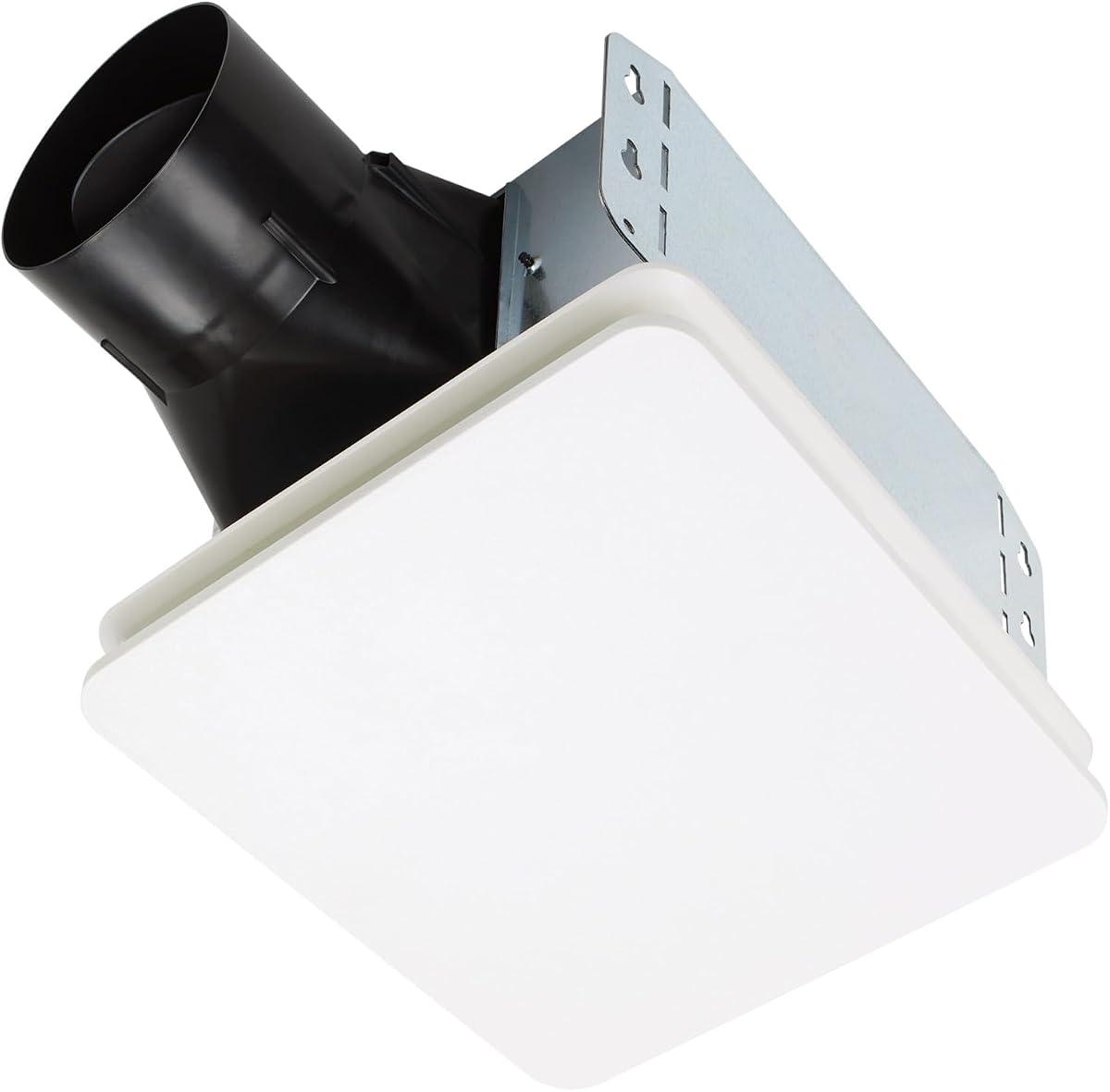


The OREiN 3-in-1 is a strong all-around upgrade for homeowners seeking ventilation, lighting, and automatic moisture control in one fixture. Its published rating is 4.4, and the combination of 160 CFM airflow, 1.0-sone operation, and a 1500-lumen LED light makes it especially appealing to people replacing an aging fan-and-light combination.
We may earn a commission when you buy through this link, at no additional cost to you.
Its built-in sensor activates ventilation when humidity rises above 60%, while a green LED confirms that sensing mode is enabled. The 160 CFM airflow is stated to suit bathrooms up to 160 square feet, and the 1.0-sone operating level supports use in a space where noise matters. Lighting options include 3000K, 4000K, and 5000K white tones plus a soft 2200K night light.
There are two important limitations. First, the product is not compatible with dimmers or timer switches, so its automated behavior comes from the internal humidity sensor rather than an external control. Second, the stated cutout of 11.81 by 11.02 inches is larger than the opening required by many compact replacements, which could require modifying the ceiling.
Overall, this is the most balanced choice in the roundup for a medium-sized bathroom that needs both an exhaust fan and upgraded lighting. Buyers should confirm the ceiling opening, electrical arrangement, and wet-location requirements before ordering, while those with an existing large opening will get the most value from the integrated design.
Rather than installing a separate exhaust fan and light fixture, this model combines both functions in a single housing. That makes it a practical choice for remodels intended to simplify wiring and reduce the number of ceiling penetrations.
The selectable color temperatures and dedicated night light offer more flexibility than a basic bathroom fixture. Users can choose brighter, cooler illumination for grooming or a warmer tone for nighttime use without changing fixtures.
We may earn a commission when you buy through this link, at no additional cost to you.
The VIVOHOME 240 CFM EC Motor model is the feature-rich premium option in this roundup. Its published rating is 4.0, while its 35W brushless DC motor, humidity-responsive speed adjustment, and stated maximum airflow of 240 CFM distinguish it from simpler on-and-off fans.
We may earn a commission when you buy through this link, at no additional cost to you.
The sensor operates across several humidity stages: the fan runs at 160 CFM between 50% and 80% relative humidity, increases to 240 CFM at 80% or above, and shuts off at 50% or lower. A remote with a digital display shows the current speed and light status. It also provides six-speed manual control, 30-, 60-, and 90-minute timers, a night light, and a buzzer mute setting.
The model also supports extensive lighting customization, with five color temperatures from 2700K through 5700K and six brightness levels. Smart memory restores the previous settings, while auto airflow compensation is intended to maintain consistent ventilation despite duct bends or dust buildup. These controls add complexity, and the remote requires two AAA batteries that are not included.
This fan is best suited to a larger bathroom or laundry room where maximum airflow, nuanced controls, and integrated lighting justify a more involved installation. The stated opening of 11.37 by 12.12 inches should be checked carefully. For users who want hands-on control rather than a basic automatic fixture, it is the most advanced model listed.
The fan does more than switch on at a single threshold. Its staged response allows stronger ventilation when moisture becomes heavy, giving the system more flexibility than a conventional humidity-controlled exhaust fan.
The digital display is useful when confirming the active fan speed or light status. Timer settings, manual speed selection, buzzer control, and memory make the unit adaptable to different household routines.
We may earn a commission when you buy through this link, at no additional cost to you.
The Tech Drive 110 CFM is a straightforward humidity sensing fan with a 4.3 published rating. It is positioned for bathrooms up to 110 square feet and offers 110 CFM airflow at a stated 1.5 sones, making it a practical middle-size option for people focused on dependable ventilation rather than integrated lighting.
We may earn a commission when you buy through this link, at no additional cost to you.
The unit provides manual and humidity sensing modes, identified by red and green LEDs. In sensing mode, it starts automatically when room humidity exceeds 60%. It is ENERGY STAR qualified and UL and HVI certified, and it may be installed over a bathtub or shower when connected to a GFCI-protected branch circuit.
Installation flexibility is its defining advantage. The fan can be attached to ceiling joists during new construction, supported by suspension brackets where joist spacing is wider, or installed from the room side without attic access when replacing an existing fan. The housing measures 9 by 8.5 by 6 inches and uses a 4-inch duct, with a stated ceiling opening of 9.25 by 8.9 inches.
It is a sensible upgrade for a medium bathroom with a compatible existing opening, especially for anyone who values ENERGY STAR qualification and simple roomside installation. It does not include a light, and unlike some premium competitors, the stated sensing behavior focuses on a single activation point. Buyers who only need effective automatic ventilation will find it easier to live with than a more complex fixture.
The same platform is described for both new construction and retrofit projects. That versatility makes it easier to choose before the old ceiling fan is removed or to modernize an existing installation.
At 1.5 sones, the model is quieter than many conventional bathroom exhaust fans. It does not match sub-1.0-sone alternatives, but it balances noise control with a manageable airflow level for a medium-sized room.
We may earn a commission when you buy through this link, at no additional cost to you.
The Broan-NuTone Roomside Series is built around a clear retrofit advantage: it can be installed from the room without attic access and without cutting drywall. Its 4.2 published rating and ENERGY STAR 4.1 qualification make it an attractive option for smaller bathrooms and straightforward replacement projects.
We may earn a commission when you buy through this link, at no additional cost to you.
The built-in humidity sensor automatically turns the fan on and off when room humidity reaches a user-adjustable setpoint. That flexibility is more useful than a fixed threshold because household comfort, ventilation, and bathroom size can vary. The stated 80 CFM airflow position the unit among the more compact options in the roundup.
Its SlideClip grille uses a springless attachment intended to make the cover quick to install and easy to remove for cleaning. The modern CleanCover grille is designed to sit neatly against the ceiling, which helps a replacement look less like a basic utility fixture. It remains a fan-only unit, so anyone also hoping to replace the bathroom light needs to account for that separately.
This is the strongest pick for a small bathroom with an existing suitable opening and a preference for minimal ceiling disruption. The 80 CFM airflow means it should be matched carefully to room size and duct layout. It is less suitable when a household needs maximum airflow, integrated illumination, or multiple fan speeds.
Roomside installation is especially valuable when attic access is limited or the ceiling should remain intact. It can simplify a bathroom update and reduce the labor involved compared with a full housing replacement.
The adjustable humidity setpoint allows the fan to reflect the room and user rather than relying on one predetermined activation level. It is a small feature with meaningful everyday value in frequently used bathrooms.
We may earn a commission when you buy through this link, at no additional cost to you.
The VIVOHOME 110 CFM is an efficient fan-only option with a 4.1 published rating. Its brushless EC motor consumes 12.5 watts, is stated to save 50% over AC motors, and carries a rated life of 30,000 hours, making it appealing for buyers who want effective automatic ventilation without replacing the ceiling light.
We may earn a commission when you buy through this link, at no additional cost to you.
A switch inside the panel lets users select manual mode or automatic humidity sensing. In automatic mode, the fan starts at 55% humidity and stops at 50%, maintaining 110 CFM in either mode. Constant airflow technology is designed to compensate for duct bends, dust buildup, and increased static pressure so airflow remains consistent.
The stated 1.0-sone level and 110 CFM output make the model suitable for rooms up to 129 square feet. The housing measures 8.9 by 8.9 by 5.7 inches and fits a stated 10.2 by 10.2-inch ceiling opening. It uses 4-inch flexible ducting and includes an aluminum duct, ABS vent, extended power cord, and backdraft damper.
This is a good choice for a small-to-medium bathroom, toilet, or laundry room where quiet operation and low energy use matter more than a light. Its fixed 55% and 50% automatic thresholds are less adjustable than the Broan-NuTone setpoint, but the simple mode switch and tool-free installation keep it approachable. It is best treated as a dedicated ventilation upgrade rather than an all-in-one fixture.
The brushless EC motor delivers the same stated 110 CFM in manual and automatic modes while using comparatively little power. That combination suits homeowners looking to automate ventilation without continuously running a traditional motor.
Constant airflow compensation is a meaningful advantage when ducts contain bends or gradually accumulate dust. The system is designed to maintain more consistent ventilation than a basic fixed-speed fan.
We may earn a commission when you buy through this link, at no additional cost to you.
The Tech Drive 80 CFM model is intended for smaller bathrooms, and its published 4.1 rating reflects a straightforward approach to moisture control. It provides 80 CFM airflow at 1.5 sones and is stated to work in rooms up to 85 square feet.
We may earn a commission when you buy through this link, at no additional cost to you.
Manual and humidity sensing modes are available. A red LED indicates continuous manual operation, while a green LED identifies automatic mode. The sensor starts the fan when humidity rises above 60%, providing hands-free ventilation after showers without requiring a separate timer or wall control.
The compact 7.5 by 7.25 by 6-inch housing uses a 4-inch duct and fits a stated ceiling opening of 7.6 by 7.3 inches. Installation can be completed from the room side without attic access, which is useful for replacing many small standard fans. The six-inch housing depth is the key caution: replacing a shallow four-inch housing may require checking whether the ceiling cavity is deep enough.
The fan is ENERGY STAR qualified and UL and HVI certified, and it is acceptable over a bathtub or shower when installed on a GFCI-protected branch circuit. It suits compact bathrooms, powder rooms, and similar spaces where 80 CFM is sufficient. Buyers prioritizing stronger airflow, lighting, or quiet sub-1.0-sone operation should consider one of the larger models.
The compact dimensions make this model a practical option when replacing a small existing fan. Measuring both the old opening and the available ceiling depth is essential before installation.
The green sensing indicator provides a simple way to confirm that automatic mode is active. A 60% activation point offers dependable shower-triggered ventilation in appropriately sized rooms.
We may earn a commission when you buy through this link, at no additional cost to you.
The Homewerks 140 CFM is a balanced choice for a medium-sized bathroom. Its 4.0 published rating accompanies 140 CFM airflow, a 1.0-sone operating level, and automatic humidity sensing, combining a useful ventilation rate with comparatively low noise.
We may earn a commission when you buy through this link, at no additional cost to you.
The sensor detects room humidity and switches the fan on or off automatically when the unit is placed in sensing mode. Red and green LED indicator lights show the humidity-control and speed modes, giving users a simple visual confirmation without a digital display or complicated remote.
The stated room recommendation extends to 140 square feet, which matches the airflow figure. As a fan-only model, it does not address a separate lighting upgrade. It also offers fewer customization options than the VIVOHOME 240 CFM unit, with no listed night light, selectable color temperature, timer, or multi-speed remote.
This fan is most appropriate for buyers who prioritize the fundamentals: substantial airflow, quiet operation, and automatic startup. It avoids the complexity of a large smart fixture while still improving moisture control. Confirm the existing opening, duct size, and electrical requirements before replacing an older fan, and consider adding a separate modern light if bathroom illumination also needs attention.
The 140 CFM output is suitable for rooms up to 140 square feet, while the 1.0-sone specification keeps noise relatively restrained. It is a useful middle ground between compact 80 CFM fans and higher-output premium models.
Separate red and green LEDs show manual or sensing-related operating states. They provide enough feedback for routine use without requiring an app, display, or remote control.
We may earn a commission when you buy through this link, at no additional cost to you.
The Lightania 130 CFM combines automatic ventilation with one of the roundup's most flexible lighting systems. Its published rating is 4.3, and the 130 CFM airflow, 1.0-sone specification, and 130-square-foot suitability make it well matched to medium bathrooms.
We may earn a commission when you buy through this link, at no additional cost to you.
A manual knob lets users set the humidity level and delay-off time. The fan then detects moisture and continues operating until the bathroom remains dry and fresh. Its pure copper motor and optimized impeller are specified to deliver 130 CFM while keeping the stated noise level at 1.0 sones.
The integrated light offers five selectable color temperatures from 2700K to 5000K and brightness adjustment from 0% to 100%. That gives users more control than simple three-mode fixtures, including softer nighttime illumination and brighter task lighting. The ceiling opening is 9.4 by 9.4 inches, and the fan uses a 4-inch duct with included mounting brackets.
ETL, FCC, and Wet Rated certification support its use near showers, while a five-year warranty and lifetime customer support add reassurance. This is an excellent all-in-one choice for someone who wants both dimmable bathroom lighting and automatic fan control. The controls are physical rather than app-based, and users should verify that the stated opening and 4-inch duct arrangement match the existing ceiling.
Full 0% to 100% dimming and five color temperatures make the light useful for a wide range of routines. The range covers warm ambient settings through brighter, cooler illumination without requiring another fixture.
The manual knob provides direct access to the humidity setpoint and delay-off time. This makes the behavior easy to tune and avoids dependence on a smartphone or proprietary network.
We may earn a commission when you buy through this link, at no additional cost to you.
The 160 CFM Humidity Fan stands out with a published 4.8 rating, the highest customer rating among the ten products. It combines 160 CFM airflow with a 1.0-sone specification, giving it a strong balance of capacity and quiet operation for a budget-conscious bathroom upgrade.
We may earn a commission when you buy through this link, at no additional cost to you.
Manual mode uses a red indicator and runs the fan continuously. In humidity sensing mode, a green indicator appears and the fan starts when room humidity exceeds 60%. The stated capacity supports rooms up to 165 square feet, and the recommended 6-inch duct configuration is important to verify before purchase.
Installation options include attaching the housing to ceiling joists for spacing under 12 inches, using suspension brackets for spacing from 16 to 24 inches, or replacing an existing fan entirely from the ceiling side without attic access. The housing uses galvanized steel, while the low-profile white grill is made from ABS plastic. Two built-in thermal protection devices shut off the unit if it reaches a certain temperature.
The product is ETL compliant and is stated to be acceptable over a bathtub or shower when installed on a GFCI-protected branch circuit. It does not include a light, so it is best for a ventilation-only replacement. Among the options here, it is a compelling budget pick for buyers who prioritize high airflow, low noise, and flexible installation over integrated lighting or digital controls.
A 1.0-sone operating level is uncommon among fans in this airflow range. It allows the unit to move substantial air while remaining suitable for bathrooms where occupants frequently notice fan noise.
The model supports several mounting arrangements and includes two thermal protection devices. Its galvanized steel housing and corrosion-resistant components are also intended to withstand the conditions around a bathroom ceiling.
We may earn a commission when you buy through this link, at no additional cost to you.
The KAZE APPLIANCE SEP120H is the quietest option in the roundup, with a stated operating level of just 0.3 sones. Its published rating is 4.1, and the combination of 120 CFM airflow, ENERGY STAR certification, and automatic humidity switching makes it appealing where low sound is a priority.
We may earn a commission when you buy through this link, at no additional cost to you.
The humidity sensor automatically switches the unit on and off to maintain a desirable humidity level and provide hands-free operation. Its 120 CFM capacity is intended for bathrooms up to 120 square feet, placing it between the smaller 80 CFM models and the higher-output 140 and 160 CFM options.
Unlike several roomside retrofit products, this model requires attic access. Sliding hanger bars allow the housing to be positioned between framing members and span up to 24 inches. The ceiling opening is specified as 11 3/8 by 10 1/2 inches, which means an existing opening of a different size may need to be resized. A removable 6-inch duct, backdraft damper, and 6-to-4-inch reducer are included.
This is the ideal choice for a bathroom where fan noise is particularly bothersome, such as near a bedroom or for someone sensitive to sound. It lacks a light, digital remote, and multiple settings, but the limited feature set keeps the operation direct. Buyers should ensure attic access and confirm the opening before scheduling installation.
The 0.3-sone specification makes this model substantially quieter than the 1.0- and 1.5-sone alternatives. It can be especially useful in bathrooms where a louder fan would be distracting during showers or nighttime use.
Sliding hanger bars can span up to 24 inches and accommodate different framing arrangements. This gives installers flexibility, although attic access and the specified ceiling opening remain essential requirements.
We may earn a commission when you buy through this link, at no additional cost to you.
The right humidity sensing bathroom fan depends on room size, existing ductwork, installation access, sound tolerance, and whether lighting is part of the upgrade. Comparing the specifications below before ordering can prevent an expensive mismatch between the fixture and the bathroom.
Airflow is one of the most important factors because a humidity sensor cannot remove moisture effectively if the fan moves too little air. The products in this guide range from 80 CFM to 240 CFM, with stated room suitability varying accordingly. Smaller models are positioned around 85 to 110 square feet, while 120 to 160 CFM options cover medium bathrooms. The VIVOHOME 240 CFM model adds a 160 CFM stage at moderate humidity and increases to 240 CFM when relative humidity reaches 80% or higher.
Choose a model whose stated room coverage matches the bathroom rather than simply selecting the highest CFM figure. Also consider ceiling height, duct length, and the number of bends because those factors affect real airflow.
Bathroom fans often run for extended periods, so sound level matters more than a short burst of noise. The KAZE APPLIANCE SEP120H is rated at 0.3 sones, while several alternatives operate at 1.0 sone and the two smaller Tech Drive models are stated at 1.5 sones. Lower-sone models are generally preferable in rooms near sleeping areas or for noise-sensitive occupants.
Treat sound specifications as a useful comparison rather than a promise of identical acoustics in every bathroom. Room acoustics, duct materials, and installation quality can affect what is heard in practice.
Most models use a single activation threshold near 60% relative humidity, while others add manual settings or multiple response stages. The Broan-NuTone model provides a user-adjustable setpoint, the Lightania model offers a manual humidity and delay-off knob, and the premium VIVOHOME changes speed across different humidity bands. The more basic VIVOHOME model starts at 55% and stops at 50%.
If you want precise control, favor an adjustable setpoint. If hands-free operation and simple red-or-green indicators are enough, a fixed-threshold model may provide a cleaner installation and less complicated daily use.
A fan cannot be judged only by airflow and features; it must physically fit the ceiling. Stated openings range from a compact 7.6 by 7.3 inches to larger sizes around 12 inches in both directions. The KAZE model may require an existing opening to be resized, while several other products use roomside installation methods intended for easier retrofit.
Measure the existing cutout, available ceiling cavity depth, and attached duct diameter before ordering. A model with strong features is a poor upgrade if installation requires extensive ceiling modification.
Integrated fan-and-light fixtures can simplify a renovation and provide a more coordinated appearance. The OREiN model combines 1500-lumen lighting, three color temperatures, and a 2200K night light, while the Lightania model offers five color temperatures and full 0% to 100% dimming. The VIVOHOME 240 CFM model adds a remote-controlled light with six brightness levels.
A fan-only model may be preferable if the current ceiling light is in good condition or if a separate fixture better serves the room. Account for light output, controls, dimmer compatibility, and whether a dedicated night light is important before choosing.
Some products are explicitly designed for installation from the room side without attic access, which can simplify a retrofit. Others are intended for attic or above-ceiling work and use sliding hanger bars to position the housing. The OREiN unit is described as a no-cut housing product, while the two Tech Drive options and several competitors emphasize replacement installation from below.
Check whether a local electrician or installer is needed, how the included mounting hardware works, and whether the bathroom ceiling is deep enough for the housing. Required electrical protection also matters: several models are stated to be acceptable over a tub or shower when installed on a GFCI-protected branch circuit.
Certifications offer useful evidence of compliance and performance, although they do not replace correct installation. ENERGY STAR qualification appears on several products, while ETL, UL, HVI, FCC, and Wet Rated certifications are also listed across the guide. The premium VIVOHOME, OREiN, and 160 CFM options also include stated safety features such as thermal protection or a backdraft damper.
Prioritize models with recognized certifications relevant to your installation and electrical arrangement. Confirm the required circuit type, duct configuration, and local building requirements.
Control complexity ranges from a simple panel switch to a digital remote with timers, status feedback, and memory. The VIVOHOME 240 CFM remote requires two AAA batteries, which are not included, while the Lightania and Broan-NuTone models emphasize accessible physical controls or easy grille removal. For cleaning, detachable grilles and smooth covers can simplify routine maintenance.
Choose a control style the household will actually use. A feature-rich remote is valuable for customization, but a straightforward mode switch may be more durable and easier for every member of the household to operate.
After installation, confirm that the fan operates in both manual and humidity sensing modes. In manual mode, the fan should run continuously, while the sensing indicator should illuminate in automatic mode. Use the controls to select the desired humidity setpoint or delay-off period where available, and allow the unit to complete several shower cycles before making further adjustments. This helps distinguish normal drying behavior from a setting that is too high or too low.
Clean the grille or cover regularly according to the manufacturer's instructions. Dust and lint can reduce airflow, while a dirty sensor may respond inaccurately. Use a dry or lightly damp cloth as appropriate, avoid spraying cleaner directly into the fan, and never allow moisture to enter the motor or electrical components. Keep the sensing area unobstructed and make sure nearby objects do not interfere with air movement around the unit.
Periodically listen for unusual noise, vibration, or intermittent operation, and confirm that the exterior vent remains open. If the fan runs without removing humidity, becomes unusually loud, or the indicator behaves unexpectedly, stop relying on automatic operation and arrange inspection. Electrical work, duct modifications, and housing replacement should be handled according to local requirements and the product's installation instructions.
A humidity sensing fan starts and stops according to moisture in the room, reducing the need to operate it manually after showers. It can help dry surfaces, clear steam, and limit prolonged dampness when the sensing threshold and room size are properly matched. The fan still requires occasional cleaning and periodic operation checks to remain effective.
The products in this guide associate 80 CFM with rooms as small as 85 square feet, while 110 to 120 CFM models are commonly positioned for medium bathrooms. Larger models offer 130 to 160 CFM or more. Room area is only one factor, so ceiling height, duct length, bends, and ventilation needs should also influence the selection.
A humidity sensing fan responds to actual moisture rather than relying only on a preset duration. That makes it useful when shower length and humidity levels vary. Timers can still be useful, and the premium VIVOHOME model includes both humidity response and selectable timers for greater flexibility.
Usually, yes, provided the replacement physically fits and complies with local electrical and ventilation requirements. Check the ceiling opening, housing depth, duct diameter, and circuit type before removing the old fan. Some models support roomside replacement, while others require attic access or even ceiling-opening modification.
No. Several options in this roundup are fan-only units, including the Tech Drive, Broan-NuTone, Homewerks, KAZE, and 160 CFM models. The OREiN, VIVOHOME 240 CFM, and Lightania products include lighting. Choose a fan-only model if the existing light is satisfactory or a separate lighting upgrade is planned.
Sones measure perceived sound loudness, with lower values generally indicating quieter operation. The 1.0-sone products are intended to run more quietly than the 1.5-sone Tech Drive fans, while the KAZE model is rated at just 0.3 sones. Actual noise can vary with the room and duct installation.
Cleaning frequency depends on dust, lint, and bathroom humidity, but the grille should be inspected periodically and cleaned when buildup is visible. Keep the sensor and air passages unobstructed. Before cleaning, switch off power at the appropriate breaker and follow the manufacturer's instructions.
Start by measuring the ceiling opening and confirming the available housing depth. Next, check duct diameter, attic or roomside installation access, electrical requirements, and wet-location suitability. After that, compare airflow, sound level, sensing controls, lighting needs, and the availability of recognized certifications.
The OREiN 3-in-1 stands out as the best overall option because it combines 160 CFM airflow, quiet operation, humidity activation, and flexible integrated lighting. The VIVOHOME 240 CFM is the premium choice for households wanting multi-speed humidity response, detailed remote controls, and extensive lighting options, while the 160 CFM Humidity Fan offers a budget-oriented mix of high airflow and low noise.
The most important next step is to match the fan to the existing opening and bathroom size rather than choosing solely by features. Confirm duct size, housing depth, installation access, electrical protection, and whether the bathroom needs a replacement light. For quieter rooms, consider the 0.3-sone KAZE model; for simpler retrofits, prioritize the roomside options from Broan-NuTone, Tech Drive, and VIVOHOME.
Product availability, ratings, included accessories, technical specifications, and prices can change, so verify the current listing and installation instructions at the time of purchase. Comparing the final electrical and dimensional requirements with the bathroom before ordering will help ensure that the chosen humidity sensing fan is both practical and effective.