
CORSAIR RM850x
4.7Editor score
Fully modular cable design
Cybenetics Gold efficiency
ATX 3.1 compliant
Best PSU for Rtx 5070 and 5070 Ti compares ATX 3.1 options, wattage, efficiency, modularity, connectors, noise, and fit for modern builds.
A PSU for RTX 5070 and RTX 5070 Ti must do more than provide adequate wattage. It should handle graphics-card transients, use the correct 12V-2×6 connection, regulate power efficiently, and fit the case without compromising cable routing or airflow.
This guide compares ten supplied products by examining wattage, ATX 3.1 or PCIe 5.1 support, connector availability, efficiency credentials, modularity, noise features, and compatibility with compact or high-end gaming systems.
The list includes six power supplies and four RTX 5070-series graphics cards, providing both PSU recommendations and useful GPU context. Each review highlights verified features and trade-offs, while current prices and availability should be checked before purchasing.
4.7Editor score

4.8Editor score

4.6Editor score
This side-by-side comparison includes six suitable power supplies and four RTX 5070-series graphics cards whose listed specifications help frame PSU and build requirements.



The Seasonic Focus GX-750 is a 750-watt ATX 3.1 and PCIe 5.1-ready power supply built for systems using an RTX 5070 or RTX 5070 Ti. It carries a 4.8 customer rating, the highest listed rating in this group, and stands out through its native 12V-2×6 connector, dual efficiency certifications, OptiSink design, and hybrid fan control.
We may earn a commission when you buy through this link, at no additional cost to you.
Its most important advantage is straightforward GPU readiness. The native 12V-2×6 cable removes the need for a traditional multi-connector adapter when connecting a compatible graphics card. At the same time, 80 PLUS Gold and Cybenetics Platinum certifications indicate a strong efficiency focus, which can help reduce energy waste and heat. The 135mm fluid-bearing fan and hybrid control are useful for maintaining low noise during lighter workloads.
The main limitation is the 750-watt capacity. That output is directly relevant to the RTX 5070 class and can suit the ASUS Prime RTX 5070 Ti listing, which calls for a minimum 750W PSU, but it offers less breathing room than 850W or 1000W alternatives. Builders adding a powerful processor, multiple storage devices, expansion cards, or a heavily overclocked GPU may prefer more capacity. The cable arrangement also requires planning around the case's available space.
This is the most balanced recommendation in the guide for a buyer who wants explicit 5070 Ti readiness, modern standards, strong efficiency, and a native graphics-card connection. Choose the Focus GX-750 when your other components do not push total system demand beyond its capacity. For extensive future upgrades or a high-end workstation-style build, move to an 850W or 1000W model instead.
Seasonic's listing particularly distinguishes this model with a 135mm FDB fan controlled through a hybrid strategy, allowing the fan behavior to suit the load. That makes it easier to justify than simply matching wattage to a graphics card. The combination of native connectivity, efficiency credentials, and an established Seasonic feature set makes the Focus GX-750 our Editor's Choice.
A native 12V-2×6 connection gives builders a direct route to compatible RTX 50-series hardware without relying on an adapter. It also supports a cleaner cable arrangement around a large graphics card.
Gold and Platinum efficiency certifications support lower waste and heat, while hybrid fan control can reduce audible activity under lighter loads. These traits are particularly valuable in a gaming system expected to spend considerable time outside maximum stress.
We may earn a commission when you buy through this link, at no additional cost to you.
The Seasonic CORE GX-750 is another 750-watt ATX 3.1 and PCIe 5.1-ready option, with a 4.6 customer rating. It combines a native 12V-2×6 connector, 80 PLUS Gold and Cybenetics Platinum efficiency certifications, and an OptiSink design, making it a practical match for an RTX 5070 or RTX 5070 Ti gaming build.
We may earn a commission when you buy through this link, at no additional cost to you.
The included 12V-2×6-to-dual-8-pin PCIe cable adds flexibility. It can be useful for connecting a compatible GPU that uses two conventional eight-pin power inputs, although the native 12V-2×6 lead remains the primary feature for current RTX 50-series cards. A 750-watt rating aligns with the minimum recommendation shown for the ASUS Prime RTX 5070 Ti, provided the rest of the system is not unusually power-hungry.
The tradeoff is again capacity. A system builder may begin with an RTX 5070 and later add a more demanding processor or graphics card, at which point the 750-watt limit could become restrictive. The product data also does not describe a specific fan or fan-control implementation, so buyers who prioritize detailed acoustics information should examine the final manufacturer documentation and warranty materials before buying.
This Seasonic option makes sense for a straightforward, modern gaming PC whose estimated power needs remain moderate. It is less compelling than the Focus GX-750 for shoppers specifically seeking a documented 135mm FDB fan and hybrid fan control, but it retains the same modern connector and efficiency foundation. The choice comes down to which feature set best matches the rest of the build.
The included 12V-2×6-to-dual-8-pin cable gives the installer another PCIe connection option. It also means the PSU package is not limited to a single modern GPU wiring approach.
Seven hundred fifty watts directly addresses the minimum requirement printed for the ASUS Prime RTX 5070 Ti. It is most appropriate when processor choice and additional system components remain within a conventional gaming-PC envelope.
We may earn a commission when you buy through this link, at no additional cost to you.
The CORSAIR RM850x delivers 850 watts in an ATX 3.1 and PCIe 5.1-ready package, earning a 4.7 customer rating. It is a strong premium choice for builders who want additional capacity over a 750-watt design without moving all the way to a 1000-watt unit.
We may earn a commission when you buy through this link, at no additional cost to you.
Its fully modular construction lets builders connect only the cables their system needs, improving cable management in cases where the PSU sits beneath a PSU shroud. The embossed cables and low-profile combs further simplify routing around large graphics cards and tight motherboard areas. A native 12V-2×6 connector provides direct support for the latest graphics cards, while the ATX 3.1 compliance and transient-spike resistance are aligned with modern GPU power behavior.
Cybenetics Gold certification is listed at up to 91% efficiency, with benefits including lower power consumption, less noise, and cooler internal temperatures. The principal tradeoff is positioning. An 850-watt premium model is more than some RTX 5070 or 5070 Ti builds need, so buyers should consider their processor, cooling, expansion, and upgrade plans rather than treating excess capacity as automatically beneficial.
The RM850x is a particularly convincing choice for a system that pairs an RTX 5070 Ti with a powerful CPU or plans to upgrade later. It offers enough headroom for a robust gaming configuration, cleaner modular wiring, and a direct modern GPU connection. For buyers who want a balanced 850-watt platform rather than the minimum recommended capacity, it earns the Best Premium designation.
An 850-watt unit provides a useful middle tier for modern gaming PCs. It offers additional room for a high-performance processor and other components without requiring the footprint and cost of a 1000-watt model.
Fully modular cabling and low-profile combs can improve visibility and airflow behind a PSU shroud. The native 12V-2×6 lead avoids the extra bulk associated with adapting a conventional multi-pin cable.
We may earn a commission when you buy through this link, at no additional cost to you.
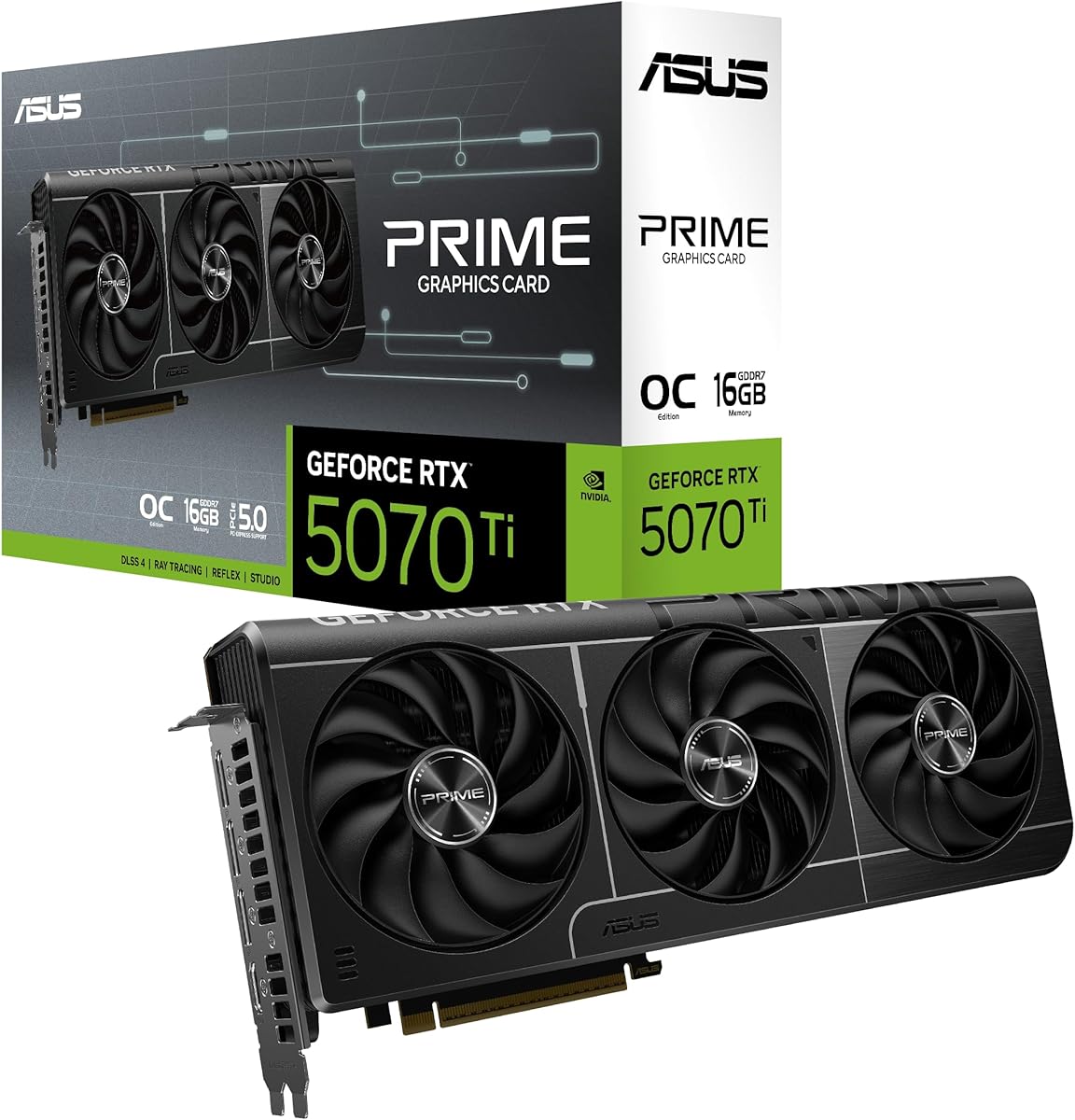
The ASUS Prime RTX 5070 Ti is a graphics card rather than a PSU, but it supplies essential context for this buying guide. Its listing explicitly states that a minimum 750W PSU with a 16-pin 12V-2×6, also described as 12VHPWR in the requirements, is required.
We may earn a commission when you buy through this link, at no additional cost to you.
Its SFF-Ready positioning is useful for compact builds. The card measures 306mm, occupies 2.5 slots, and weighs 4 pounds, although the listing advises checking case clearance and slot spacing. Axial-tech fans, a phase-change GPU thermal pad, and a dual BIOS switch support a combination of cooling and user-control features.
For PSU selection, the critical lesson is that the card's 750W minimum is a starting point defined by the GPU vendor rather than a complete system-planning calculation. A processor-heavy system may warrant 850W or 1000W, and the full cable and connector arrangement must be considered. A native 12V-2×6 PSU such as the Seasonic Focus GX-750 or CORSAIR RM850x directly addresses the listed connector requirement.
This ASUS Prime model is a compelling centerpiece for a small-form-factor PC that still wants high-end RTX 5070 Ti graphics. It is not a substitute for a PSU, and its 750W requirement should be satisfied with a modern, compliant unit. The three-year warranty, Quiet and Performance BIOS profiles, and 0dB behavior make it relevant to compact, thermally conscious builds.
The 750W figure is the minimum specified for the card, not a guarantee that every 750W PSU will suit every surrounding component. Check the processor, motherboard, storage, cooling, and planned upgrades before finalizing the selection.
The 306mm length and 2.5-slot thickness make clearance checks essential. Also verify that the power connector can bend and route within the recommended clearance area without pressing sharply against the card or adjacent components.
We may earn a commission when you buy through this link, at no additional cost to you.
The CORSAIR RM850e (2025) combines 850 watts of capacity with ATX 3.1 certification and PCIe 5.1 platform support. Its 4.6 customer rating makes it a credible budget-conscious option for an RTX 5070 or RTX 5070 Ti system, particularly when the buyer values modern transient handling and modular cabling.
We may earn a commission when you buy through this link, at no additional cost to you.
The product data emphasizes two transient power excursions from the GPU, an important consideration for a platform that can rapidly change GPU power demands. Fully modular cabling allows unused leads to remain out of the chassis, and a 120mm rifle-bearing fan uses a specially calculated fan curve to limit noise. The included 105°C-rated capacitors support dependable electrical performance, while Modern Standby compatibility improves wake-from-sleep behavior and low-load efficiency.
One detail deserves careful attention: unlike several other choices in this guide, the supplied information does not explicitly identify a native 12V-2×6 cable. ATX 3.1 and PCIe 5.1 readiness alone do not necessarily settle the question of which exact cable is bundled. Buyers should verify the cable list and current manufacturer specifications before ordering, especially if they want a direct, adapter-free RTX 50-series connection.
The RM850e is a strong value recommendation when 850 watts is the desired capacity tier and the final cable configuration is acceptable. It gives buyers ATX 3.1 transient support, a modular layout, and a documented quiet fan strategy without requiring the premium feature set of higher-tier models. It earns the Best Budget label for practical capacity and modern platform support.
ATX 3.1 certification is designed around the rapid load changes associated with contemporary graphics hardware. The listing specifically notes support for two transient power excursions, which makes the standard more relevant than an older generic label.
The attractive feature set should be compared with the exact cable bundle rather than inferred from the PCIe 5.1 label. Checking the product listing and manufacturer documentation for a native 12V-2×6 lead helps prevent a connector mismatch.
We may earn a commission when you buy through this link, at no additional cost to you.
The CORSAIR RM1000x is the highest-wattage power supply in the supplied roundup, providing 1000 watts in an ATX 3.1 and PCIe 5.1 design. It has a 4.5 customer rating and is aimed at builders who want unusually generous headroom for an RTX 5070 Ti or a system expected to evolve.
We may earn a commission when you buy through this link, at no additional cost to you.
A native 12V-2×6 connector enables a direct GPU-to-PSU connection, while full ATX 3.1 compliance adds transient-spike resistance. The fully modular layout keeps unnecessary cables out of the build, and Cybenetics Gold certification is listed at up to 91% efficiency. Embossed cables and low-profile combs help with both appearance and installation around demanding components.
The obvious tradeoff is that most conventional RTX 5070 and RTX 5070 Ti systems do not require 1000 watts. Paying for capacity that will not be used can make a more appropriate 750W or 850W model a better value. A larger PSU may also be harder to fit in a compact case, and cable management becomes more involved when the unit is installed beneath a shroud.
This model is most sensible for an expansive high-end build, a power-hungry processor and GPU combination, or a buyer who prioritizes long-term headroom. It is also a logical pairing for the ASUS ROG Strix RTX 5070 Ti, a large three-fan, 3.2-slot card whose size and cooling design will already demand careful case planning. The RM1000x delivers capacity and modern connectivity without relying on speculation about adapter requirements.
One thousand watts is useful when a system combines a demanding processor, high-end graphics hardware, multiple expansion devices, and future upgrade plans. It reduces the need to replace the PSU when the major desktop components change.
Extra capacity does not remove physical-fit requirements. Confirm the PSU dimensions, case clearance, modular cable bend radius, and the space required by the graphics card before finalizing a large-power build.
We may earn a commission when you buy through this link, at no additional cost to you.
The CORSAIR CX650M (2025) is a 650-watt semi-modular ATX 3.1 and PCIe 5.1 power supply with a native 12V-2×6 cable. Its 4.7 customer rating and modern connector make it an interesting entry-level option, but its 650-watt capacity demands more careful system matching than the 750W and 850W alternatives.
We may earn a commission when you buy through this link, at no additional cost to you.
The supplied product information states that the 650W version provides up to 450W of GPU power through a single cable. It also says this is more than enough for the RTX 5070 and RTX 5070 Ti, yet the separate ASUS Prime RTX 5070 Ti listing specifies a minimum 750W PSU. Those statements should be reconciled by checking the exact GPU variant, vendor guidance, and the rest of the system before purchase.
The semi-modular design attaches the main power cables while allowing the remaining leads to be selected as needed. A 120mm low-noise fan is designed to remain quiet under low and medium loads, and the unit uses LLC topology, 105°C-rated capacitors, and Cybenetics Bronze efficiency. Those are solid attributes for a budget-oriented build, although the fixed cables offer less routing freedom than a fully modular design.
The CX650M is best considered for a restrained RTX 5070 configuration with a modest processor and a carefully planned power budget. It should not be selected on the assumption that one GPU cable automatically makes every 5070 Ti build suitable. Corsair itself advises using its PSU calculator and matching the unit to the specific build, which is the safer purchasing approach.
A 650-watt rating can work in a focused build, but the processor and other components determine the margin. Use a current PSU calculator and compare its result with both the estimated demand and the graphics card vendor's minimum recommendation.
The principal cables remain attached, while optional cables are detachable. This reduces unused cable clutter compared with a fully fixed design, although it provides less freedom than a fully modular model.
We may earn a commission when you buy through this link, at no additional cost to you.
The ASUS ROG Strix RTX 5070 Ti is another graphics card included to clarify the system context for a PSU purchase. It features 16GB GDDR7, 1492 AI TOPS, a 3.2-slot thermal design, three Axial-tech fans, a MaxContact design, and a phase-change GPU thermal pad.
We may earn a commission when you buy through this link, at no additional cost to you.
Its high-end positioning makes power-supply headroom and physical planning more important. The card is thicker than the 2.5-slot ASUS Prime models in the roundup, and its three-fan cooler is designed around a substantial fin array. A buyer should verify case width, motherboard slot spacing, cooler clearance, and the graphics card's official PSU requirements before selecting a unit.
The product details provide OC and default boost clocks of 2625MHz and 2602MHz, respectively, along with GPU Tweak III software for performance tweaking, thermal control, and monitoring. The 0dB feature supports relative silence during light gaming, while the phase-change thermal pad is intended to assist heat transfer and GPU longevity.
Because no explicit PSU wattage requirement appears in the supplied information, buyers should consult the current manufacturer specifications for the exact card. As a general purchasing strategy, an 850W or 1000W modern ATX 3.1 unit can provide sensible headroom for a large RTX 5070 Ti, particularly alongside a powerful CPU. The PSUs in this guide are more directly relevant to the build than treating the graphics card as a power-supply alternative.
A 3.2-slot card and triple-fan cooler require more space than the compact ASUS Prime option. The PSU selection should therefore be made after checking the complete case layout, not only the basic ATX fit.
The supplied listing does not state a minimum PSU wattage for this model. Use the current ASUS or NVIDIA guidance for the precise board, then choose a compliant unit with additional margin for the processor and upgrade plans.
We may earn a commission when you buy through this link, at no additional cost to you.
The ASUS TUF Gaming RTX 5070 Ti is a 16GB GDDR7 graphics card with a listed 2610MHz clock, RGB lighting, and a 3.125-slot vented exoskeleton design. Its 4.7 customer rating makes it a relevant performance context for this guide, but the product itself does not replace a power supply.
We may earn a commission when you buy through this link, at no additional cost to you.
Thermal and durability features include Axial-tech fans, a phase-change GPU thermal pad, military-grade component claims, and a protective PCB coating against moisture and debris. A dual BIOS lets users switch between Quiet and Performance profiles, while GPU Tweak III supports tuning, thermal monitoring, and system oversight. These features are relevant to the PSU decision because a larger performance-oriented GPU is likely to be installed in a roomier, better-cooled system.
The listing calls out TUF Gaming Gold 1000W and 850W units as companions, providing a direct indication of the brand's power-supply ecosystem. It does not explicitly state a mandatory wattage for every possible CPU and configuration, so buyers should still verify the exact product requirements. A native 12V-2×6 connection and ATX 3.1 support remain desirable for this generation of hardware.
This TUF model is a sensible centerpiece for a gaming system that values a large memory configuration, robust board construction, and selectable operating profiles. Buyers should pair it with a modern 750W or 850W PSU for a conventional configuration, or consider 1000W when the CPU and upgrade path warrant extra margin. The PSU should be selected using the full system estimate rather than the graphics card alone.
The listing specifically references TUF Gaming Gold 850W and 1000W units as companions. Those wattages provide a practical frame of reference, with the better choice depending on processor power, case size, and future upgrades.
The vented 3.125-slot design benefits from adequate case airflow. Check the clearance around the card, the space needed by its power connector, and the room available for modular PSU cables before completing the layout.
We may earn a commission when you buy through this link, at no additional cost to you.
The ASUS Prime RTX 5070 is a 12GB GDDR7 graphics card built around a compact 2.5-slot, SFF-Ready form. It carries a 4.7 customer rating and provides an alternative to the larger ASUS ROG and TUF RTX 5070 Ti models, making it useful when a smaller case or lower memory tier is preferable.
We may earn a commission when you buy through this link, at no additional cost to you.
Axial-tech fans use a smaller hub to accommodate longer blades and a barrier ring for greater downward air pressure. A phase-change GPU thermal pad is designed to improve heat transfer, support lower temperatures, and improve reliability. The listing also notes HDMI and DisplayPort 2.1 connectivity, a PCIe 5.0 interface, and a three-year warranty.
As with the ASUS Prime RTX 5070 Ti, the product itself is not a PSU. The supplied information does not state a specific wattage requirement for this 12GB card, so buyers should consult the exact product documentation. A 750W ATX 3.1 PSU provides a sensible starting point for many gaming systems, while an 850W model offers additional room for a powerful processor or planned upgrades.
This card is best suited to a compact build that wants RTX 5070-class hardware without committing to the footprint of a 3.2-slot enthusiast model. A semi-modular or fully modular modern PSU can simplify the installation, but connector fit and cable bend room remain important. The CORSAIR CX650M is the most compact wattage option listed, while the Seasonic and CORSAIR 750W or 850W models offer a more conservative capacity margin.
The 2.5-slot format can make the Prime RTX 5070 easier to accommodate than the triple-fan enthusiast cards in this guide. The case and cooler must still provide sufficient clearance and airflow.
Do not infer the required capacity from the 12GB memory label alone. Check the official graphics-card guidance, estimate the processor and system draw, and preserve enough headroom for expected upgrades and transient behavior.
We may earn a commission when you buy through this link, at no additional cost to you.
Choosing a PSU for an RTX 5070 or RTX 5070 Ti requires balancing GPU guidance with processor power, transient behavior, connector type, efficiency, acoustics, physical fit, and future upgrade plans.
Begin with the graphics card vendor's minimum PSU recommendation, then add the expected processor, motherboard, memory, storage, fans, and expansion-card load. A capacity figure should not be treated as the expected constant draw; it represents the maximum sustained output the unit is designed to deliver while also accommodating peaks and short-duration transients.
For the products listed, 650W is the most constrained option, 750W directly matches the ASUS Prime RTX 5070 Ti's printed minimum, 850W offers a useful upgrade margin, and 1000W is aimed at expansive or long-lived builds. Choose enough capacity for comfortable headroom rather than trying to squeeze every available watt from a smaller unit.
ATX 3.1 is especially relevant for contemporary graphics hardware because the standard addresses rapid load changes and transient power excursions. Every power supply in the guide is described as ATX 3.1 and PCIe 5.1 ready, but certification alone does not describe every detail of the implementation. Look for explicit mentions of transient handling in the product documentation.
An ATX 3.1 unit is a sensible foundation for RTX 5070 and 5070 Ti systems. It does not guarantee adequate total wattage or compatibility with every connector arrangement, so buyers should still confirm capacity, the included GPU cable, and the complete system estimate.
A native 12V-2×6 connection allows a compatible RTX 50-series graphics card to connect directly to the PSU without a traditional multi-8-pin adapter. The Seasonic Focus GX-750, Seasonic CORE GX-750, CORSAIR RM850x, CORSAIR RM1000x, and CORSAIR CX650M explicitly list native 12V-2×6 cables in the supplied information.
Prefer a native cable when the GPU supports it, but verify that the cable is actually included rather than merely implied by ATX 3.1 or PCIe 5.1 wording. Also plan the bend near the graphics-card connector. A tightly folded cable can create unnecessary strain, and the connector should not be forced into an improper orientation.
Efficiency determines how effectively a PSU converts AC power into usable DC power. The Seasonic Focus GX-750 and CORE GX-750 list both 80 PLUS Gold and Cybenetics Platinum credentials, while the CORSAIR RM850x and RM1000x carry Cybenetics Gold certification. The CORSAIR CX650M has Cybenetics Bronze efficiency, and no efficiency certification is stated for the RM850e in the supplied data.
Higher efficiency can reduce waste, heat, and fan activity, particularly during extended gaming sessions. It is not the only quality indicator, but it can be especially useful when the PSU shares a compact enclosure with powerful components. Compare certification standards consistently rather than treating every efficiency label as identical.
A fully modular PSU lets the builder remove every cable that the system does not require, which is useful under a shroud or behind a tightly packed motherboard tray. The Seasonic Focus GX-750, CORSAIR RM850x, RM850e, and RM1000x are described as fully modular. The CX650M is semi-modular, meaning its main cables remain attached while the rest are optional.
Full modularity provides the cleanest routing, but it also means the correct leads must be present and correctly identified. Semi-modularity offers a middle ground with fewer detached cables to store. Whichever format you choose, allow enough room for the 12V-2×6 connector to bend safely near the graphics card.
A quiet PSU is especially noticeable in a gaming system where background fan noise is already present. The Seasonic Focus GX-750 uses a 135mm fluid-bearing fan with hybrid control, the RM850e uses a 120mm rifle-bearing fan with a calculated fan curve, and the CX650M has a 120mm low-noise fan designed to remain quiet under low and medium loads.
Fan size and control strategy are useful, but placement and case airflow also affect acoustic results. A quality thermal design and efficient power conversion can help the fan remain slower during ordinary play. Check the final product details for fan-bearing type, control mode, and any warranty information relevant to long-term use.
ATX compatibility alone does not guarantee that every large power supply will fit. Check the enclosure's maximum PSU length, width, height, fan orientation, modular connector space, and the clearance needed by cable bends. Large graphics cards such as the 3.2-slot ASUS ROG Strix RTX 5070 Ti also need adequate thickness, airflow, and connector space.
Compact builds may favor the 2.5-slot ASUS Prime cards, while the TUF and ROG models need a more generous layout. Plan the PSU, graphics card, CPU cooler, and cable path together. A technically capable unit that cannot be installed cleanly is not a good match for the system.
Electrical quality is supported by details such as 105°C-rated capacitors, Modern Standby support, established cooling designs, and reputable manufacturer ecosystems. The CORSAIR CX650M and RM850e list 105°C-rated capacitors, while the RM850e also supports Modern Standby for faster wake-from-sleep behavior and improved low-load efficiency.
Review the warranty, included documentation, and current manufacturer support resources before ordering. The supplied customer ratings can help identify overall satisfaction, but they do not replace verification of the exact model, cable bundle, or warranty terms. Checking those details reduces the chance of a mismatch.
Before installation, identify every component that will draw power, compare the estimate with the PSU's rated capacity, and read the included wiring guide. Install the unit in accordance with the case and manufacturer instructions, ensuring adequate clearance around the fan, modular sockets, and cable bends. Use only the cables supplied or explicitly approved for that PSU model.
Connect the motherboard, CPU, storage, fans, and graphics card according to their manual instructions. For a native 12V-2×6 connection, seat the plug fully without forcing it and route the cable so it does not press sharply against the card or side panel. If a different connector arrangement is required, confirm compatibility and follow the correct adapter routing instructions.
Power on the system and monitor it for unusual noise, odor, visible cable strain, or immediate shutdowns. A PSU should be installed with its fan and intake unobstructed, and the surrounding case should provide suitable airflow. After adding a major component or changing the graphics card, revisit the power estimate and confirm that all connectors remain properly seated.
A 750W PSU is a sensible starting point for many RTX 5070 builds, but the final choice must also account for the processor and other components. Use the graphics-card vendor's current recommendation and a system PSU calculator, then preserve additional headroom for upgrades. A more powerful CPU or extensive expansion may justify 850W or 1000W.
The ASUS Prime RTX 5070 Ti listing in this guide specifies a minimum 750W PSU with a 16-pin 12V-2×6 connection, also called 12VHPWR in that requirements text. That figure is a minimum tied to the card, not a complete system calculation. A powerful processor, accessories, and upgrade plans can make 850W or 1000W more comfortable.
An ATX 3.1 PSU is strongly recommended for a modern RTX 5070 or RTX 5070 Ti build because it addresses modern transient behavior and supports current power-delivery expectations. You should still verify total wattage and the exact cable bundle. Older standards can work in some situations, but they lack the clearest alignment with the newest graphics platforms.
Yes, when the graphics card and PSU both support it, the native 12V-2×6 connection is the preferred arrangement. It avoids an adapter and provides a direct GPU-to-PSU route. Route the cable with an adequate bend radius and never treat a 12V-2×6 plug as if it has zero strain tolerance.
The CORSAIR CX650M listing describes enough single-cable GPU power for the RTX 5070 and 5070 Ti, but another supplied GPU listing calls for a minimum 750W PSU. This inconsistency makes system-specific verification essential. Check current manufacturer guidance, the exact graphics-card model, the processor, and a current PSU calculator before choosing a 650W unit.
An 850W PSU provides more headroom but is not automatically better for every system. It is attractive when paired with a high-power processor, multiple expansion devices, or future upgrades. If the entire build remains modest, a well-matched 750W unit may be sufficient and can offer a more compact result.
Yes. A fully modular design lets you leave unused power leads disconnected and outside the chassis, which is especially useful beneath a PSU shroud. A semi-modular unit keeps the main cables attached but allows selected optional cables to be removed. The result should still be planned around the graphics card's connector bend and the case's routing space.
Check the GPU's current minimum PSU requirement, estimated whole-system draw, ATX 3.1 support, native 12V-2×6 availability, efficiency certification, modularity, noise features, warranty, and physical fit. Also confirm case clearance and connector space. Current prices and availability should be reviewed at the time of purchase because they can change independently of the hardware.
The Seasonic Focus GX-750 is the most balanced pick because it combines a native 12V-2×6 connection, strong efficiency credentials, explicit RTX 5070 Ti readiness, and documented hybrid fan control. The CORSAIR RM850x stands out as the premium 850-watt option for extra headroom and fully modular routing, while the CORSAIR RM850e (2025) offers a value-focused path to modern ATX 3.1 support.
Prioritize total system capacity, ATX 3.1 transient handling, and the exact connector included with the PSU. The ASUS Prime RTX 5070 Ti listing calls for a minimum 750W unit with a 16-pin connection, which points many buyers toward 750W or 850W models, while larger or more heavily equipped builds may justify the CORSAIR RM1000x.
Finally, check the current product listing, cable bundle, warranty, and price before ordering. Hardware specifications and prices can change, and the right PSU is the one that fits the complete machine—not merely the graphics card—while leaving comfortable room for transient loads and future upgrades.