
RØDE VideoMic Pro+
4.6Editor score
Rycote Lyre shock suspension
Multiple power options
Automatic power function
Digital signal switching
Compare the best shotgun mics for Voice over in 2026, including budget, premium, USB, camera-mounted, and boom-friendly models for different recording setups.
Shotgun microphones can give voice-over recordings the focused, broadcast-style clarity associated with professional film and television production. Their directional pickup helps limit unwanted room sound, while differences in output, controls, mounting, and noise isolation determine which model suits a particular voice artist, narrator, streamer, or mobile creator.
This guide compares ten relevant recording options using their stated specifications, included accessories, connection methods, directional patterns, and practical features. It covers traditional boom and field microphones, on-camera models, USB-equipped alternatives, and two conventional studio microphones that may be better choices when a focused off-axis response is not essential.
Each review explains the product's strongest qualities, limitations, and ideal recording environment. The top selections represent the most balanced premium, general-purpose, and budget options, while the remaining entries reveal important differences in power, monitoring, compatibility, and portability. Product availability and prices change over time.
4.6Editor score

4.4Editor score

4.3Editor score
The comparison below highlights output options, power requirements, directional behavior, bundled accessories, and likely recording applications. It also makes clear that two entries are conventional studio alternatives rather than true shotgun microphones.




The Rode VideoMic NTG earns its place as the most versatile option in this guide, combining a compact camera-mount shotgun design with both analog and USB recording. Its 4.4 rating reflects a generally well-received balance of transparent sound, flexible controls, and broad device compatibility. It suits voice-over artists who move between cameras, computers, tablets, and phones rather than remaining in one fixed studio.
We may earn a commission when you buy through this link, at no additional cost to you.
Its most useful feature is automatic 3.5mm output detection, which recognizes whether the connected device is a camera or mobile device and changes behavior accordingly. The same jack can serve as a headphone output when the microphone is operating over USB. Digital switching provides a high-pass filter, pad, high-frequency boost, and safety channel, while variable gain allows the output to be matched more precisely to different recorders.
There are compromises to consider. A device with only USB-C or a modern Lightning connection may require an appropriate cable, and the full set of digital features can take time to learn. This is not the lightest minimal microphone in the list, nor is it a conventional studio XLR model. It also asks the user to understand which output mode and gain setting are appropriate for the connected recorder.
It is the strongest all-around recommendation for a mobile voice-over workflow. On-camera narrators, streamers, and creators recording explanations to camera gain useful controls and automatic device handling. Dedicated studio actors can still benefit from it, although a large-diaphragm condenser may be preferable when a naturally roomy vocal sound is more important than off-axis rejection.
The combination of 3.5mm analog and USB operation reduces the need to own separate microphones for camera and computer work. Automatic output detection also reduces cable-related guesswork when moving between compatible devices.
The high-pass filter, pad, frequency boost, safety channel, and variable gain give the user more ways to protect a take before editing. These controls are especially relevant when the recording level cannot be monitored as precisely as in a full studio.
We may earn a commission when you buy through this link, at no additional cost to you.
The Rode NTG-1 is a compact professional shotgun condenser built for film, video, television, broadcast, voice-over, and streaming. Its 4.4 rating is supported by a combination of low noise, a full frequency response, and a body weighing only 105 grams. That low weight is especially important when the microphone is suspended from a boom during a long narration or production session.
We may earn a commission when you buy through this link, at no additional cost to you.
The 80Hz switchable high-pass filter helps reduce traffic rumble and other unwanted low-frequency energy, while the supplied foam windshield offers basic protection against plosives and light air movement. Its transparent sound is appropriate for users who want to shape the final voice in post-production rather than depend heavily on onboard processing. A furry windcover is available separately for more demanding outdoor conditions.
The main limitation is its comparatively simple feature set. It does not offer the digital switching, automatic device detection, USB recording, or safety channel found in the VideoMic NTG. Users must provide compatible recording equipment, manage level appropriately, and perform more of the signal refinement themselves during editing.
The NTG-1 is a compelling choice for boom operators, documentary recordists, and voice artists working near a noisy environment who value low weight and uncolored capture. It is less convenient for a creator who wants one microphone to connect directly to a phone or laptop. For that plug-and-play need, the VideoMic NTG or GO II is a better fit.
At 105 grams, the NTG-1 places relatively little strain on a boom operator. Its light weight makes precise positioning more comfortable during extended voice-over and production work.
The low-noise condenser design and full frequency response provide a flexible starting point for editors. A high-pass filter offers a simple way to reject rumble without adding complex processing.
We may earn a commission when you buy through this link, at no additional cost to you.
The Movo VXR10-PRO combines a focused supercardioid pattern with a Rycote Lyre shock mount in a highly portable package. Its 4.3 rating makes it a credible value choice for filmmakers, vloggers, and voice-over creators who want stronger directional pickup than a basic camera microphone without moving into premium professional equipment.
We may earn a commission when you buy through this link, at no additional cost to you.
The supercardioid pattern isolates sound arriving from the front while rejecting more of the surrounding environment. The integrated Lyre mount helps reduce handling noise, vibration, and low-frequency rumble, which is valuable when a narrator moves around or when the microphone is mounted to a camera rig. Foam and furry windscreens, TRS and TRRS adapters, and a carrying case are included.
The microphone draws power from the connected device, eliminating battery management. Compatibility depends on the destination: cameras need an external microphone input, while some phones require a separate Lightning or USB-C-to-3.5mm adapter. The supplied information also specifically notes that certain Canon Rebel T6 and T7 models lack the required microphone jack, so hardware verification matters.
This is a strong selection for a creator who already owns a suitable camera or adapter and prioritizes isolation and accessories. It is less convenient for someone expecting direct USB recording or automatic device recognition. For straightforward camera narration at a modest budget, its combination of directional focus and shock isolation is particularly persuasive.
The supercardioid pattern directs attention toward the subject and rejects more side and rear sound than a broad cardioid microphone. This can improve clarity when narration is recorded in a room that is not acoustically controlled.
The Rycote Lyre system is a meaningful advantage for mobile production. A complete windscreen and adapter set reduces the need to purchase basic accessories separately.
We may earn a commission when you buy through this link, at no additional cost to you.
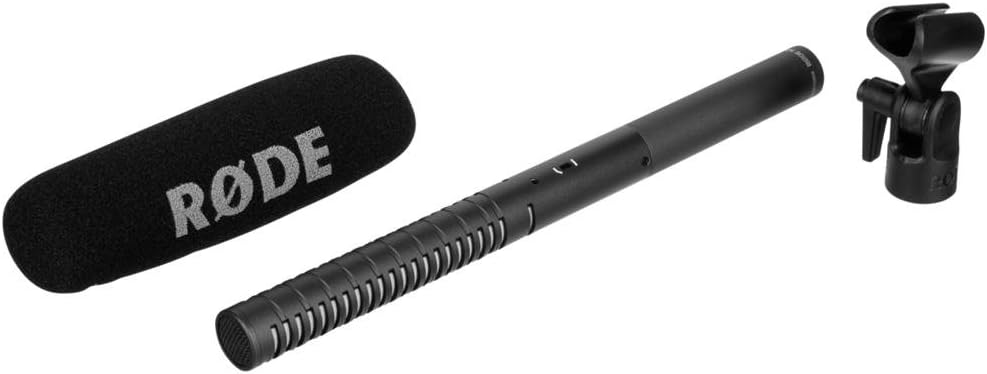
The RØDE VideoMic Pro+ is the premium on-camera selection, pairing a 4.6 rating with a robust suspension system and extensive power options. Its feature set is aimed at producers who want dependable source capture without constantly changing batteries or operating complex controls. It remains particularly relevant for location narration, corporate video, documentary work, and polished voice-over recorded beside a camera.
We may earn a commission when you buy through this link, at no additional cost to you.
The built-in Rycote Lyre suspension continues the strengths associated with the earlier VideoMic Pro while the capsule, line tube, and windshield have also been improved. Automatic power management turns the microphone off when unplugged when the connected camera supports plug-in power. Users can operate it with the included lithium-ion rechargeable battery, two AA batteries, or continuous Micro USB power.
Digital switching is intended to improve capture at the source and reduce corrective work during editing. Despite those strengths, the microphone is less convenient than a simple USB model for computer-only voice-over, and its professional controls take more study. The absence of a directly stated USB audio output also means users should confirm their exact recording path and required cables before buying.
For a production team that values ruggedness, isolation, and power flexibility, the VideoMic Pro+ is an excellent premium choice. A single creator working primarily with a laptop may find the VideoMic NTG more direct, while a mobile vlogger may prefer the simpler GO II. Its strongest audience is someone who expects the microphone to handle demanding, changing production conditions.
The Rycote Lyre system remains a standout feature because it reduces the transfer of bumps and handling vibration into the recording. That protection supports cleaner narration in run-and-gun work.
The included rechargeable battery, AA option, and continuous USB power cover different shooting patterns. Automatic shutoff adds convenience without replacing careful level management.
We may earn a commission when you buy through this link, at no additional cost to you.
The Movo X1-Mini is a compact hybrid microphone designed for cameras, phones, tablets, computers, and audio recorders. Its 4.4 rating reflects a versatile connection strategy and a useful combination of analog and digital operation. It is a particularly interesting option for creators who alternate between recording a camera take and capturing a separate computer narration.
We may earn a commission when you buy through this link, at no additional cost to you.
The bundled 3.5mm TRS and TRRS cables cover many camera and smartphone arrangements, while the USB-C cable supports compatible digital devices. The supercardioid pattern helps exclude distracting off-axis sound, and the digital mode is stated to support up to 24-bit resolution. An integrated shock mount, aluminum body, foam windscreen, furry windscreen, and carrying case make it portable and reasonably complete.
Compatibility is still model-dependent. Older phones and some camera ports may need different cables, and the stated digital resolution does not guarantee that every host device captures the signal at that level. As with any directional microphone, positioning matters: mounting it on a distant camera is less effective than placing it close to the speaker on a boom.
The X1-Mini is best for a creator who wants one small microphone to move between a phone, computer, and camera. Its wired approach and included analog cables make it less convenient than a purely wireless setup, but the combination of focused pickup, shock isolation, and multiple outputs serves many mobile production needs.
Separate analog and USB-C options make the X1-Mini useful across camera and computer workflows. The included cable selection also reduces setup uncertainty for many common devices.
The supercardioid pickup is most effective when the microphone is near the voice and aimed correctly. Moving it onto a boom or positioning it close to the speaker can improve intelligibility and reduce room reflections.
We may earn a commission when you buy through this link, at no additional cost to you.
The Rode NTG-2 is a traditional field shotgun microphone whose dual-powered design remains useful in fixed and mobile production. Its 4.6 rating reflects a focused pickup pattern, low noise, full frequency response, and an easy-to-use control set. It is a strong fit for voice-over artists who record to a dedicated field recorder, mixer, or audio interface.
We may earn a commission when you buy through this link, at no additional cost to you.
Its most notable feature is the ability to operate from either P48 phantom power or an AA battery. That flexibility lets the same microphone work in studio-adjacent setups and remote locations where phantom power is unavailable. The switchable 80Hz high-pass filter helps reject traffic rumble, handling energy, and other low-frequency disturbance.
The NTG-2 is intentionally simple compared with digital hybrid models. It does not provide USB recording, headphone monitoring, gain adjustment, or automatic device detection. A separate recorder and suitable connection are required, and users must take responsibility for output level and microphone placement.
It is a compelling field choice for documentary, broadcast, and location narration where focused sound pickup and flexible powering matter more than direct computer connectivity. The VideoMic NTG is easier for a mobile creator who wants one device to work with cameras and USB hosts, but the NTG-2 remains a proven option for a dedicated recording chain.
Phantom power and AA battery operation make the NTG-2 adaptable to both equipped studios and remote recorders. The dual-power design also allows continuity when different equipment is available.
A highly directional response can help isolate narration from background sound. The 80Hz filter adds another layer of rumble control without turning the microphone into a complex processing tool.
We may earn a commission when you buy through this link, at no additional cost to you.
The RØDE VideoMic GO II focuses on uncomplicated operation. Its 4.6 rating makes it one of the strongest choices for creators who want a compact microphone that can move from a camera to a computer or phone without extensive setup. The model offers 3.5mm TRS and digital USB output while drawing power from the connected device.
We may earn a commission when you buy through this link, at no additional cost to you.
There are no complicated switches or battery requirements, which makes the GO II approachable for first-time camera microphone buyers. The included deluxe windshield and HELIX isolation mount protect against knocks, bumps, handling noise, wind, and plosives. Compatibility with RØDE Connect and RØDE Central also gives compatible users access to high-pass filtering, high-frequency boost, and pad functions.
Users seeking physical control over gain and processing may find the microphone limited. The advanced features named in the supplied information are accessed through compatible software rather than through a comprehensive set of onboard controls. It is also less specialized for boom work because it is designed primarily as an ultra-compact on-camera microphone.
The GO II is an excellent choice for streamlined video narration, web tutorials, streaming, and on-camera presentations. It suits users who value simplicity and broad connection options more than extensive analog controls. For a dedicated field boom, the NTG-1 or NTG-2 offers a more traditional microphone shape and workflow.
The GO II removes batteries and complicated switches from the recording process. Connecting a supported device is enough to begin capturing, which is valuable for fast production days.
The HELIX system addresses knocks and vibration while the microphone remains device powered. The deluxe windshield adds a useful barrier against plosives and environmental noise.
We may earn a commission when you buy through this link, at no additional cost to you.
The Movo VXR10 is a budget-friendly directional microphone for creators who want clearer narration than a built-in camera or phone microphone can provide. Its 4.3 rating reflects a practical package aimed at vlogging, interviews, podcasting, streaming, and general social-video production. It also fits a broad range of cameras, phones, tablets, and laptops.
We may earn a commission when you buy through this link, at no additional cost to you.
The aluminum body and integrated shock mount make it more travel-friendly than a bare microphone, while the directional pattern focuses on the subject and rejects distractions from the sides. The box includes a fuzzy windscreen, carrying case, camera cable, original and Rycote shock mounts, and a smartphone cable. That accessory list makes it convenient for a new creator building a first portable kit.
The VXR10 requires a 3.5mm microphone input and plug-in power. Newer Lightning and USB-C phones may need an appropriate adapter, and some cameras do not accept external microphones at all. The supplied guidance recommends positioning the microphone between one and five feet from the subject, since excessive proximity can cause distortion while excessive distance may produce a muffled result.
It is the best budget pick for a creator who wants focused sound and included accessories without moving to a premium model. It does not offer digital switching, USB audio, headphone monitoring, or fine manual controls. Those limitations are acceptable when the goal is straightforward, portable narration in a reasonably controlled environment.
The inclusion of windscreens, cables, shock mounts, and a case gives new users the core accessories needed for mobile recording. This reduces the need to assemble a basic kit piece by piece.
A directional microphone does not remove every reflection or background sound. Keeping it a sensible distance from the voice and monitoring the result helps prevent the distortion or muffling warned about in the product guidance.
We may earn a commission when you buy through this link, at no additional cost to you.
The ZealSound Podcast Microphone, also identified in the product information as the K66, is not a true shotgun microphone. It is included because its USB connectivity, cardioid pattern, and extensive monitoring controls make it a strong desktop alternative for narration recorded in a fixed location. Its 4.4 rating reflects broad compatibility and useful controls for voice-over and online content.
We may earn a commission when you buy through this link, at no additional cost to you.
The condenser capsule covers a stated 40Hz to 18kHz frequency response, uses a 46kHz sampling rate, and provides real-time zero-latency monitoring through a 3.5mm headphone connection. Physical controls cover microphone volume, monitoring volume, and echo. A noise reduction mode is activated by holding the mute button, while an LED indicates mute status and the active noise-reduction state.
Its most important limitation is acoustic rather than electrical. A cardioid desktop microphone will collect more reflections and ambient sound than a supercardioid or shotgun model, especially in an untreated room. It is therefore most appropriate for a quiet booth, furnished studio, or consistently controlled office rather than a noisy location with significant reverberation.
For a narrator who always records at the same computer and wants direct USB operation, this is a convenient alternative. It should not be chosen specifically to reject off-axis sound. If that isolation is the main requirement, a proper shotgun such as the VideoMic NTG, GO II, or Movo VXR10 is the more logical choice.
Zero-latency headphone monitoring helps the user identify clipping, uneven delivery, and unwanted room sound while recording. Separate microphone and monitoring volume controls make live adjustments straightforward.
The plug-and-play USB design requires no drivers, apps, or installation for basic recording. Included USB-C and Lightning adapters broaden its usefulness for compatible mobile devices.
We may earn a commission when you buy through this link, at no additional cost to you.
The RØDE NT1 Signature is a studio condenser rather than a shotgun microphone, but it deserves consideration for voice-over artists who work in a dedicated room. Its 4.6 rating and long-standing large-diaphragm voicing make it a natural option for narration, audiobook work, vocals, and streaming where a polished and intimate presentation is desired.
We may earn a commission when you buy through this link, at no additional cost to you.
The tight cardioid pattern focuses on the sound in front of the microphone while rejecting some room sound. The stated very low self-noise is particularly valuable for quiet home-studio recordings because it reduces the microphone's own contribution to the noise floor. A shock mount, pop filter, XLR cable, and dust cover are included, making the core vocal setup straightforward.
The tradeoff is the need for an XLR-capable audio interface or preamp with phantom power. The microphone is also more sensitive to reflections than a shotgun and offers no direct USB connection, onboard digital controls, or off-axis rejection designed for a noisy location. In a reflective room, acoustic treatment and close positioning remain important.
This is the strongest dedicated-studio alternative in the list, especially when the narrator's voice and room acoustics are controlled. A professional who needs background rejection, portability, or camera operation should choose a true shotgun. A professional who records every session from a fixed booth and values tonal detail and low self-noise may prefer the NT1 Signature instead.
Very low self-noise gives the recording system more room to preserve subtle vocal detail. This is valuable in a treated booth where the desired signal may be quiet and the ambient noise floor is already low.
The included shock mount, pop filter, and XLR cable cover the main physical needs of a vocal session. An interface with phantom power remains the one significant addition a new user should plan for.
We may earn a commission when you buy through this link, at no additional cost to you.
The right microphone depends on the voice, recording room, equipment, and level of mobility. Consider signal quality and directional performance alongside power, monitoring, connection, mounting, and accessory requirements.
Choose strong directional behavior for noisy or uncontrolled spaces. For a treated studio, prioritize voice detail and low self-noise over off-axis rejection.
Match the output to your recorder, not merely to your phone or camera. Verify ports, adapters, and software support before purchasing.
Prefer device power for simplicity, batteries for independent field use, and phantom power for professional recording chains.
Prioritize real-time monitoring and understandable gain controls. Check whether advanced functions require compatible desktop or mobile software.
Look for reputable shock isolation and an included windscreen. Match the wind protection to the recording environment.
Choose a mount that matches the production style. Get the microphone close to the mouth and verify that off-axis sound is not entering the pickup path.
Inventory your existing cables and ports before ordering. Bundled accessories can complete the setup, but no package overrides an incompatible connection.
Use a true shotgun for focused or mobile recording. Consider a conventional condenser when the priority is a controlled studio vocal sound.
Begin by confirming that the destination device supports the microphone's output, power method, and any digital control features. Connect the appropriate cable, wait for the operating system or recorder to recognize the microphone, and perform a short test recording before beginning a full session. Set input gain conservatively, speak at the level you will use throughout the recording, and check the waveform or recording meters for clipping.
Position the microphone above, below, or slightly in front of the narrator according to the available mounting arrangement, then angle it toward the mouth. Keep it close enough to limit room sound, but avoid placing it so near that plosives become excessive. Use the supplied shock mount and windshield, and record a short test in the actual room to identify reflections, traffic noise, HVAC sound, or handling vibration.
After use, disconnect the microphone before changing cables or removing batteries where applicable. Wipe the body gently, keep the capsule dry, and let any trapped moisture dry before storing it. Store the microphone in a protective case with the windscreen fitted, avoid leaving it near heat or direct sunlight, and use a dry, stable environment to protect the capsule, suspension, and electrical contacts.
A shotgun microphone is usually better when recording in a noisy or uncontrolled environment because its focused pickup helps reduce sound arriving from the sides and rear. A conventional condenser is often preferred in a quiet, treated studio because it can provide a polished and natural vocal sound with less aggressive off-axis rejection. The best choice depends on the room, recording position, and how much isolation the project requires.
Yes, a shotgun microphone can be an excellent voice-over tool, particularly for narration recorded in less controlled rooms. Its directional response can make dialogue easier to understand and reduce distracting background sound. Close placement, a suitable windscreen, good shock isolation, and careful gain control remain important. A studio condenser may provide a more natural result when the room is already quiet and well treated.
The ideal distance depends on the microphone, recording style, and room, but positioning it as close as practical is usually the safest starting point. The Movo VXR10 guidance suggests approximately one to five feet, with too much distance potentially creating a muffled result. Very close placement can exaggerate plosives or create an unnatural voice, so listen to a test take and adjust accordingly.
Not necessarily. The VideoMic NTG, VideoMic GO II, Movo VXR10-PRO, and Movo X1-Mini can use device-powered operation in their supported configurations. Other models may use AA batteries, a proprietary rechargeable battery, or P48 phantom power. Always check the microphone's requirements and the power capabilities of the exact camera, recorder, interface, or computer you intend to use.
Many can, but the phone must have a compatible external microphone connection or a suitable adapter. Some recent phones require a USB-C-to-3.5mm or Lightning-to-3.5mm adapter, and the correct TRS or TRRS cable must match the microphone and phone arrangement. Phone models can also differ in how they route external microphone and headphone signals, so a short test recording is essential.
Both concentrate pickup toward the front, but their patterns and off-axis behavior differ. A shotgun typically has a very narrow lobe intended to reject sound from the sides and rear, while a supercardioid balances strong front focus with a small rear region of sensitivity. In practice, the room and speaker placement can influence results as much as the label, making real-world testing important.
A separate pop filter is not always required because most models include a foam or furry windscreen that helps reduce plosives. A dedicated pop filter can still be useful for close studio narration, particularly when a thin windscreen is used. The solution should be chosen so that it does not obstruct the microphone's intended pickup or create excessive pressure close to the capsule.
Yes, if the microphone offers a compatible USB audio output and the computer recognizes it as an input. The VideoMic NTG, VideoMic GO II, and Movo X1-Mini include digital connection options, while the ZealSound podcast microphone provides a direct USB workflow. An analog microphone can also be used with a suitable interface, and professional XLR models require an interface or preamp with phantom power.
The Rode VideoMic NTG is the strongest overall recommendation because it combines a focused shotgun design with analog and USB operation, automatic device detection, variable gain, and practical digital controls. The RØDE VideoMic Pro+ stands out as the premium selection for demanding on-camera work, while the Movo VXR10 delivers an approachable budget package with directional pickup, a shock mount, cables, and windscreens included.
Prioritize the recording environment before choosing a feature. A true shotgun is most useful when background rejection and mobility matter, while a conventional condenser can be better for a fixed, quiet studio. Also confirm output ports, power requirements, mounting needs, and monitoring before purchasing, because small compatibility details can determine whether a microphone is convenient or frustrating.
Product specifications, included accessories, ratings, availability, and prices can change, so check the current listing and compatibility details before ordering. Comparing the microphone with the recorder, cables, room, and voice-over style is the surest way to choose a model that supports a dependable recording workflow.
