
Garmin zūmo R1 Radar
3.4Editor score
Rearview and blind-spot radar
License-plate mounting system
HUD and external lights
Compare ten Radar Detector for Motorcycle systems across police radar alerts, rear blind-spot coverage, installation, displays, warnings, and weather resistance
Motorcycle radar safety equipment now spans two distinct categories: detectors that warn of police radar and laser signals, and blind-spot systems that monitor approaching traffic from behind. A useful purchase should suit your motorcycle, fit your riding environment, and provide information you can interpret quickly without distracting you from traffic.
We compared the supplied products by examining their detection technology, directional coverage, warning methods, environmental resistance, installation requirements, display information, and available connectivity. The list includes purpose-built police radar systems, motorcycle blind-spot detectors, and portable automotive detectors whose suitability may depend on mounting and power compatibility.
Each review explains the strongest feature, practical trade-offs, and ideal rider profile for all ten choices. Rankings reflect the information available for this guide rather than claims of personal testing. Product availability and prices can change, so confirm the current listing, specifications, and motorcycle fit before purchasing.
3.4Editor score

4.2Editor score

4.5Editor score
The comparison covers purpose-built police radar detectors, rear blind-spot monitoring systems, and premium motorcycle radar platforms, with each entry evaluated for alert type, coverage, installation, and riding-condition suitability.



The Adaptiv Technologies TPX Pro is a purpose-built motorcycle radar and laser detection system with a 4.2 rating. Its defining advantage is that it was designed around the realities of riding rather than asking an owner to adapt an automotive detector. It combines all-band police radar and laser detection, 360-degree coverage, camera-location data, and a motorcycle-oriented installation approach.
We may earn a commission when you buy through this link, at no additional cost to you.
The most useful strengths are practical ones. A daylight-visible, front-mounted angled LCD places critical information where a rider can check it without searching around the cockpit, while the ultra-bright adjustable LED can make alerts easier to notice. The supplied harness, quick-release plate, and compatibility with AdaptivMount or other mounts simplify installation. Waterproofing and vibration resistance also address common motorcycle concerns that desktop-oriented automotive products may not emphasize.
There are trade-offs. The feature set can feel more involved than a basic alert module, and the audio output jack only provides integration potential unless a compatible sound or communication system is purchased. An optional wireless headset is likewise not necessarily included. Riders who want a self-contained, visually driven experience may need to plan those extras before installation. The camera database and updateable data points are also most valuable for riders who regularly travel near known enforcement areas.
This is the most compelling pick for someone seeking a dedicated motorcycle police radar and laser detector without making an automotive unit fit a bike. The combination of environmental protection, readable alerts, flexible mounting, and a straightforward installation supports the recommendation. Riders should still confirm handlebar or fairing clearance, choose a secure mounting position, and verify the compatibility of any optional headset or communication equipment before buying.
Unlike a generic car detector, the TPX Pro combines waterproofing, vibration resistance, large backlit controls, and a daylight-readable front display in a package intended for bikes. That motorcycle-specific design is particularly useful during poor weather or rough roads.
The system can present information through its adjustable LED, front LCD, and optional audio integration. This gives riders multiple ways to notice a threat and select a presentation method that suits their riding style.
We may earn a commission when you buy through this link, at no additional cost to you.
The TPX A-01-01 Version 2.0 is a motorcycle-oriented radar and laser detection system with a 4.4 rating, making it one of the better-rated products in the supplied group. It focuses on the core functions most riders expect: detecting all listed police radar and laser bands, providing 360-degree coverage, resisting weather, and delivering a conspicuous alert.
We may earn a commission when you buy through this link, at no additional cost to you.
Its advantages are clear and focused. The top-rated sensitivity is intended to help identify incoming signals, while the adjustable ultra-bright LED makes warnings easier to recognize in changing light. Waterproof construction gives commuters and touring riders confidence during wet rides, and the simple plug-and-play installation reduces the work required to add a detector to a motorcycle.
The main concern is that this is the Version 2.0 system rather than the newer TPX Pro. Its supplied information describes fewer user features, such as no explicit mention of an integrated camera database, smartphone connectivity, quick-release plate, front LCD, or optional headset integration. Some riders may prefer the simpler feature set, but others will want more information and flexible installation options.
This detector is best for a rider who prioritizes core radar-and-laser detection, broad directional coverage, and straightforward setup over sophisticated displays or connected features. It is also attractive for anyone seeking a higher-rated motorcycle-specific option. Before installation, check the available space around the controls, confirm that the alert can be seen safely, and route the wiring away from moving and hot components.
The Version 2.0 concentrates on all-band detection, 360-degree coverage, and a bright alert. That narrower feature set may be easier for new riders to understand than a detector offering several menus, connectivity modes, and notification settings.
Waterproof construction supports use in rain and changing road conditions. Paired with simple installation, it is a practical option for riders seeking dependable everyday monitoring without a complicated dashboard.
We may earn a commission when you buy through this link, at no additional cost to you.
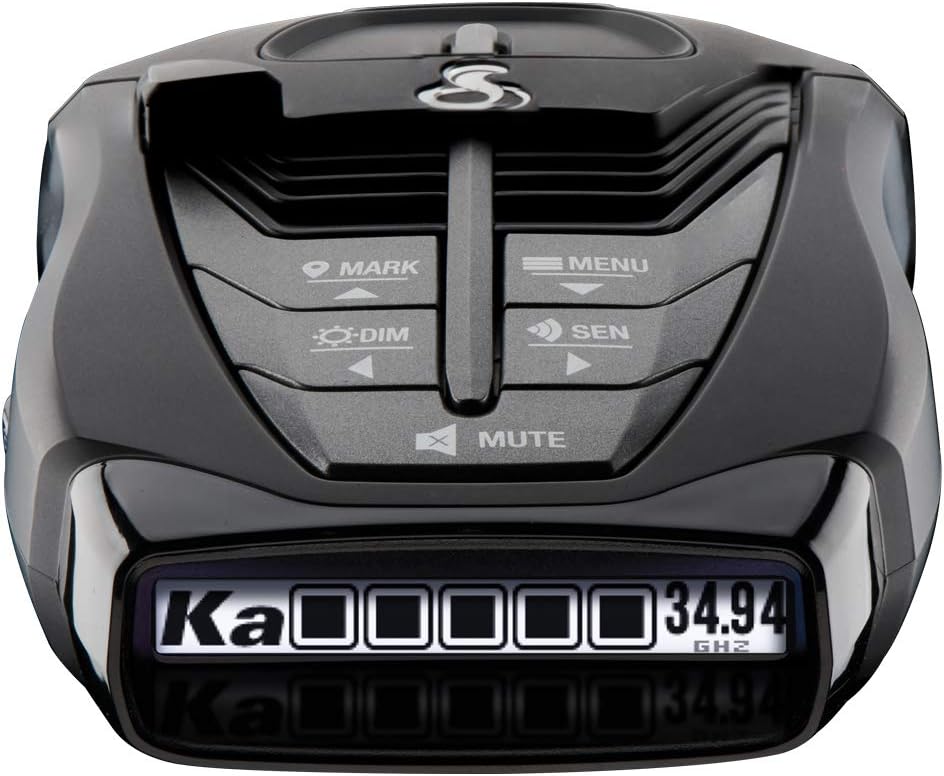
The Cobra RAD 480i is a long-range automotive radar and laser detector with a 4.2 rating. Its strongest features are front and rear LaserEye detection, updateable filtering, Bluetooth connectivity, and access to shared alerts through the Drive Smarter community. It is a sophisticated car-oriented product, so motorcycle suitability depends on secure mounting and a dependable power connection.
We may earn a commission when you buy through this link, at no additional cost to you.
Cobra's digital signal processing is intended to provide faster laser alerts, while the next-generation updateable IVT filter and anti-falsing circuitry help limit alerts caused by other vehicle systems. The Drive Smarter platform adds another layer through shared community notifications, Apple CarPlay, and Android Auto compatibility. That makes the RAD 480i appealing to riders who want a connected device and already use a compatible smartphone or vehicle display.
Its included 12V power cord, suction-cup windshield mount, and hook-and-loop dash fastener confirm that this is primarily designed for cars. A biker would need a safe motorcycle mounting solution, vibration-resistant placement, and a way to power the unit without creating a loose cable or vulnerable connector. Its screen and controls may also be less convenient to check at a glance than a purpose-built motorcycle display.
The RAD 480i is best for technically confident riders who want long-range detection, front and rear awareness, and smartphone connectivity. It is less suitable for anyone requiring a fully integrated, weather-resistant motorcycle installation out of the box. Check the cockpit, power routing, and local display setup before choosing it over a dedicated motorcycle system.
Bluetooth and the iRadar app expand the RAD 480i beyond direct signal detection. Shared community alerts can provide information from other drivers, although the rider still needs an appropriate way to view notifications while safely operating the motorcycle.
Updateable IVT filtering and anti-falsing circuitry help suppress signals from blind-spot and avoidance systems. These features are useful in busy traffic, where excessive or irrelevant alerts can quickly make a detector frustrating.
We may earn a commission when you buy through this link, at no additional cost to you.
The Uniden R8W is Uniden's newest portable windshield-mount laser and radar detector in the supplied data, earning a 4.3 rating. It emphasizes detection performance, directional awareness, connected features, and clear hands-free notifications. Dual Blackfin processors and two antennas underpin its ability to identify signals from multiple directions.
We may earn a commission when you buy through this link, at no additional cost to you.
Voice alerts state the threat direction, band, and signal strength, which can give a rider more context than a simple on/off warning. Built-in GPS can remember locations that repeatedly create false alerts and mute them along familiar routes. Preloaded red-light and speed-camera locations, together with free database and firmware updates, add another information layer. Wi-Fi, Bluetooth, and R/TACH app support broaden the feature set further.
The important limitation is mounting. This is described as the best portable windshield-mount detector in Uniden's lineup, and the listed motorcycle benefits do not establish that the supplied housing is waterproof, vibration-resistant, or intended for handlebars. A windshield-mounted unit can also be difficult to inspect safely while wearing a helmet. Riders would need a secure, weather-appropriate installation and a reliable power source.
The R8W is a strong choice for riders who value rich directional information, voice prompts, and camera databases more than a turnkey motorcycle package. It suits a rider with a secure bike-specific mounting solution who understands how to integrate an automotive detector. Confirm power, vibration, visibility, weather exposure, and local display requirements before installation.
Dual antennas allow the R8W to identify where a signal originates, and voice alerts can communicate direction, band, and strength. This richer feedback is helpful when a rider needs to distinguish an immediate threat from a distant or unrelated signal.
GPS-based auto-mute memory can suppress recurring false alerts along familiar routes. This can reduce noise during daily commuting, although the detector still depends on the rider having compatible power and mounting.
We may earn a commission when you buy through this link, at no additional cost to you.
The Uniden R7 receives a 4.6 rating, the highest numerical rating among the ten supplied products. Its large multicolor OLED display, dual antennas, and directional arrows make it a particularly information-rich detector. It is marketed as an extreme long-range radar and laser system with GPS-based filtering and preloaded camera locations.
We may earn a commission when you buy through this link, at no additional cost to you.
The display can show up to four signals simultaneously, which is useful when several signals are detected in quick succession. Directional arrows help distinguish threats approaching from different sides, while the band and signal strength add further context. GPS memory reduces repeat false alerts, and free database and firmware updates help keep the red-light and speed-camera information current.
This product is a car-oriented portable detector, and its suitability on a motorcycle requires more planning. The product information does not state that the housing is waterproof, vibration-resistant, or equipped with motorcycle controls. A large display may also be difficult to view at a glance, and a windshield-style installation may not translate directly to a bike's steering or fairing geometry.
The R7 is most appropriate for a rider who wants a high-end detection display and already has a safe, secure mounting solution. Its simultaneous signal display and directional arrows are compelling for riders who want more detail than a basic warning light. Verify electrical connection, vibration exposure, visibility, and weather protection before relying on it during motorcycle tours.
The large OLED screen can display richer information than a simple LED module. Multiple colors and simultaneous threat indicators may help riders distinguish signal type, direction, and strength at a glance, provided the unit is mounted where it can be seen safely.
Dual antennas and arrows create 360-degree directional awareness. That makes the R7 useful for riders who want a comprehensive picture of detected signals rather than a single undifferentiated warning.
We may earn a commission when you buy through this link, at no additional cost to you.
The 24GHz Motorcycle BSD Blind Spot Detection System has a 4.9 rating, making it the highest-rated product in the supplied group. It focuses on rear-traffic awareness rather than police radar, using a compact radar sensor and indicator lights to warn of vehicles approaching from the left rear, right rear, or directly behind.
We may earn a commission when you buy through this link, at no additional cost to you.
Its coverage extends up to 98 feet across an approximately 130-degree area. Left-side traffic activates a yellow left indicator, right-side traffic activates a yellow right indicator, and a vehicle directly behind triggers both red indicators. That visual approach removes the need for a bulky screen, making the system attractive to riders who prefer a glanceable solution near the mirrors.
The system also includes target-speed filtering so alerts activate only above 1.9 mph, which is intended to reduce clutter from stationary or slow-moving objects. Its IP69K weather-resistant housing suits outdoor riding in rain, fog, and snow. The main compromise is power: direct USB setup works best for motorcycles with a compatible USB port, and riders without one may need a different connection solution.
This is a strong option for commuters and touring riders who want additional awareness of approaching traffic without a police radar detector. It is particularly helpful during lane changes and when mirrors are compromised by poor visibility. Confirm USB compatibility, indicator placement, local wiring regulations, and whether blind-spot monitoring is permitted in your area before installation.
Separate left, right, and rear indications communicate where a vehicle is approaching. This provides immediate positional context without requiring the rider to interpret a small screen while maintaining control of the motorcycle.
The IP69K radar housing is designed for outdoor motorcycle use in rain, fog, snow, and changing road conditions. A compact, screen-free design also leaves more room in the cockpit than a conventional display.
We may earn a commission when you buy through this link, at no additional cost to you.
The BSD01 is a motorcycle blind-spot and rear-collision warning system with a 4.5 rating. It uses 24GHz multi-antenna millimeter-wave radar to identify vehicles in the left rear, right rear, and directly behind the motorcycle, offering a 30-meter range and approximately 130-degree coverage.
We may earn a commission when you buy through this link, at no additional cost to you.
Its LED indicators provide a simple way to receive warnings, while the target-speed threshold of 10 km/h helps prevent clutter from low-speed objects. The system is described as fully waterproof, dustproof, and fogproof under IP69K, and its stated operating range extends from minus 40 to 176 degrees Fahrenheit. Those characteristics make it particularly suitable for year-round commuting and touring.
Installation is more involved than a direct USB arrangement. The positive wire connects to the motorcycle ACC line, the negative wire connects to the battery, and the system is designed to turn on and off with the bike so it does not drain the original battery. Riders who are not comfortable with basic wiring should use a qualified installer or consult the electronic manual available through the supplied QR code.
The BSD01 is best for riders seeking a rugged rear monitoring system with strong weather protection and a three-direction warning pattern. It adds awareness for lane changes and helps compensate for limited mirror visibility during rain, fog, or nighttime riding. Confirm the installation location, cable routing, indicator visibility, and compatibility with the motorcycle's electrical system.
The system monitors the left rear, right rear, and center rear, which directly addresses common blind spots during lane changes. Dual-stage warnings are intended to give riders timely information before a maneuver becomes more difficult.
IP69K protection and broad temperature tolerance suit motorcycles exposed to rain, dust, fog, snow, and seasonal temperature changes. The system is designed as a persistent safety aid rather than a fair-weather accessory.
We may earn a commission when you buy through this link, at no additional cost to you.
The Cobra RAD 700i is a premium detection-range radar and laser detector with a 4.2 rating. It combines a new antenna platform, digital signal processing, GPS-based filtering, AutoLearn behavior, and a five-color OLED display, delivering a more advanced feature set than the RAD 480i.
We may earn a commission when you buy through this link, at no additional cost to you.
The platform is designed to process laser signals quickly and provide front and rear protection through LaserEye technology. GPS filtering and AutoLearn help the detector recognize recurring false signals and become quieter over time. Riders can customize the OLED colors to match their environment, while the Drive Smarter ecosystem provides shared community alerts and compatibility with CarPlay and Android Auto.
As with the other Cobra units in the guide, motorcycle fit is the main question. The product information describes a vehicle-oriented detector and does not specify waterproof motorcycle housing, vibration isolation, or a bike-specific power lead. A large automotive-style display may also demand a carefully chosen mounting position. Community alerts are useful only if the rider can receive and understand them without distraction.
The RAD 700i is recommended for a rider seeking sophisticated detection processing, directional coverage, and a customizable display, along with connectivity. It is most practical when the owner already knows how to create a secure, powered motorcycle installation. Verify cable reach, control visibility, app operation, weather exposure, and local laws before purchasing.
The combination of GPS filtering and AutoLearn is intended to suppress recurring false alerts. Over regular routes, this can make the detector more useful by reducing signals the rider encounters repeatedly.
A five-color OLED display lets users adjust the presentation to their preferences. Clear customization can make threat bands and directions easier to distinguish, provided the display is mounted where it remains readable without pulling attention from the road.
We may earn a commission when you buy through this link, at no additional cost to you.
This 24GHz motorcycle blind-spot system has a 4.0 rating and focuses on a simple, compact solution for monitoring vehicles approaching from behind. It covers an approximately 130-degree area out to 98 feet, using low-profile indicator lights to communicate left, right, and direct-rear traffic.
We may earn a commission when you buy through this link, at no additional cost to you.
The alerts use yellow lights for traffic on either side and red indicators when a vehicle is directly behind. A dedicated USB cable can draw power from a compatible motorcycle USB port, reducing installation work and leaving the cockpit uncluttered. The IP69K weather-resistant housing is also suitable for daily riding through rain, fog, snow, and other changing conditions.
Compared with the closely related 24GHz system in this guide, its stated target-speed filter activates above 6.21 mph rather than 1.9 mph. This may reduce unwanted warnings, but it can also omit slower vehicles that still represent a relevant traffic condition. The system does not detect police radar, laser, or camera enforcement, and it cannot replace careful mirror checks or shoulder checks.
This product is best for riders with a compatible USB port who want inexpensive, compact rear awareness. It is especially practical for commuting, multi-lane highway riding, and situations where poor visibility makes blind spots harder to judge. Check the USB output rating, cable length, indicator position, and local blind-spot-device regulations before installation.
Low-profile indicators can be placed near the mirrors or another visible area, avoiding the need for a dedicated screen. The result is less visual clutter and faster interpretation while changing lanes.
A dedicated cable and direct USB connection can shorten installation compared with cutting into motorcycle wiring. Riders should verify that the motorcycle's port supplies suitable power and that the cable cannot interfere with steering or bodywork.
We may earn a commission when you buy through this link, at no additional cost to you.
The Garmin zūmo R1 Radar is a premium motorcycle rearview and blind-spot radar with a 3.4 rating. Unlike the police radar detectors in this roundup, it focuses on nearby vehicles, directional awareness, and integration with compatible Garmin navigation hardware or a smartphone through the zūmo Radar app.
We may earn a commission when you buy through this link, at no additional cost to you.
Heads-up indicator lights provide awareness of vehicles in the blind spots or behind the rider, while side-facing amber lights and an optional rear-facing red light increase the motorcycle's visibility to others. Full-screen radar views are available on a zūmo XT2 motorcycle navigator or a mounted compatible smartphone. Audio alerts can also be paired through the app and a headset.
The license-plate mount is sleek and intended to withstand weather and road conditions, though Garmin explicitly warns that adverse weather and wet roads may interfere with operation. Its rating is lower than those of the other products, so buyers should not treat the premium feature set as a guarantee of superior overall satisfaction. Environmental limitations also make continued rider awareness essential.
The zūmo R1 is ideal for riders already invested in the Garmin ecosystem or seeking a polished motorcycle-native system with rear, blind-spot, lighting, display, app, and audio-alert functions. It is less suitable for someone wanting police radar detection. Confirm compatibility with the intended navigator or phone, mounting requirements, local legality, and operation in heavy rain before installation.
The system combines external warning lights with heads-up indicators. Amber side lights and an optional rear light increase visibility to other road users, while the internal indicators help the rider monitor nearby vehicles.
Compatible zūmo XT2 navigators and mounted smartphones can show a full-screen radar view, while headset audio delivers hands-free notifications. This creates a more integrated experience for riders with the required Garmin or mobile ecosystem.
We may earn a commission when you buy through this link, at no additional cost to you.
The right motorcycle safety system depends on the threats you want to monitor, the electrical layout of your bike, and how you prefer to receive alerts. These factors separate dedicated police radar detectors from rear blind-spot radar and help narrow the field before installation.
Police radar detectors monitor law-enforcement radar and laser bands, while blind-spot detection systems use radar to identify vehicles approaching from the side or rear. The first category helps with speed-enforcement signals; the second addresses lane-change, merging, and limited-visibility risks. These are different jobs, and a motorcycle radar detector listing may describe either one. Buyers should decide which warning they actually need rather than assuming every radar device performs both functions.
Coverage can mean several things. Police radar systems may provide 360-degree detection, directional arrows, front and rear LaserEye coverage, or a specified signal range. Blind-spot systems may cover approximately 130 degrees, monitor three directions, or extend as far as 98 feet. Compare the alert area with common blind spots around your motorcycle, paying particular attention to direct rear, left rear, and right rear coverage. More range is not automatically better if the system becomes difficult to use or produces distracting alerts.
A motorcycle rider needs information that can be understood with minimal attention. LED indicators are fast and glanceable, an LCD can provide band and signal details, voice prompts can keep eyes ahead, and an app or navigator display can offer richer maps and vehicle positions. Consider helmet noise, ambient traffic, glare, screen visibility, and whether the display can be reached safely. Some systems support several methods, while others rely on one.
A system can perform well on paper yet become impractical on a particular bike. Purpose-built products may use quick-release mounts, front fairing placement, ACC wiring, or direct USB power. Automotive detectors may require a 12V connection and a custom mounting solution. Inspect handlebar clearance, steering movement, cable paths, view obstruction, fairing access, and vibration exposure. Secure every bracket and strain-relieve every cable so wind and road vibration cannot create a loose or snagged component.
Motorcycles are frequently exposed to rain, fog, snow, dust, temperature changes, and road spray. A weather-resistant housing is especially important for a rear radar sensor mounted near the license plate. IP69K is used by several blind-spot systems in this guide to indicate strong protection against dust and water, but the product should still be installed according to its instructions. Garmin also warns that wet roads and adverse weather may interfere with its radar operation, so weather resistance does not eliminate environmental limits.
Power options range from a simple USB cable to direct ACC and battery connections. USB is attractive for a faster installation, but the bike must have a compatible port with adequate output. ACC wiring permits automatic shutdown and avoids continuous battery drain, but it requires more care and may involve a cover, connector, or adapter near the battery. Automotive power cords can be adapted only if the installed system is suitably secured and protected from moisture and movement.
Bluetooth, Wi-Fi, companion apps, shared alerts, GPS, and camera databases can improve a detector, but they also add menus, charging needs, and potential distractions. Riders should establish how information reaches them before buying. A phone held unsecured can be distracting, while a compatible motorcycle navigator may offer a more stable solution. GPS route memory is useful for suppressing recurring false alerts, and camera databases can provide useful location-based notices, but neither replaces attentive riding.
Radar detectors, radar-based lane-keeping systems, and speed-camera alerts are subject to local restrictions that vary by jurisdiction. Blind-spot monitoring devices may also face rules concerning their use or installation. Check current local law before buying or operating any system. Also consider your usual riding environment: dense city traffic rewards directional awareness, while longer routes and frequent lane changes make rear radar especially useful. A motorcycle tourer may prioritize different features from a short urban commuter.
Begin by reading the product manual and identifying every component before connecting power. Mount the main unit or radar sensor in the recommended location, keeping the view or sensing angle unobstructed. Check that controls and indicators are visible from a normal riding position. If the system uses a windshield-style automotive mount, verify that the bracket, power lead, and display cannot interfere with steering, throttle movement, fairing operation, or a helmet visor.
Route cables along existing motorcycle wiring paths and secure them with appropriate ties or clips. Avoid sharp bends, moving parts, hot components, and the steering mechanism. For ACC-connected systems, follow the specified positive and negative connections so the unit powers down with the motorcycle. For USB-powered models, confirm the port's output and protect the connector from rain and pulling forces. Recheck all fasteners after the first longer ride because vibration can loosen brackets.
Operate the unit in its lowest distracting setting during an initial familiarization ride. Learn what each LED color, band indication, arrow, voice message, or proximity graphic means while the motorcycle is stationary. Review GPS route-memory and camera-update functions, if included, and test connectivity without interacting with a phone while moving. Periodically clean the sensor or display with a soft damp cloth, keep connectors dry, inspect mounting hardware, and confirm that software or camera databases remain current.
No. A police radar detector is designed to identify police radar and laser signals, often adding camera-location alerts. A blind-spot detection system uses radar to monitor vehicles approaching from the left, right, or rear. Some search results mix both categories, so riders should confirm the function before purchasing and should not expect one device to perform the other unless its specifications explicitly state that it does.
It may be possible, but compatibility depends on mounting, power, weather exposure, and visibility. Automotive detectors may vibrate, lack waterproof controls, or require a car power cord and bracket. A purpose-built motorcycle system generally offers a more secure installation and clearer integration with the cockpit. If using an automotive unit, confirm that it is firmly mounted, protected from the elements, and does not obstruct riding controls or demand unsafe screen attention.
A rear blind-spot radar system is generally the more relevant choice for lane changes because it identifies vehicles in the left rear, right rear, and directly behind the motorcycle. The systems in this guide use directional indicator lights to show the location of an approaching vehicle. They supplement, rather than replace, mirror checks and shoulder checks.
Several products use IP69K-rated housings intended to resist water, dust, and fog. Nevertheless, heavy rain, wet roads, fog, and other severe conditions may affect actual radar performance. Garmin explicitly notes that adverse weather and wet roads may interfere with its zūmo R1. Riders should use these systems as an additional awareness tool and remain fully responsible for observing surrounding traffic.
Usually, yes, when the motorcycle has a compatible USB port. It can reduce wiring and make the system easier to remove. You must still confirm electrical output, cable length, connector security, and routing away from steering and hot parts. ACC-connected systems may require more installation work but are designed to switch with the motorcycle and can avoid continuous battery drain.
Directional arrows identify where a radar or laser signal originates, which can be especially valuable when several signals are present. Simple LED alerts usually indicate a threat or, in blind-spot systems, use separate left and right lights to show a vehicle's position. The appropriate choice depends on how much detail the rider wants and how quickly that information can be interpreted on the road.
Some police radar detector systems do. The Adaptiv TPX Pro includes red-light and speed-camera data points with updateable information, while the Uniden R8W includes preloaded locations and database or firmware updates. Blind-spot systems such as the Garmin zūmo R1 and the 24GHz BSD units focus on nearby vehicles rather than enforcement-camera locations.
No. Rules differ by country, state, and local jurisdiction, and they can address police radar detectors, camera alerts, lane-use monitoring, and aftermarket blind-spot devices differently. Check current laws before purchase, installation, or use. A retailer listing and the presence of an ASIN do not establish that a device is legal for every motorcycle rider in every location.
The Adaptiv Technologies TPX Pro stands out as the most complete motorcycle-specific police radar and laser choice, combining a daylight-readable display, adjustable LED, waterproofing, vibration resistance, and a straightforward mounting system. The Garmin zūmo R1 is the premium selection for integrated rear and blind-spot awareness with lights, app or navigator views, and audio alerts. For compact rear monitoring, the BSD01 offers rugged three-direction radar and strong weather resistance.
Your priority should match the risk you want to reduce. Choose a dedicated police radar detector if your concern is enforcement signals, and choose a blind-spot system if your concern is vehicles approaching during lane changes or in poor visibility. Before buying any model, check the power connection, mounting position, weather exposure, display visibility, legal status, and whether the alerts are easy for you to interpret at a glance.
Product availability, technical revisions, and prices can change over time. Review the current listing and manufacturer information before purchase, especially for compatibility, included accessories, and the most recent operating requirements. The best device is not merely the one with the longest feature list; it is the one that securely fits your motorcycle, communicates clearly, and supports safer riding without creating distraction.