
NZXT H9 Flow RGB+
4.7Editor score
Spacious dual-chamber airflow design
Three RGB fans included
Ten-fan mounting capacity
Dual 420mm radiator support
Our dual system PC cases guide compares 10 dual-chamber, dual-system, and high-airflow enclosures for cooling, expansion, cable management, and compatibility.
Dual system PC cases can mean two independent computers sharing one enclosure or a single high-performance system organized around separate cooling chambers. The best examples balance airflow, motherboard compatibility, expansion options, cable routing, and convenient access. True dual-system designs are especially useful for workstations, developers, creators, and enthusiasts who want to run parallel operating systems.
We compared all ten cases using the supplied specifications, focusing on the number of systems or chambers they support, included cooling hardware, radiator clearance, graphics card accommodation, front connectivity, and practical cable-management features. The list includes both true dual-system chassis and dual-chamber cases, because both approaches can improve thermal separation and make ambitious builds easier to organize.
Each review explains who benefits most from the design and where trade-offs appear. Ratings and specifications reflect the available product information, while practical suitability depends on your hardware. Prices and promotions can change, so compare the current listing with the compatibility and cooling priorities described in this guide before ordering.
4.7Editor score

4.6Editor score

5.0Editor score
This side-by-side comparison covers genuine dual-system chassis, dual-chamber designs, and high-airflow cases with separated cooling or component zones. The key distinctions are system capacity, fan support, radiator clearance, graphics card handling, included hardware, and how effectively each enclosure organizes airflow and cables.
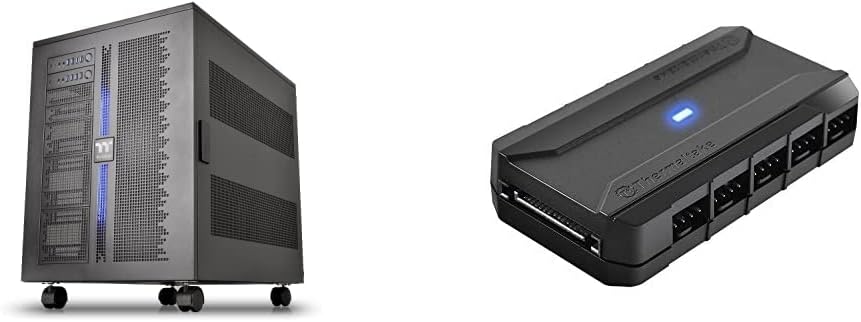


The Thermaltake Core W200 is the most literal interpretation of a dual system PC case in this guide. Instead of merely separating a power supply from the main components, its back-to-back chassis can accommodate two motherboards, two power supplies, and two graphics cards as independent systems. No numerical customer rating was supplied, but the core specification makes the Core W200 a specialist choice for parallel workstations, sandboxed environments, and advanced builders.
We may earn a commission when you buy through this link, at no additional cost to you.
Its fully modular and dismantlable construction is one of the most compelling features. The included Commander FP can power up to 10 PWM fans from the power supply, reducing the need for excessive fan headers and helping organize a cooling setup that may serve both installed systems. The case can also support two 600mm radiators, creating substantial potential for a highly customized liquid-cooling arrangement.
The trade-off is complexity. A back-to-back dual-system design requires more deliberate planning than a conventional tower, and the broad cooling options will feel excessive for a single compact workstation. The Commander FP bundle also includes reusable ties and Velcro tabs, but a builder with many additional accessories may still need more organizational supplies. These are acceptable constraints for a case whose central purpose is hosting two separate computers.
Choose the Core W200 when your project specifically benefits from two operating systems, isolated test environments, or separate workstation tasks within one chassis. It is less appropriate for an ordinary gaming build with one motherboard. For anyone committed to that unusual objective, its true dual-system architecture and liquid-cooling headroom set it apart from every conventional dual-chamber case in the list.
The Core W200 accepts two complete platforms, including separate motherboards, power supplies, and graphics cards. That makes it a more literal solution for parallel computing than cases that merely divide airflow zones.
Support for two 600mm radiators and ten powered fans creates unusual expansion potential. The Commander FP hub is particularly useful when the cooling system serves both sides of the back-to-back layout.
We may earn a commission when you buy through this link, at no additional cost to you.
The Cooler Master HAF II 500 carries a 4.8 rating and prioritizes airflow above nearly every other consideration. Its Mighty40 cooling system combines two 220 x 40mm front intake fans with a 180 x 40mm rear exhaust fan. Although the name includes “Dual” because of the pair of large front fans, this is not a case for two independent operating systems.
We may earn a commission when you buy through this link, at no additional cost to you.
The low-resistance ventilation design gives those large fans room to move substantial air through the chassis. MasterRail mounting supports several fan and radiator sizes at the front and top, making the case flexible enough for both a powerful air-cooled build and a more advanced liquid-cooling configuration. The split-level cable-management layout also preserves useful space behind the motherboard tray for an oversized rear exhaust setup.
Its standout hardware feature is the Dual-Mode GPU holder. It can clamp one graphics card for extra stability or support two cards up to 3.6 slots, or 72mm, thick each. That makes the case relevant to creators working with multiple professional GPUs, even though the systems share one power and cooling environment. The downside is that the case does not solve the isolation and management problems of a genuine dual-system chassis.
The HAF II 500 is a strong recommendation for a high-output workstation or enthusiast system that values airflow and GPU stability over strict operating-system separation. Its fan size, storage configuration, and motherboard clearances should be checked against large components, but for a thermally demanding single build, the included cooling hardware and adaptable mounting system are unusually compelling.
The oversized Mighty40 arrangement uses broad intake and exhaust openings to reduce resistance. That gives the included 220mm and 180mm fans an opportunity to cool demanding components without relying entirely on liquid cooling.
The adjustable GPU holder accommodates one card or two cards as thick as 72mm each. It is a practical alternative to a dual-computer chassis for workloads that need multiple accelerators within one operating system.
We may earn a commission when you buy through this link, at no additional cost to you.
The NZXT H9 Flow RGB+ earns a 4.7 rating and provides one of the most complete premium dual-chamber packages. Its design separates the power supply and drives from the primary components, creating cleaner cable routing and helping the main chamber maintain a more deliberate cooling path. The panoramic tempered glass treatment makes the divided interior visible without making the enclosure feel functionally divided.
We may earn a commission when you buy through this link, at no additional cost to you.
Cooling is a major strength. The case includes two F420 RGB Core single-frame fans and one F120 RGB Core case-version fan, along with an NZXT Control Hub. It supports up to nine 140mm fans across the top, front-right, and bottom, plus one 120mm rear fan. Perforated steel panels and angled front-right fans are designed to move air efficiently through a high-performance build.
Its size is the main compromise. The H9 Flow is a spacious ATX enclosure, so it may not suit a compact desk, and the included fan and control-hub package may still need expansion for a heavily loaded system. The rear fan uses a three-pin DC case version, which is worth noting for anyone mixing fan types. Despite those points, radiator support, GPU clearance, and the overall thermal layout remain strong.
This is the premium pick for builders who want an organized, visually polished dual-chamber system rather than two separate computers. It suits high-end gaming, creator, and workstation builds that benefit from generous cooling capacity. Buyers should simply confirm that its footprint and the included cooling configuration match the hardware they already own.
The dedicated chamber isolates the power supply and drives from the main hardware. That reduces clutter and supports a cleaner airflow path through the components that generate the most heat.
Two large RGB Core intake fans, a rear fan, and a control hub create a convenient starting point. Additional fan mounts and 420mm radiator support leave considerable room for thermal upgrades.
We may earn a commission when you buy through this link, at no additional cost to you.
The Antec Flux Pro is a full-tower E-ATX case built around expansion, and its 4.7 rating reflects a strong foundation for large systems. It combines metal, glass, and wood textures to produce a more distinctive appearance, while its multi-directional ventilation and six included PWM fans create a generous cooling foundation for workstation-class hardware.
We may earn a commission when you buy through this link, at no additional cost to you.
The case can hold as many as 12 fans simultaneously. Its bundled set consists of three Tranquil 140 PWM front fans, two P12R PWM reverse fans on the power supply shroud, and one Tranquil 140 PWM rear fan. Reverse shroud fans can direct air toward compatible CPU coolers, while removable cooling brackets on the top, front, and shroud allow cooling positions to be adjusted as the build evolves.
The innovative iShift mount lets the power supply sit at a 90-degree angle, and the CPU and GPU dual temperature display offers a useful at-a-glance readout. These features improve convenience, although the full-tower dimensions can dominate a workspace. Its simultaneous support for 420mm and 360mm radiators also demands careful clearance planning around the power supply and cable area.
The Flux Pro is best for users with substantial hardware, extensive expansion cards, or a build that may need many fans. It is less attractive when desk space is tight or when the goal is a modest system. Buyers who can accommodate the footprint gain a flexible chassis, plentiful cooling, and several practical management features.
E-ATX support and a full-tower layout provide room for extended motherboards, multiple cards, and substantial storage. The removable brackets also let builders adapt cooling positions instead of accepting a fixed internal arrangement.
The 90-degree power supply mount and dual CPU and GPU temperature display simplify everyday monitoring. These features are particularly handy in a large case where internal components are less immediately visible.
We may earn a commission when you buy through this link, at no additional cost to you.
The ASUS TUF Gaming GT502 is an ATX mid-tower that uses its dual-chamber layout for a specific thermal purpose. Instead of treating it as two mini-towers, the GT502 divides the main and rear chambers so the CPU and GPU can operate in independent cooling zones. Its 4.6 rating and clean, practical design make it one of the most balanced choices in the guide.
We may earn a commission when you buy through this link, at no additional cost to you.
The separation works well with the included vertical graphics card mount. A vertically installed GPU can receive air more directly from the lower intake area, while the bundled support bracket helps prevent sag. Builders can also install the graphics card conventionally in a motherboard slot, giving them flexibility between presentation, clearance, and airflow. Tempered glass at the front and side provides a tinted but broad view of the main chamber.
Tool-free side panels improve the build experience, and the front panel includes USB 3.2 Gen 2 Type-C, two USB 3.0 ports, and an RGB control button. The main limitation is semantic but important: the GT502 does not host two independent operating systems. It is a dual-chamber case, not a dual-system chassis. The supplied information also does not identify included fans, so a complete air-cooling or RGB plan may require additional components.
The GT502 is recommended for builders who want a gaming system with a long, powerful graphics card and a clear reason for separated cooling. It is particularly attractive when a vertical GPU mount is important. For true parallel-computer projects, choose the Core W200 or Capo X instead; for a conventional high-end gaming build, the GT502 may be the more practical choice.
The main chamber houses the visible performance components, while the rear chamber isolates power and cabling. Dividing the CPU and GPU into independent cooling zones can reduce the amount of hardware competing for the same internal airflow.
The included vertical mount offers a dramatic presentation and a favorable intake position for a long card. A bundled support bracket and conventional motherboard mounting make it possible to prioritize either aesthetics, clearance, or installation convenience.
We may earn a commission when you buy through this link, at no additional cost to you.
The ASUS ROG Strix Helios II is a premium showcase enclosure with a 4.3 rating, dual tempered glass side panels, and an aluminum front panel. Its diamond-grille design and three-dimensional filter give the case a distinctive identity, while the dual glass panels allow a broad view of showcase hardware from multiple angles.
We may earn a commission when you buy through this link, at no additional cost to you.
Four preinstalled 140 x 28mm performance fans provide a strong cooling foundation. The case supports E-ATX motherboards, graphics cards up to 450mm long, and radiators up to 420mm, giving it enough capacity for demanding components. A slot clamp helps secure the graphics card, while a detachable rear power supply bracket improves access during assembly.
Its multifunction cover integrates a power supply shroud, cable cover, and graphics card holders, and rear cable clips help control the final routing. The advanced I/O panel includes two USB 20Gbps Type-C ports, four USB-A 3.0 ports, and dedicated ARGB and PWM fan-speed controls. The trade-offs are the case's bulk and the fact that its 4.3 rating is lower than those of the most highly rated alternatives.
The Helios II is a good fit for a premium gaming or creator system where visual presentation matters as much as performance. It offers more conventional dual-sided visibility than many dual-chamber designs, although it is not designed to run two operating systems. Builders who need extensive E-ATX space and long graphics card clearance will find its capacity more valuable than the lowest possible desk footprint.
Dual tempered glass panels create a broader showcase than a conventional single-window tower. The aluminum front and structured filter preserve the visual theme while directing attention toward the internal components.
Support for E-ATX motherboards, 450mm graphics cards, and 420mm radiators makes the enclosure suitable for a broad range of high-end components. Four included 140mm fans reduce the need to begin with a bare chassis.
We may earn a commission when you buy through this link, at no additional cost to you.
The HAVN HS 420 combines a 4.6 rating with a hybrid dual-chamber structure that prioritizes graphics card cooling. Its airflow is directed from the bottom intake toward a centrally positioned GPU, making it an interesting option for compact high-performance builds where the graphics card is the primary source of heat.
We may earn a commission when you buy through this link, at no additional cost to you.
Cooling capacity is extensive. The case fits eleven 140mm fans, with custom ventilation across the panels, and supports 420mm radiators at the top, right, and bottom. The included PWM fan hub simplifies power distribution, while the SimpliCable system uses grooved guides to route cables vertically through the chassis. A VESA display mount and a three-way adjustable GPU bracket add further customization options.
The curved UniSheet glass panel is designed to reduce visual distortion, and flexible rubber pads isolate the fan brackets from the chassis to limit vibration and resonance. The downside is that the design is not a substitute for a true dual-system chassis, and its cooling strategy is explicitly centered on the GPU. Buyers should understand the intended airflow path rather than treating it as a generic room for any configuration.
The HS 420 suits advanced builders with a powerful, physically large graphics card who want extensive air or liquid cooling options. Its cable system, vibration isolation, and multi-position radiator support are particularly useful for a carefully planned single workstation. It is less necessary for a simpler system, but highly capable for a compact enthusiast build.
The hybrid chamber places the graphics card near the path of cool incoming air. That focus can be especially useful for long, high-power cards that generate substantial heat around the GPU and nearby VRAM.
Eleven 140mm positions and three 420mm radiator locations offer exceptional flexibility. The fan hub and grooved SimpliCable guides help keep a dense cooling and wiring configuration orderly.
We may earn a commission when you buy through this link, at no additional cost to you.
The NZXT H6 RGB+ is a compact dual-chamber ATX case with a 4.4 rating. Its dedicated secondary chamber isolates the power supply and cables, reducing visual clutter and keeping those components away from the main heat-producing hardware. Angled front-right fans target the hottest components rather than relying only on a general front-to-back airflow pattern.
We may earn a commission when you buy through this link, at no additional cost to you.
Ultra-fine mesh appears across the top, front-right, and right panels to encourage airflow, while a removable nylon filter protects the bottom intake from dust. The single-piece curved tempered glass panel is bent to minimize distortion and provide an uninterrupted view of the interior. An integrated adjustable anti-sag bracket supports large modern graphics cards while maintaining a neat appearance.
Unlike several premium rivals, the H6 ships without fans. That gives complete control over fan size, lighting, and budget, but it also makes it less convenient for buyers who want an immediately complete build. It supports ten standardized 120mm fans across the top, front-right, bottom, and rear, which is more restrictive than cases accepting 140mm and 180mm models.
The H6 RGB+ is best for compact ATX builds where organized internals and a clean visual presentation matter. It is also appealing for users who already know exactly which cooling hardware they want. Choose a fan-rich model instead if convenience, a ready-made RGB package, or large-fan support is the priority.
The H6 preserves a distinct secondary chamber despite its smaller footprint. Power and cables stay out of the main display area, creating a tidier build while supporting a more deliberate internal airflow path.
Because the case includes no fans, buyers can match every fan to their lighting and performance preferences. The trade-off is that a complete system requires additional purchases and more planning before assembly.
We may earn a commission when you buy through this link, at no additional cost to you.
The Thermaltake Capo X is a true dual-system case with a 5.0 supplied rating. Its cross-platform architecture allows two independent mATX systems to operate in parallel within one chassis, making it one of the most directly relevant products for anyone searching specifically for dual system PC cases.
We may earn a commission when you buy through this link, at no additional cost to you.
Both systems have individual I/O panels. The upper system provides power, reset, HD audio, two USB 3.0 Type-A ports, and a USB 3.2 Gen 2 Type-C port, while the lower system has a separate set located at the bottom front foot. This separation allows both operating systems to be controlled independently without repeatedly reaching into the enclosure.
Cooling is highly configurable, with support for up to thirteen 120mm fans, 420mm and 360mm radiators, and air coolers up to 180mm high. Hidden connector support is available for mATX motherboards such as ASUS BTF, MSI Project Zero, and Gigabyte Project Stealth. Two detachable clamp braces mount to the chassis frame and support the top and bottom of each graphics card.
The important limitation is hardware scale. Both platforms must use mATX motherboards, and each complete system needs its own processor, memory, graphics hardware, and operating-system setup. The case therefore offers great flexibility for developers and advanced users, but it is not an economical way to build a single ordinary PC. For genuine parallel operation, however, it is a highly capable and thoughtfully organized option.
Two independent mATX platforms can run separate operating systems at the same time. This is useful for development, testing, secure separation, or dedicating one side to a specialized task.
Each platform receives its own front I/O set, making everyday operation straightforward. The detachable dual GPU braces also reduce the risk of heavy graphics cards sagging across two long parallel systems.
We may earn a commission when you buy through this link, at no additional cost to you.
The Thermaltake View 380 TG is an ATX dual-chamber case with a 4.7 rating and an emphasis on visual presentation. Its pillarless front and side tempered glass panels create a broad view of the interior, while the separate chamber structure keeps the power and storage area apart from the main components.
We may earn a commission when you buy through this link, at no additional cost to you.
Four 120mm ARGB Lite fans with hydraulic bearings come preinstalled, giving builders a ready-made lighting and cooling foundation. The front I/O includes a USB 3.2 Gen 2 Type-C port, two USB 3.0 ports, and HD audio. Compatibility with hidden-connector motherboards also helps produce a cleaner front-facing cable appearance when the board supports that layout.
The case supports a maximum 360mm radiator and graphics cards up to 415mm long, which are meaningful constraints for builders considering multiple radiators or very long GPUs. It also does not provide separate power supplies or I/O for two operating systems. As with other dual-chamber products here, the label should not be mistaken for true dual-system capability.
The View 380 TG is a compelling choice for a stylish single gaming or creator system that needs a moderate amount of cooling and a strong glass presentation. It includes more lighting hardware than many competing cases at this level, helping reduce setup complexity. Those needing two independent computers should instead consider the Capo X or Core W200.
Four preinstalled ARGB Lite fans provide an immediately coordinated appearance. Their hydraulic bearings and 120mm format make them broadly useful for conventional ATX airflow configurations.
Hidden-connector motherboard support can remove several front-facing cables from view. Combined with pillarless dual glass, it creates a streamlined presentation around the installed components.
We may earn a commission when you buy through this link, at no additional cost to you.
The right enclosure depends on whether you need two independent computers or one system with separated cooling zones. Compatibility, thermal capacity, component size, expansion needs, and cable organization should guide the decision more strongly than the word “dual” alone.
A true dual-system case can host two independent platforms, usually with separate motherboards, processors, power supplies, graphics cards, and I/O controls. The Thermaltake Core W200 supports two complete systems in a back-to-back arrangement, while the Capo X is designed around two mATX platforms. A dual-chamber case instead divides one build into a primary hardware area and a secondary area for the power supply, drives, or cables. The H9 Flow, H6 RGB+, GT502, HS 420, Flux Pro, and View 380 TG fall into this broader category.
In short, choose a true dual-system design only when operating-system isolation or parallel operation is essential. For one powerful computer, a dual-chamber layout usually offers better space efficiency and a more conventional build experience.
Begin with the form factors the chassis supports. Most products in this guide accept ATX motherboards, but the two-system Thermaltake designs impose different restrictions. The Core W200 uses a specialized back-to-back architecture, while the Capo X is centered on compact mATX platforms. A single-system case may also need enough clearance for E-ATX boards, as offered by the Flux Pro and ROG Strix Helios II.
List every motherboard, expansion card, and cable before purchasing. Confirm that the board, CPU cooler, graphics card, power supply, and storage devices can coexist without blocking one another or forcing awkward cable routes.
Airflow capacity should be evaluated through more than the number of fans. Case dimensions, vent placement, fan thickness, radiator locations, and the path between intake and exhaust all affect results. The HAF II 500 begins with two 220mm intake fans and a 180mm exhaust fan, while the H9 Flow includes two 140mm RGB fans and a 120mm rear fan. The Capo X and HS 420 offer unusually high mounting counts for more elaborate configurations.
Match cooling capacity to component heat, not simply to aesthetics. Include the CPU cooler height, radiator thickness, fan and radiator clearance, and any rear-mounted equipment. More mounting positions do not guarantee better cooling if the arrangement creates restricted intake or competing airflow paths.
Long modern graphics cards can dictate whether a case is usable. The ROG Strix Helios II supports cards up to 450mm, the View 380 TG accepts up to 415mm, and the HAF II 500 can hold two GPUs up to 72mm thick each. The GT502 and H6 RGB+ include anti-sag or support hardware, while the Capo X uses detachable clamp braces for its two parallel graphics cards.
Check both length and thickness, including the space occupied by power connectors and side-mounted cables. A support bracket is valuable for long cards, but it still needs the correct mounting position and enough clearance from the case wall or intake fans.
Large radiator support provides flexibility, but each mounting position has a different purpose. The H9 Flow supports 420mm radiators at the top and front-right, the HS 420 adds a bottom position, and the Core W200 can accept two 600mm radiators. The Flux Pro supports simultaneous 420mm and 360mm installations. These figures are more meaningful when paired with explicit thickness and fan-clearance details.
Plan the radiator first if you intend to use liquid cooling. Confirm whether the specified fan or radiator combination includes additional clearance for tubing, reservoirs, pump blocks, and cable routing. Avoid treating a printed radiator size as proof that a large pump or reservoir will fit in the same area.
Cable management affects both appearance and serviceability. The GT502's rear chamber isolates power and storage, the H6 RGB+ uses dedicated channels and tie-down points, and the HS 420 provides grooved SimpliCable guides. The Core W200 bundle includes reusable ties and Velcro tabs for managing the substantial wiring associated with two systems.
Front-panel connectivity should be checked at the same time. The GT502 and Helios II include USB Type-C, while the View 380 TG and Capo X provide a USB 3.2 Gen 2 Type-C connection. The Capo X goes further by giving each of its two systems an individual I/O panel.
Case size affects every stage of ownership, from delivery to later upgrades. Compact dual-chamber models such as the H6 RGB+ may suit smaller desks, while full-tower cases such as the Flux Pro provide more expansion room. Tempered glass, visible fan lighting, vertical GPU mounts, and filtered intake panels also influence the final build experience.
Finally, account for what is in the box. The H9 Flow includes three RGB fans and a control hub, the Helios II includes four 140mm fans, and the View 380 TG includes four ARGB fans. The H6 RGB+ ships without fans, while several other cases have no fan package specified. A complete cooling plan may therefore require additional purchases.
Plan the layout before installing any components. In a true dual-system chassis, assign the top and bottom platforms, route each system's power and data cables separately, and confirm that both graphics cards can receive adequate intake air. In a dual-chamber case, use the secondary area for the power supply and storage while preserving the intended path from front or bottom intake to rear and upper exhaust.
Install fans and radiators in the case's intended direction, then connect the fan hub or control hub according to its supported headers. Use the supplied cable ties, clips, or Velcro straps to keep bundles flat and away from fans. Do not force a thick radiator into a mounting position without confirming both the fan and radiator clearance, and route pump or reservoir tubing without sharp bends or tension on the fittings.
For routine care, power down and disconnect the system before opening the case. Remove accumulated dust from intake filters and fan blades with controlled airflow, taking care not to loosen components. Check that filters do not restrict intake, that cables remain clear of rotating parts, and that the case feet provide stable support. True dual-system builds deserve extra attention because a loose cable or obstructed fan can affect both platforms at once.
A dual-system case can operate two independent computer platforms, each with its own motherboard, processor, memory, graphics hardware, and power supply. A dual-chamber case still contains one computer but separates the main components from the power supply, storage, or cable area. The latter can improve organization and thermal separation but does not provide two separate operating systems.
The Thermaltake Core W200 supports two separate systems in a back-to-back configuration, while the Capo X is designed for two independent mATX systems. The other cases use dual chambers or separated cooling areas for a single system. True dual-system cases require roughly twice as much core hardware and careful planning for power, cooling, and I/O.
They can be, because separating the power supply, drives, and cables from the main chamber reduces internal clutter and can create a cleaner intake-to-exhaust path. Actual performance still depends on fan placement, radiator location, component heat, and the quality of the airflow route. A poorly configured dual-chamber case will not automatically cool better than a well-ventilated conventional design.
The Core W200 bundle includes the Commander FP, which powers up to 10 PWM fans simultaneously. The HS 420 also includes a PWM fan hub, and the H9 Flow includes an NZXT Control Hub for managing the bundled fan setup. The H6 RGB+ supports ten 120mm fan positions but ships without fans, allowing complete cooling customization.
The Capo X is the clearest choice for parallel operation in a compact enclosure because it is designed around two mATX platforms. The H6 RGB+ and H9 Flow are dual-chamber cases for single systems, but they use different sizes and layouts. Always verify the case dimensions against the exact motherboard, CPU cooler, power supply, and graphics card before ordering.
Yes, although the cooling must be planned for every installed system. The Core W200 supports two 600mm radiators, while the Capo X supports 420mm and 360mm radiators along with up to thirteen 120mm fans. The Capo X also accepts air coolers up to 180mm high. Pump placement, tubing routes, reservoir space, and separate fan control remain important considerations.
Many are. The GT502, H6 RGB+, H9 Flow, and Helios II are designed for modern gaming hardware, but each has different length and thickness limits. The GT502 offers vertical mounting with support, and the H6 RGB+ includes an adjustable anti-sag bracket. Check the published clearance, connector space, and mounting position rather than assuming a full-size card will fit.
It depends on the model and cooling plan. The H9 Flow, Helios II, View 380 TG, HAF II 500, and Flux Pro include fan packages, while the H6 RGB+ ships without fans. Other listed models do not have included fan quantities specified. Confirm what is included, how many positions exist, and whether your desired radiator configuration still leaves room for fans.
The ASUS TUF Gaming GT502 stands out for a single high-performance system because its separate CPU and GPU cooling zones create a clear thermal purpose, while its vertical GPU mount and tool-free panels simplify ownership. The NZXT H9 Flow RGB+ is the premium option for buyers who want extensive airflow, integrated RGB cooling, and generous radiator support. For an authentic two-computer enclosure, the Thermaltake Capo X is the most approachable mATX-focused solution.
The Thermaltake Core W200 remains the specialist choice for back-to-back dual-system projects, offering two complete platforms and exceptional liquid-cooling headroom. Between these extremes, cases such as the HAF II 500, HAVN HS 420, H6 RGB+, Flux Pro, Helios II, and View 380 TG serve different combinations of airflow, size, expansion, and presentation.
Prioritize exact hardware compatibility before choosing by appearance or included fans. Measure the motherboard, graphics card, power supply, coolers, and radiators, and decide whether you need one computer or two. After that comparison, review the current listing, included accessories, and promotion details, since prices and bundle contents can change over time.
