
ATC Dissolved Oxygen Meter
4.3Editor score
Expanded 0–40 mg/L range
Automatic temperature compensation
Calibration powder and covers included
Compare the best dissolved oxygen sensors for aquariums, ponds, hydroponics, aquaculture, and labs, with key features and maintenance needs explained.
Dissolved oxygen sensors help reveal whether water contains enough oxygen for aquatic life, plant roots, fermentation, and other demanding applications. A useful sensor combines an appropriate measurement range with reliable temperature compensation, practical calibration features, and maintenance requirements suited to its environment.
This guide compares ten dissolved oxygen sensors spanning handheld meters, laboratory-grade probes, optical systems, and microcontroller-compatible kits. The comparison considers measurement capabilities, calibration methods, power options, accessories, environmental resistance, and the maintenance involved in keeping readings dependable.
Each review explains the strongest use case, important specifications, and legitimate trade-offs for its listed model. The three featured selections cover a budget digital meter, an editorially selected optical instrument, and a premium professional meter, though availability and pricing may change over time.
4.3Editor score

4.8Editor score
4.4Editor score
The comparison below places each option according to its sensor technology, measurement coverage, calibration approach, portability, and maintenance demands, helping narrow the field for education, hobby, industrial, or professional water-quality work.
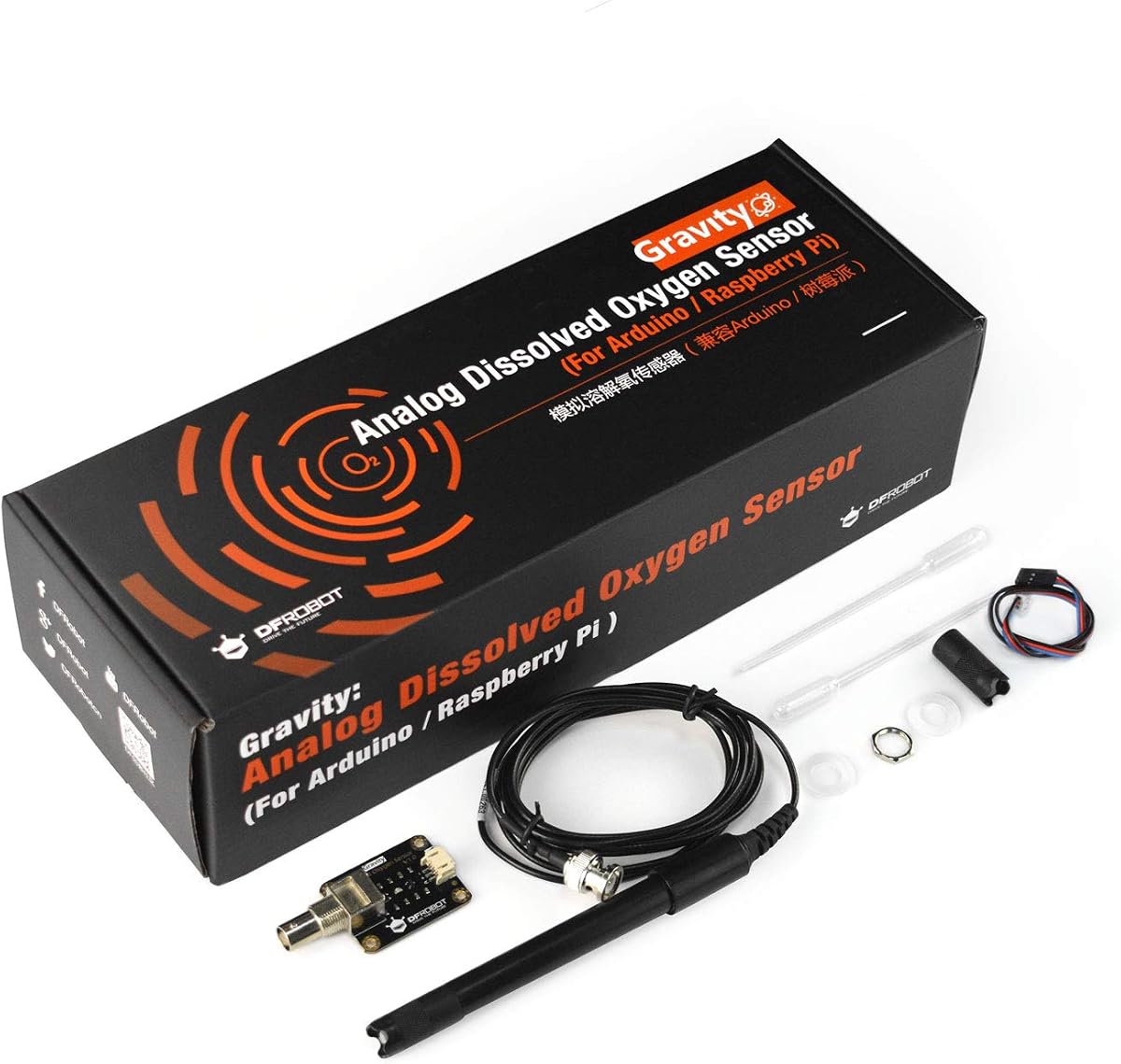


The Gravity Analog Dissolved Oxygen Sensor Kit is designed for makers, aquaponics projects, and connected water-quality installations that need a voltage output rather than a conventional handheld display. It holds a 4.4 rating and stands out through its galvanic probe, which needs neither preheating nor a polarization period, allowing rapid measurements when power is intermittent.
We may earn a commission when you buy through this link, at no additional cost to you.
Its detection range extends from 0 to 20 mg/L, while the stated response reaches 98% of the full response in about 90 seconds at 25°C. The converter board uses integrated hardware filtering to produce a smoother analog signal, which can reduce the software burden on Arduino, ESP32, and Raspberry Pi installations. A standard Gravity three-pin interface also simplifies connection.
Maintenance is managed through replaceable components rather than whole-probe disposal. A spare membrane cap is included, and both the cap and filling solution can be replaced. However, the required 0.5 mol/L NaOH filling solution is not included because of shipping restrictions, so buyers must obtain or prepare it before the sensor can operate.
This kit is best for builders who want to integrate oxygen readings into dashboards, automated controls, or IoT notifications. It is less appropriate for someone wanting a self-contained field meter because an ADC, wiring, calibration software, and filling solution may also be needed. For embedded projects, though, its combination of galvanic operation, filtered output, and documented code makes it especially versatile.
The lack of preheating or polarization is particularly useful in systems that power down between checks. Once correctly filled and calibrated, the probe can provide an immediate reading without a lengthy startup cycle.
Integrated hardware filtering produces a steadier voltage signal before data reaches the microcontroller. This can simplify firmware and reduce visible short-term signal jitter, although users must still follow the included calibration guidance.
We may earn a commission when you buy through this link, at no additional cost to you.
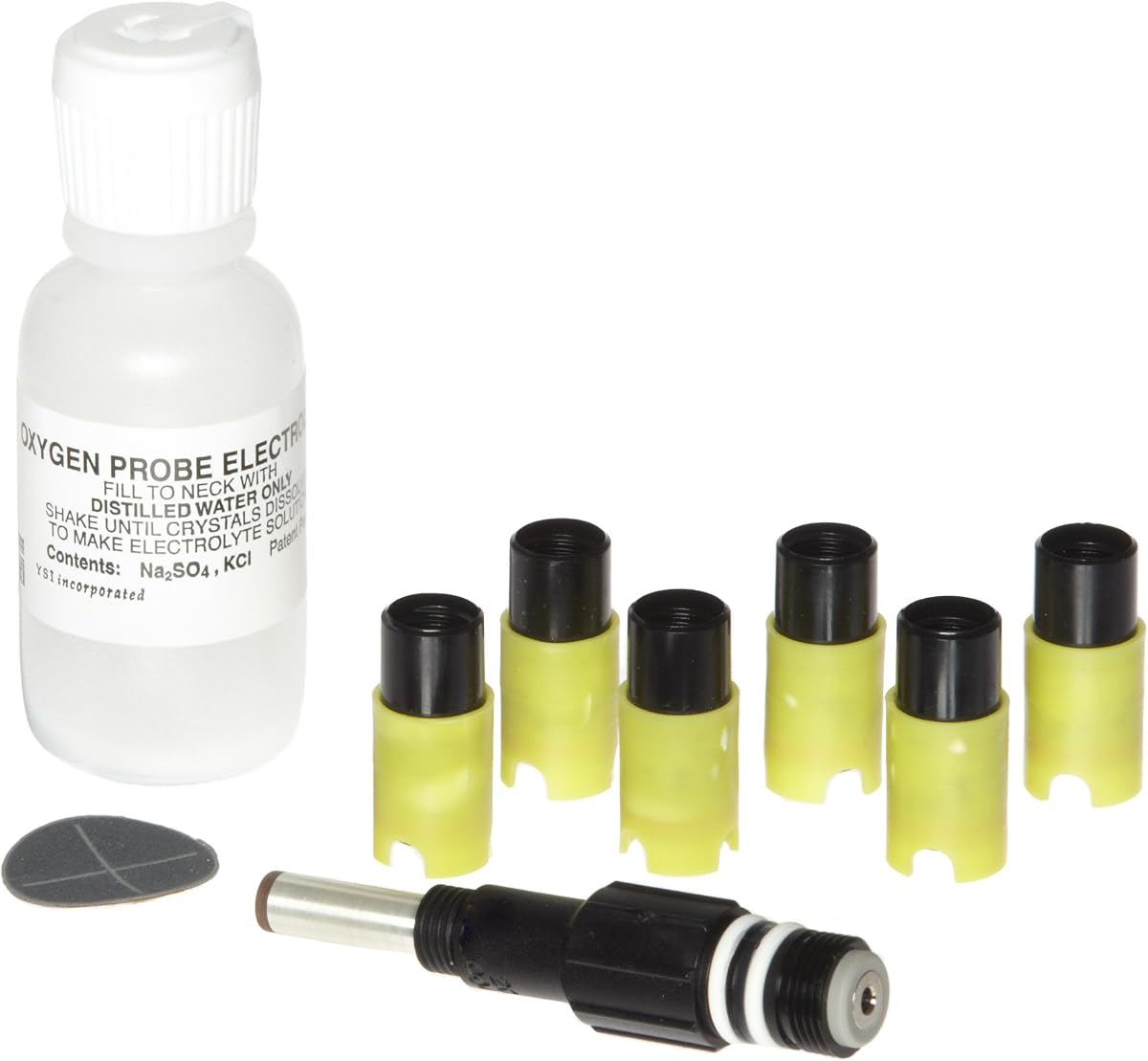
The YSI-605202 Pro Series is a 4.8-rated galvanic dissolved oxygen sensor intended for users who already own a compatible YSI instrument or need a replaceable probe rather than another complete meter. Its standout feature is a user-replaceable sensor that can be exchanged without tools, reducing downtime when a probe reaches the end of its service life.
We may earn a commission when you buy through this link, at no additional cost to you.
Membrane maintenance is also designed to be straightforward. Screw-on cap membranes simplify replacement, and the package includes six membrane caps along with a bottle of solution. That combination of consumables and tool-free procedures is particularly useful for field technicians who want to maintain a dependable spare kit without repeatedly sourcing individual parts.
As a sensor-only product, it does not provide the convenience of a built-in screen, data storage, or standalone measurement controls. Buyers need to confirm that the probe is compatible with their existing YSI equipment and follow the manufacturer’s procedures for installation, conditioning, calibration, and electrolyte handling.
The YSI-605202 is best for owners of compatible professional systems who value fast replacement and straightforward membrane service. It is less suitable for a first-time buyer seeking an all-in-one instrument, but for the right setup, its high rating, included consumables, and replaceable construction make it a strong long-term maintenance choice.
A replaceable sensor can restore instrument function without sending the entire meter for service. The no-tools approach and screw-on membrane design make routine maintenance more approachable for mobile crews.
Six membrane caps and an included bottle of solution provide useful backup supplies. The assortment gives users a practical maintenance reserve when frequent measurements make membrane wear more likely.
We may earn a commission when you buy through this link, at no additional cost to you.
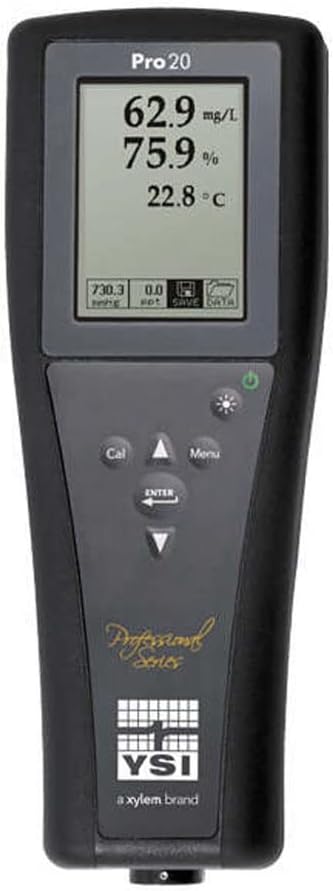
The YSI Pro20 is a professional handheld dissolved oxygen meter for users who need fast field operation, pressure compensation, and organized data collection. It carries a 4.4 rating, and its One Touch Cal function is the central attraction because it completes DO calibration within three seconds with a button press.
We may earn a commission when you buy through this link, at no additional cost to you.
Automatic barometric pressure compensation improves the meter’s suitability for measurements taken at different elevations and under changing atmospheric conditions. The instrument stores 50 data sets, reducing the need to record readings manually, while its graphic backlit display and glow-in-the-dark keypad improve visibility during fieldwork and poorly lit sampling conditions.
The listing identifies this configuration as meter only, so the package should not be assumed to include a complete sampling setup. Users should verify the required probe, consumables, and compatible accessories before purchase. A professional meter also calls for careful calibration and handling, even when the interface simplifies the process.
This Pro20 is best for environmental sampling, aquaculture field work, education programs, and other users who value quick calibration and stored results. It is a less natural choice for casual users wanting a basic pond tester, but its rapid workflow and field-oriented display make it a compelling premium handheld for repeated measurements.
A three-second One Touch Cal routine can reduce downtime between sampling points. Fast access to calibration is especially useful when a user must move through multiple locations while conditions are changing.
The ability to store 50 data sets helps preserve readings without relying on handwritten notes. The backlit display and illuminated keypad add practical usability during dawn, dusk, or enclosed sampling areas.
We may earn a commission when you buy through this link, at no additional cost to you.
The YSI 6900 ProDSS ODO is an optical dissolved oxygen sensor associated with the professional ProDSS platform. Rather than a basic standalone meter, it is positioned as a sensor option for users who build their dissolved oxygen measurement setup around a capable multi-parameter field instrument.
We may earn a commission when you buy through this link, at no additional cost to you.
Optical sensing is the key technical distinction. It avoids the operating model associated with electrochemical probes that can require electrolyte refilling and periodic membrane replacement, helping reduce day-to-day consumable maintenance. That makes the sensor attractive for repeated field sampling where consistent operation and reduced servicing are priorities.
The supplied information is limited, and no customer rating is available for this listing, so it would be inappropriate to make broad claims about accuracy, response time, battery life, or included accessories. Buyers should verify which ProDSS configuration, cables, calibration supplies, and instrument functions are required for the intended deployment.
This ODO sensor is best for experienced users who already use or intend to use a YSI ProDSS platform and want an optical DO option. It is less suitable for a first-time purchaser seeking a ready-to-use meter, so compatibility should be confirmed before ordering.
Optical sensors generally reduce the routine refill and membrane service associated with traditional electrodes. That can simplify workflows involving many sampling locations and repeated deployments.
Because the listing describes an individual sensor rather than a complete kit, the required meter and accessories should be identified early. Confirming platform compatibility prevents a mismatched purchase.
We may earn a commission when you buy through this link, at no additional cost to you.
The ATC Digital Dissolved Oxygen Meter combines an expanded 0–40 mg/L range with automatic temperature compensation, making it a practical choice for routine readings in aquariums, pools, ponds, aquaculture settings, and research. Its 4.3 rating reflects a well-rounded package for users who value functional measurement and included accessories over advanced data features.
We may earn a commission when you buy through this link, at no additional cost to you.
The broader range exceeds the common 0–20 mg/L interval, giving the meter flexibility for samples with higher or lower readings. Automatic temperature compensation operates from 0 to 50°C, while a straightforward LCD presents values at a glance. A low-battery indicator and automatic shutdown after eight minutes of inactivity help support unattended or intermittent use.
The kit includes six probe protective covers and anaerobic water calibration powder. A transparent bottle is provided for preparing anaerobic water, and the probe tip is placed inside it during zero calibration. The product information also notes that the membrane sleeve may need replacement if accuracy or calibration deteriorates over time.
This meter is best for hobbyists, educators, and light-duty professionals who need a straightforward dissolved oxygen tester without a complex data platform. The lack of a backlight makes bright sunlight and dark conditions less convenient, but the expanded range, ATC, and calibration supplies create a strong foundation for regular monitoring.
The 0–40 mg/L range is broader than the interval commonly offered by basic dissolved oxygen meters. It provides additional headroom for environmental samples and high-oxygen conditions.
Anaerobic water calibration powder and a preparation bottle help users establish the zero point. The included protective covers provide several replacements for the probe sleeve.
We may earn a commission when you buy through this link, at no additional cost to you.
The EZTOCH Digital Dissolved Oxygen Meter is designed around flexible pond, aquarium, hydroponic, fermentation, and environmental monitoring. Its 3.6 rating is the lowest among the rated selections here, so buyers should consider its complete feature set and practical limitations carefully rather than treating it as an equally strong all-around choice.
We may earn a commission when you buy through this link, at no additional cost to you.
The meter displays dissolved oxygen in both mg/L and percent saturation, covering 0–40 mg/L and 0–300%. A two-point calibration process at zero and full saturation supports accuracy, while the backlit display helps users read the instrument in dim conditions. Automatic shutdown after five minutes extends battery life between sessions.
The package includes a 3.6-foot, or 1.1-meter, electrode cable, zero-oxygen calibration solution, two bottles of electrolyte, and six membranes. The included consumables make the kit well supplied for maintenance, although the relatively short cable may require the user to position the meter close to the sampling point.
This meter is best for users who value dual units, a backlit screen, and a generous accessory package across varied applications. Its lower rating warrants checking recent customer feedback and verifying the included calibration workflow before committing, especially when a long cable or more advanced recording features are important.
mg/L expresses oxygen concentration, while percentage saturation shows how much oxygen the water holds relative to its saturation level. Having both units makes the meter useful for both pond care and general water assessment.
Calibration solution, electrolyte, and six membranes provide the core consumables needed for electrode care. The shorter cable should be considered when sampling deep tanks or locations beyond easy reach.
We may earn a commission when you buy through this link, at no additional cost to you.
The Multi-Parameter Dissolved Oxygen Meter is aimed at aquariums, fish tanks, aquaculture, environmental work, and education, combining oxygen measurement with temperature, salinity, and barometric pressure readings. Its 4.0 rating reflects a useful package, especially for users who want more than a single oxygen value from one instrument.
We may earn a commission when you buy through this link, at no additional cost to you.
The oxygen measurement range is 0–199.9%, equivalent to 0–19.99 mg/L, with a stated resolution of 0.01 ppm. Temperature covers 0–50°C, salinity spans 0–50 ppt, and barometric pressure covers 500–1499 mmHg. Automatic temperature compensation, manual salinity adjustment, a stability indicator, and a data hold function support routine interpretation.
Memory can hold 99 readings, and the listed IRDA port provides a data-transfer route rather than relying entirely on displayed results. The probe cable measures 11.48 feet, offering better reach in larger tanks or ponds than a short lead. A Clark-type electrode is specified with a stated sensor life greater than 12 months when maintained.
This is a good fit for aquarium hobbyists, educators, and field users who value multi-parameter capability. Its oxygen ceiling is lower than several alternatives in this guide, and the electrochemical electrode demands periodic care, but the long cable, memory, and broad supporting measurement set create a versatile package.
Dissolved oxygen, temperature, salinity, and barometric pressure readings can support a more complete water assessment. This reduces the need to carry separate instruments for basic aquarium and pond checks.
The long probe cable reaches awkward tank corners and deeper sampling points, while 99 memory locations preserve results. The data hold and IRDA port add options for reviewing and transferring readings.
We may earn a commission when you buy through this link, at no additional cost to you.
The Milwaukee MW600 is a portable dissolved oxygen meter for education, aquaculture, water analysis, and environmental assessment. Its 4.2 rating and straightforward LCD design make it approachable for users who need a dedicated field instrument rather than a complex multi-parameter setup.
We may earn a commission when you buy through this link, at no additional cost to you.
The listed measurement range is 0–19 mg/L with 0.1 mg/L resolution and stated accuracy of plus or minus 1.5 percent. A 100-percent saturation range expands the information available, while automatic temperature compensation covers 0–30°C. The polarographic probe connects through a three-meter cable, giving the user comfortable reach in tanks, ponds, and field containers.
Two-point manual calibration gives the operator direct control over the calibration process. That can be useful for teaching proper sensor preparation, although it also demands more care than automatic routines. Users should follow the instrument instructions for conditioning, calibration solutions, membrane care, and storage.
The MW600 is best for students, educators, and field users handling samples that typically fall within its 0–19 mg/L range. It is less versatile than units measuring temperature, salinity, and pressure, but its portable format, straightforward controls, and long probe lead make it well suited to hands-on water-quality work.
A dedicated LCD and portable body keep the instrument uncomplicated for teaching and routine analysis. The long probe lead supports sampling without requiring the meter to sit directly over the water.
The stated range, resolution, and accuracy give users concrete criteria for judging suitability. Automatic temperature compensation helps maintain consistency as water conditions vary during a session.
We may earn a commission when you buy through this link, at no additional cost to you.
The Apera Instruments AI480 DO850 combines an optical dissolved oxygen probe with a complete handheld kit, earning a 4.8 rating and the Editor’s Choice distinction. It is designed for users who want reliable dissolved oxygen measurements without the recurring solution refilling and frequent membrane changes associated with conventional electrode probes.
We may earn a commission when you buy through this link, at no additional cost to you.
The optical sensor is supported by automatic calibration for saturated air and zero oxygen, reducing manual steps while preserving defined reference points. A 10-foot probe provides useful reach for tanks, ponds, and field containers. The meter and probe are bundled with a calibration cap and rugged carrying case, making the package easier to transport and organize.
Environmental protection is another major strength. The IP67-rated structure is described as waterproof and dustproof, which is valuable in harsh working environments where a less protected instrument may be vulnerable to spray, dust, and routine handling. Optical technology also reduces the consumables burden, making the kit attractive for frequent testing.
The DO850 is best for aquaculture, water-quality professionals, educators, and serious hobbyists who value low maintenance and dependable optical sensing. It is less appropriate for minimal-budget users, and the probe should still be handled and calibrated carefully. For broad field usability, a complete kit, and fewer consumable chores, it is an excellent all-around recommendation.
Because the optical sensor does not need solution refilling or frequent membrane changes, users can spend more time measuring and less time servicing consumables. This is a meaningful advantage for repeated field or production checks.
The IP67 enclosure helps protect the instrument from water and dust in harsh environments. The calibration cap, ten-foot probe, and carrying case complete a package designed for mobile use.
We may earn a commission when you buy through this link, at no additional cost to you.
The YSI-605203 Pro Series is a polarographic dissolved oxygen sensor with a 4.6 rating. It is intended for users who need a professional replacement probe for compatible equipment rather than a complete meter with a display, controls, and a carrying solution.
We may earn a commission when you buy through this link, at no additional cost to you.
Polarographic sensing represents a different operating approach from the galvanic and optical products elsewhere in this guide. It is a familiar laboratory and field technique, but users should follow the relevant YSI procedures for sensor conditioning, electrolyte, membrane condition, and calibration to obtain dependable results.
The available listing information is concise, confirming a single laboratory-supply package with dimensions of approximately 12.953 by 10.921 by 4.826 centimeters and a weight of 0.35 pounds. Detailed specifications about response, measurement range, accuracy, and supplied accessories are not provided, so these should be verified before purchase.
The YSI-605203 is best for existing compatible YSI users who need a compact spare or replacement sensor. It is not the right purchase for someone seeking a standalone dissolved oxygen meter, and confirming instrument compatibility is essential. Subject to that fit, its strong customer rating and professional polarographic design make it a practical addition to a maintained instrument kit.
Keeping a compatible spare can reduce disruption when a primary sensor needs service or replacement. The compact, lightweight format also simplifies storage in a mobile maintenance kit.
The listing does not provide a full technical sheet or explicit list of compatible meters. Buyers should check the YSI model, connection, and required consumables before selecting this sensor.
We may earn a commission when you buy through this link, at no additional cost to you.
Choosing a dissolved oxygen sensor means balancing measurement needs, operating environment, calibration requirements, maintenance willingness, and the level of portability or data handling required by the application.
Galvanic, polarographic, and optical sensors differ in how they measure oxygen and how much upkeep they require. Galvanic probes are useful for responsive embedded monitoring, polarographic sensors are established choices in professional and laboratory work, and optical sensors reduce the need for electrolyte refills and frequent membrane replacement. Choose the technology that matches both the instrument and the maintenance routine you can sustain.
A meter should cover the lowest and highest values expected in the sampled water with enough resolution for the decisions being made. Many products span approximately 0–20 mg/L, while some cover 0–40 mg/L. Percentage saturation is useful when assessing how close a sample is to full oxygen saturation. For precision work, compare resolution and stated accuracy rather than relying on the maximum range alone.
Oxygen solubility changes with temperature, and atmospheric pressure can influence the relationship between oxygen concentration and saturation. Automatic temperature compensation is particularly valuable for field measurements, while automatic barometric pressure compensation is useful for users sampling at different elevations. A meter with manual salinity adjustment can also help account for saltier water in marine and aquaculture environments.
Good calibration turns a functioning sensor into a trustworthy measuring instrument. Two-point calibration generally establishes zero and full-saturation references, while one-touch and automatic routines reduce operator effort. Some meters use anaerobic water or zero-oxygen solution, and optical units may use a saturated-air cap. Check the calibration method, the availability of the required standards, and how much time the procedure takes.
Traditional probes may need membrane changes, electrolyte replacement, and periodic cleaning. Optical sensors generally reduce this workload, which can be decisive for frequent measurements. For other technologies, look for tool-free replacement, screw-on caps, included spare membranes, and refill solution. Also consider membrane availability over the long term, since consumables can determine whether a sensor remains practical to maintain.
Portable meters are useful for ponds, aquariums, aquaculture sites, classrooms, and field sampling. Cable length determines where the probe can reach, while a backlit display, glow-in-the-dark keypad, and readable screen improve operation in poor light. IP67 protection is advantageous where spray and dust are likely. Larger cable lengths improve access but can complicate storage and handling.
A single display may be sufficient for a quick pond check, but frequent or formal monitoring often benefits from stored readings. Products in this guide offer up to 99 memory locations, 50 stored data sets, a data hold function, and an IRDA port on selected models. Consider how results will be reviewed, compared over time, and transferred before deciding that recording features are unnecessary.
A complete meter with a probe, calibration supplies, membranes, electrolyte, batteries, and a case is easier to begin using. Sensor-only options can be excellent for owners of compatible equipment, but they require careful verification of the meter, connection, probe, and consumables. Check the package contents carefully, especially when the listing describes a meter only or omits filling solution.
Begin by reading the instructions for the specific sensor, preparing the required filling or electrolyte solution, and inspecting the membrane, probe tip, cable, and contacts. Remove protective packaging only as directed, place the probe in the proper calibration medium, and allow it to stabilize before adjusting the zero or saturation point. For microcontroller kits, follow the provided wiring diagrams and open-source calibration code rather than estimating settings.
Rinse the probe with clean water between samples and store it as required by the manufacturer, usually with the sensing surface protected rather than exposed to air. Traditional electrodes need clean membranes, adequate electrolyte, and periodic replacement, while optical probes need less consumable service but still benefit from careful handling. Keep connectors dry, avoid scraping the sensing surface, and do not immerse parts of the meter that are not designed for immersion.
For dependable results, calibrate before a session or after a significant change in conditions, take readings after the stability indicator settles, and record the associated temperature. Clean the probe promptly after algae, sediment, or biofilm exposure. If a reading becomes erratic, inspect consumables and connections before assuming the instrument has failed, and arrange professional service when a replacement sensor or specialized calibration is required.
A dissolved oxygen sensor measures the amount of oxygen available in water. It is commonly used in aquariums, ponds, hydroponic reservoirs, aquaculture systems, environmental studies, fermentation, and water-treatment work. The result helps users identify low-oxygen conditions, track biological demand, and assess whether aquatic organisms or plant roots have adequate oxygen.
Optical sensors generally require less routine maintenance because they do not need electrolyte refilling or frequent membrane changes. Traditional galvanic and polarographic sensors can remain highly effective and may suit particular instruments or budgets, but they need more attention to consumables. The best choice depends on compatibility, operating conditions, calibration workflow, and how frequently the instrument will be used.
Common causes include an exhausted or damaged membrane, depleted electrolyte, insufficient filling solution, residual contamination, an inadequately stabilized probe, or a calibration solution that is not prepared correctly. Confirm the probe is at the correct zero or saturation reference and follow the manufacturer’s conditioning procedure. If problems continue, replace the appropriate consumable or service the instrument.
Many aquatic organisms need at least around 6 mg/L according to the EZTOCH product guidance, while hydroponic plants commonly perform best with roughly 5–10 mg/L. These are general guidelines rather than universal limits, because species, temperature, time of day, and system load all affect oxygen needs. A meter covering at least 0–20 mg/L is generally useful for routine aquarium and pond checks.
Temperature compensation is highly recommended because the amount of oxygen water can hold changes as temperature changes. Automatic compensation adjusts the reading using the measured temperature, reducing the need for manual correction. Meters with barometric pressure or salinity adjustment can provide further refinement, particularly for field, marine, and high-altitude measurements.
It depends on the model and its supported compensation functions. A basic meter may measure salt water but provide less accurate interpretation without a salinity correction, while multi-parameter instruments can measure and manually adjust for salinity. Users should follow the manufacturer’s stated ranges and guidance rather than assuming every dissolved oxygen probe is equally suitable for marine conditions.
The essentials depend on the technology, but a complete setup often includes a probe, calibration materials, membrane or optical-protective components, electrolyte or filling solution, batteries, and a carrying case. The Gravity kit, for example, requires 0.5 mol/L NaOH filling solution that is not included. Always inspect the package list before ordering additional consumables.
Calibration frequency depends on usage, water conditions, sensor technology, and how much accuracy the application requires. At minimum, calibrate before a series of important measurements, and check it more often after a membrane change, prolonged storage, contamination, or a noticeable shift in results. Optical sensors still require reference-point calibration even though they use fewer consumables.
The Apera AI480 DO850 stands out as the strongest all-around selection because it pairs an optical probe with automatic calibration, a complete accessory package, and IP67 protection. The YSI Pro20 serves field professionals who prioritize rapid one-touch calibration, pressure compensation, and stored data, while the ATC Digital DO Meter offers a practical way to begin routine monitoring with an extended range.
Your priorities should reflect the application. Choose optical technology when minimizing maintenance matters, consider galvanic or polarographic systems when they integrate with an existing instrument, and match range, compensation, and cable length to the water and locations being sampled. Also verify that calibration supplies and replacement consumables are available before committing to an electrode-based model.
Product availability, included accessories, and pricing can change over time, so check the current listing and package details before purchasing. The most suitable dissolved oxygen sensor is not simply the one with the broadest feature list; it is the one that can provide trustworthy readings, remain calibrated in your environment, and stay practical to maintain.