
AMD Ryzen 5 9600X
4.8Editor score
6 cores, 12 threads
Up to 5.4 GHz boost
38 MB total cache
DDR5-5600 support
Explore the best Cpus for 3D Rendering in this expert guide comparing cores, threads, cache, clocks, platforms, and workloads.
The best Cpus for 3D Rendering must balance sustained multicore performance, clock speed, cache capacity, memory support, and the ability to keep demanding scenes responsive. Rendering workloads vary widely, from product visualization and architectural visualization to animation, game assets, simulations, and final video output, so no single specification can guarantee an ideal result.
This guide compares ten desktop processors using their stated core counts, thread counts, architecture, clock speeds, cache, platform support, and rendering-oriented features. It includes mainstream Zen 5 options, X3D gaming processors, high-core-count Threadripper models, an Arrow Lake processor, and a capable Zen 3 alternative for systems built around AM4.
Each pick reveals where it fits in a 3D workflow and which trade-offs matter. The top recommendations balance parallel throughput, clock behavior, upgrade platforms, and practical workload fit. Product availability and prices can change, so compare the latest listings and ensure your motherboard, memory, graphics card, and cooling solution are compatible before purchasing.
4.8Editor score

4.7Editor score

4.2Editor score
The comparison highlights the central differences among these processors: core and thread counts for parallel rendering, boost clocks for responsive modeling, cache for data locality, and platform capabilities for professional memory and expansion. The list includes practical AM4 and AM5 choices as well as Threadripper systems designed for demanding production workloads.


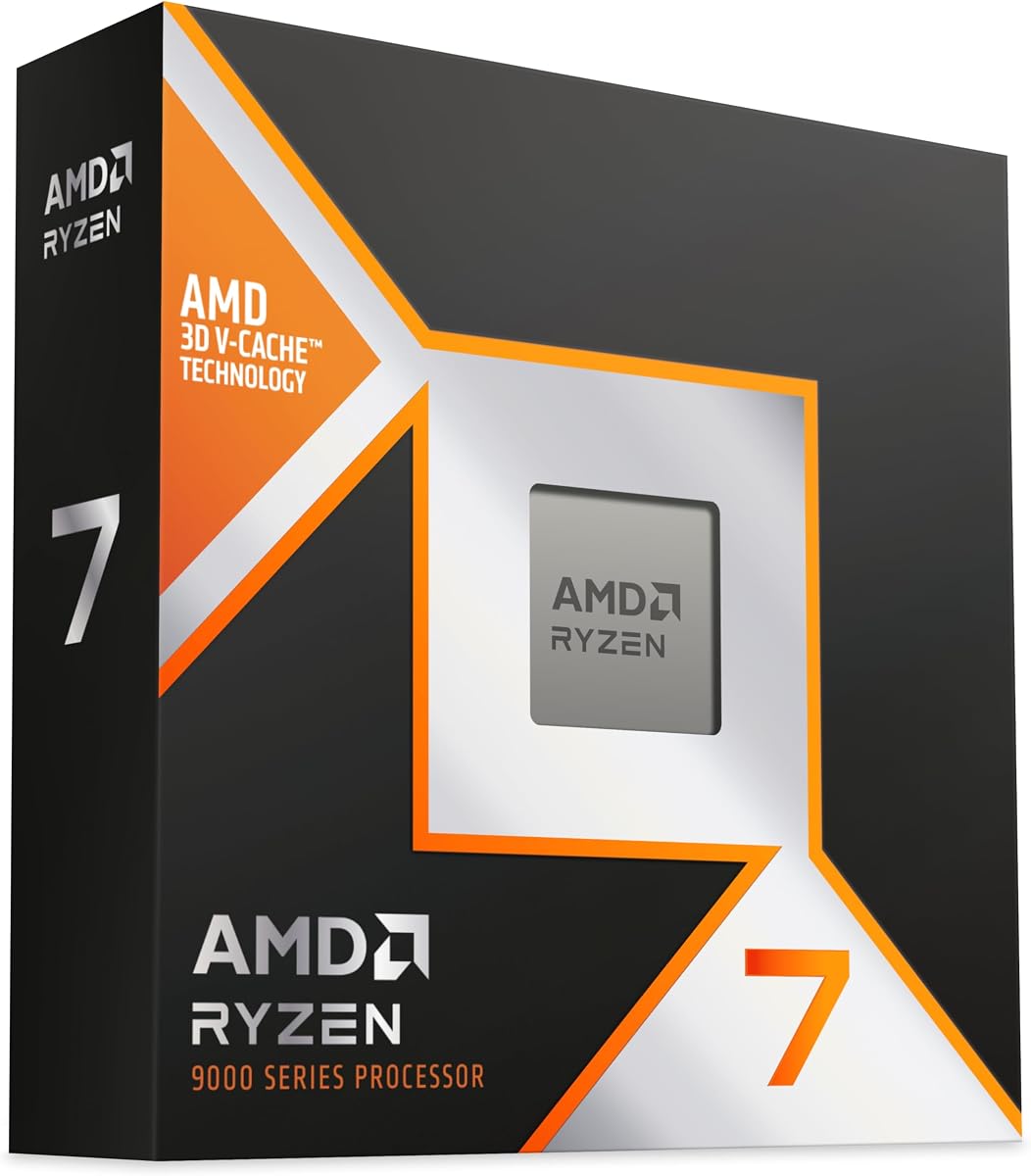


The AMD Ryzen 7 9800X3D combines eight Zen 5 cores, 16 threads, and Next Gen 3D V-Cache in a processor designed to excel at both interactive work and gaming. Its 4.8 rating reflects a strong overall customer impression, while the substantial 96 MB L3 cache distinguishes it from many conventional eight-core chips. For a 3D artist who models, textures, renders, and plays demanding games on the same machine, that combination is unusually versatile.
We may earn a commission when you buy through this link, at no additional cost to you.
The cache is the processor's defining feature. The 96 MB L3 pool gives the CPU a substantial local data store, which can be valuable when recurring scene data, application assets, and working sets need quick access. The listed boost speed reaches 5.2 GHz, helping keep the interface responsive while background tasks continue. Its Zen 5 foundation also provides a stated IPC uplift over the previous generation, improving the efficiency of instructions that do not scale perfectly across many cores.
There are important boundaries to this recommendation. Sixteen threads cannot match a 32- or 64-core processor when a render is built around heavy parallel scaling, and the X3D emphasis is especially attractive for gaming rather than maximizing every possible production outcome. A cooler is not included, and Socket AM5 systems require compatible DDR5 memory and motherboard support. It is therefore a better fit for a balanced creator workstation than a dedicated render server.
Choose the Ryzen 7 9800X3D if you want strong viewport performance, modern platform support, and considerable cache without moving into a high-core-count platform. It is particularly appealing for architectural visualization, product design, game development, and motion work where interactive quality matters as much as final render time. Among eight-core processors, its cache-oriented design gives it a particularly strong case for a versatile 3D creation system.
High boost clocks and Zen 5 efficiency help modeling, shading, and scene navigation feel responsive. This processor is best suited to workflows that repeatedly move between viewport changes and rendering rather than submitting one enormous parallel job and leaving the machine idle.
The 96 MB L3 cache is the standout specification. It can reduce the need to repeatedly retrieve frequently used data from system memory, making the chip a strong match for creators who also value high-performance gaming.
We may earn a commission when you buy through this link, at no additional cost to you.
The AMD Ryzen 9 9950X3D is a high-end processor explicitly positioned for gaming and content creation, and its combination of 16 cores, 32 threads, and up to 5.7 GHz boost makes it an appealing all-round choice for demanding 3D systems. Its 4.7 rating places it among the strongest products in this guide, with especially attractive specifications for creators who need more parallelism than an eight-core model can provide.
We may earn a commission when you buy through this link, at no additional cost to you.
The Zen 5 architecture brings a useful combination of scale and clock speed. Sixteen physical cores give renderers more work to distribute, while the stated 5.7 GHz maximum boost supports responsive applications that depend heavily on single-core performance. That balance is valuable in Blender, material authoring, texture preparation, scene assembly, and other tasks where the interface does not benefit from dozens of cores.
Because the supplied product details do not include the processor's exact cache configuration, the 9950X3D should be evaluated primarily on its confirmed core count, thread count, clocks, architecture, and AM5 platform. It is also a step up in platform cost and system complexity, so buyers should determine whether their workload genuinely needs a 16-core processor. Existing AM5 hardware may make the decision easier, but memory and motherboard compatibility still need verification.
This model is best for professionals working across modeling, rendering, video, and games who want one processor to handle several demanding roles. It may be especially suitable for freelancers and small studios that cannot justify a workstation-class Threadripper but need substantially more throughput than a six-core or eight-core desktop chip. It is our strongest all-round high-end recommendation when balanced performance matters.
Sixteen cores and 32 threads expand the processor's ability to handle parallel render tasks, while the 5.7 GHz boost specification helps preserve application responsiveness. That combination serves both final rendering and interactive production work.
Zen 5 and AM5 provide a modern foundation for a workstation that may also need fast memory and current platform features. The processor is aimed explicitly at content creators, making it a logical match for users who alternate between 3D, gaming, and visual production.
We may earn a commission when you buy through this link, at no additional cost to you.
The AMD Ryzen 7 7800X3D established a popular approach to combining a manageable eight-core desktop with a large 96 MB L3 cache. It offers 8 cores, 16 threads, 8 MB of L2 cache, and a 4.20 GHz clock speed, with a 4.8 rating reflecting its favorable reception. For creators who want a familiar core count and strong cache behavior, it remains a credible AM5 option.
We may earn a commission when you buy through this link, at no additional cost to you.
Its large L3 cache is the main attraction. Rendering applications involve substantial amounts of geometry, textures, shaders, and scene data, and a larger cache can improve the efficiency with which the processor accesses frequently used information. The integrated Radeon graphics controller also gives the system basic display output without requiring a discrete graphics processor, which can simplify a basic setup even though serious 3D work still calls for a capable graphics card.
The 4.20 GHz listed clock speed and eight physical cores place this processor below newer Zen 5 alternatives in raw thread count and headline boost speed. It will not match a Ryzen 9 or Threadripper when a task scales cleanly across many cores. Its cooler support and platform requirements should also be checked, because the appearance of integrated graphics does not make the processor a complete rendering system.
Buy the Ryzen 7 7800X3D if your workload combines strong interactive performance with occasional rendering and you prefer a proven eight-core layout. It is especially attractive for game developers, technical artists, and 3D professionals who also game. For maximum parallel rendering, choose a 16-core or higher processor; for a balanced, cache-rich desktop, this remains a practical option.
The 8 MB L2 and 96 MB L3 arrangement gives the processor a substantial data hierarchy. This makes the chip attractive for scene-heavy applications where efficient reuse of local data can improve overall responsiveness.
The Radeon graphics controller can handle basic display tasks and provides a useful fallback. A dedicated graphics card remains advisable for GPU rendering, complex viewports, and color-accurate work.
We may earn a commission when you buy through this link, at no additional cost to you.
The AMD Ryzen 7 9850X3D is presented as a desktop processor in the Ryzen 7 family, and its 4.8 rating gives it a strong customer-response foundation. The X3D designation points toward AMD's cache-enhanced processor design, making it an interesting consideration for users who want a current Ryzen desktop without immediately moving to the Ryzen 9 or Threadripper product families.
We may earn a commission when you buy through this link, at no additional cost to you.
What is confirmed is the product identity: Ryzen 7, the 9850X3D model, and desktop positioning. The supplied listing does not provide a detailed specification breakdown, so the guide does not assume a precise core count, clock speed, cache capacity, or platform generation. That distinction matters in a technical purchase because naming conventions alone should not replace the manufacturer's specification sheet.
As a result, the main risk is buying based on the model name without verifying the final production details. Prospective users should check the full specification list, socket requirement, memory support, maximum power behavior, and cooler recommendations. They should also compare the actual cache configuration with the established 9800X3D and 7800X3D models rather than assuming every X3D product behaves identically.
The Ryzen 7 9850X3D may fit a buyer seeking an AMD desktop with cache-focused design and a strong rating, particularly if the complete product listing confirms competitive specifications. It is less suitable for plug-and-play compatibility decisions because fewer technical details are available here. Treat the final manufacturer specifications as decisive, then confirm that the platform supports the required motherboard, memory, and cooling arrangement.
Because the supplied information is limited, check the official specification sheet for socket, memory type, core count, cache, and power limits. This prevents assumptions based only on the Ryzen and X3D labels.
The cache-oriented naming and Ryzen 7 positioning make this a plausible option for interactive 3D and gaming systems. Its exact advantage depends on the final specifications, which should be compared directly with other X3D alternatives.
We may earn a commission when you buy through this link, at no additional cost to you.
The AMD Ryzen 9 9950X is a 16-core, 32-thread Zen 5 processor built for creators who need substantial parallel throughput while retaining high clock speeds. It reaches 5.7 GHz max boost, includes 80 MB of cache, supports DDR5-5600 memory, and is unlocked for overclocking. Its 4.8 rating makes it one of the most well-regarded products in this comparison.
We may earn a commission when you buy through this link, at no additional cost to you.
The combination of 16 physical cores and 32 threads makes this processor a natural fit for CPU rendering scenes that can exploit parallel processing. High boost clock helps the same system remain responsive during modeling, shading, and asset preparation. Unlike a purely cache-focused X3D model, the 9950X provides a more traditional high-core desktop configuration with broad appeal for content creation and gaming.
Overclocking support adds flexibility for users willing to tune memory, cooling, and power settings. It also adds responsibility: the listed maximum boost is not a promise of a stable all-core overclock, and actual results depend on the board, cooling, workload, and chosen settings. A liquid cooler is recommended, and the processor does not include one, so the complete system budget should include a capable thermal solution.
This is a strong recommendation for 3D professionals who want high performance without stepping up to Threadripper's memory channels and enterprise platform features. It fits studios producing animation, architectural sequences, product renders, and large simulation jobs. Choose it when 16 cores are enough and you value the flexibility of a modern unlocked AM5 platform; move to Threadripper when memory bandwidth, lane count, or substantially more cores become central.
Unlocked operation allows experimentation with multiplier, voltage, and memory tuning. The 5.7 GHz max boost specification provides a strong factory starting point, while the unlocked design gives experienced builders additional headroom.
Sixteen cores and 32 threads offer a practical balance for rendering, modeling, and gaming. The processor can scale across substantial workloads without requiring the specialized memory architecture of a workstation platform.
We may earn a commission when you buy through this link, at no additional cost to you.
The AMD Ryzen 5 9600X brings six Zen 5 cores, 12 threads, a 5.4 GHz maximum boost, and 38 MB of cache to a comparatively accessible desktop configuration. It carries a 4.8 rating and unlocks the processor for overclocking, making it a practical entry point for creators who want a modern AM5 foundation and strong application responsiveness.
We may earn a commission when you buy through this link, at no additional cost to you.
For 3D production, the processor's relatively high clock speed is especially useful. Modeling operations, shading, UV work, and asset inspection often benefit from fast single-thread performance, while 12 threads provide enough parallelism for lighter CPU renders and background tasks. The processor also supports DDR5-5600 memory and can use PCIe 5.0 on compatible motherboards, providing a modern foundation without requiring a workstation platform.
The clear limitation is scale. Six physical cores will handle less simultaneous work than eight-, 16-, or 32-core alternatives, and some renderers take longer as thread counts rise. If a project is CPU-bound, highly complex, or needs to render several independent scenes at once, the 9600X can become the bottleneck. It is unlocked, but extra clock headroom cannot compensate for missing physical cores in every workload.
Choose this processor for students, freelancers, motion designers, and hobbyists who create 3D assets on a gaming-oriented system. It is a good fit when the graphics card handles rendering or when CPU rendering jobs are modest. For sustained professional scenes, a larger core count is advisable, but for a capable general-purpose creator PC, the Ryzen 5 9600X offers an efficient and appealing balance.
A 5.4 GHz max boost and Zen 5 design help keep interactive tasks quick. This makes the processor suitable for small studios and individual artists who need a system that can both create and entertain.
Socket AM5, DDR5-5600 support, and potential PCIe 5.0 use create a flexible foundation. Buyers can select a motherboard and memory according to graphics, storage, and expansion needs rather than relying on an obsolete platform.
We may earn a commission when you buy through this link, at no additional cost to you.
The AMD Ryzen Threadripper PRO 5955WX offers 16 cores and 32 threads for professional workloads that need more parallel capacity than mainstream desktop processors provide. Its 4 GHz clock speed is less eye-catching than the 5 GHz-plus figures of newer Ryzen 9 chips, but the core count and Threadripper PRO positioning make it a relevant option for CPU rendering, simulation, and content-production systems.
We may earn a commission when you buy through this link, at no additional cost to you.
Parallel capacity is the principal reason to choose this processor. Sixteen physical cores can divide rendering and scene-processing work across more logical processors, improving throughput when the application scales well. It is also a practical option for builders who already understand the AM4 platform and want a professional-class processor without moving to the newer Threadripper PRO generation. DDR4-3200 support can simplify reuse of compatible memory and boards.
The trade-off is platform and clock speed. Threadripper PRO requires a compatible motherboard and processor-specific cooling and power support, so it is not a drop-in upgrade for an ordinary AM4 desktop. The 4 GHz figure is also lower than the 5.7 GHz max boost stated for the Ryzen 9 9950X, meaning tasks that depend on one very fast core may not benefit as much. Storage, memory, and accelerator planning are equally important for professional builds.
Choose the 5955WX when parallel rendering, simulation, or workstation multitasking matters more than maximum single-core speed. It may be especially attractive to studios retaining AM4 infrastructure while needing a professional processor. Users building from scratch should compare the total platform requirements with a modern Ryzen desktop or the newer 7975WX rather than considering the processor in isolation.
Sixteen cores and 32 threads give rendering and simulation software more room to scale. The processor is better suited to sustained production tasks than to systems intended only for basic desktop use.
For builders with compatible AM4 components, Threadripper PRO can extend the useful life of an established platform. New systems still require appropriate boards, memory, and cooling because the processor needs a Threadripper-compatible motherboard.
We may earn a commission when you buy through this link, at no additional cost to you.
The AMD Ryzen Threadripper PRO 7975WX is the specialist choice in this guide for maximum parallel rendering capacity. It provides 32 cores, 64 processing threads, up to a 5.3 GHz max boost, and a huge 160 MB cache. Its 4.2 rating is the lowest among the listed products, but rating alone does not capture the significance of its workstation architecture and extraordinary expansion support.
We may earn a commission when you buy through this link, at no additional cost to you.
Thirty-two cores can substantially reduce render time in applications that scale across CPU cores, especially when the scene is divided into many render tasks. The 64 threads expose even more parallel execution capacity, while 160 MB of cache is notable in a processor that already emphasizes heavy workloads. The unlocked design and automatic overclocking feature add additional tuning options for experienced workstation builders.
Its defining workstation advantage is platform bandwidth. Eight-channel DDR5 RDIMM support can accommodate up to 2 TB of memory, and 128 usable PCIe 5.0 lanes create room for professional graphics cards, high-speed storage, and specialized accelerators. That scale makes the processor relevant to virtual production, simulation, machine learning, large data visualization, and simultaneous CPU and GPU rendering rather than ordinary desktop work.
The processor has a stated 350W TDP, no included cooler, and substantial platform requirements. It needs a compatible Threadripper PRO motherboard, appropriate memory, serious cooling, and a power supply sized for the complete workstation. Choose it when render time has a direct financial cost and your software can use substantial parallelism. For a single creator with lighter scenes, a Ryzen 9 may deliver a more sensible balance.
Thirty-two cores and 64 threads provide the largest rendering capacity in this comparison. The architecture is especially compelling for studios that divide complex scenes into many tasks or run several demanding processes simultaneously.
Eight-channel DDR5 RDIMM support and 128 usable PCIe 5.0 lanes distinguish this processor from ordinary desktops. Those features support large memory configurations, multiple accelerators, and high-speed professional storage.
We may earn a commission when you buy through this link, at no additional cost to you.
The Intel Core Ultra 7 270K Plus offers an interesting alternative for 3D creators who want a large mixed-core count without moving into Threadripper. It has 24 cores split into 8 performance and 16 efficient cores, reaches up to 5.50 GHz, includes 36 MB of cache, and supports DDR5 along with PCIe 5.0 and 4.0. Its 4.6 rating reflects a generally favorable but not exceptional customer impression.
We may earn a commission when you buy through this link, at no additional cost to you.
The mix of performance and efficient cores can be useful in modern applications that assign different types of work to different classes of core. The 8P plus 16E arrangement provides more logical parallelism than a conventional six- or eight-core desktop, while the up-to-5.50 GHz specification should help with interactive tasks. DDR5 support and current PCIe capabilities also make it suitable for a modern workstation built around the LGA 1851 platform.
There are practical complications. The product is an Amazon.co.jp exclusive, and the listing specifies that it is for products sold and shipped by Amazon.co.jp. International availability, warranty handling, and shipping should therefore be confirmed before purchase. It also requires motherboards using the Intel 800 series chipset, and the stated 125W processor-based power means a suitable cooling and power solution is necessary.
Choose this processor when its availability is reliable in your region, you specifically want an Intel platform, and the software's handling of mixed cores suits your workflow. It is a credible option for content creation, but the Threadripper alternatives offer clearer professional expansion. A Ryzen desktop may also be more convenient for buyers focused on readily available AM5 components.
The 8P plus 16E design gives the processor 24 physical cores across two classes. This can improve multitasking efficiency and support modern software that balances foreground responsiveness with background work.
LGA 1851, Intel 800-series motherboards, and DDR5 define the required platform. Because this is an Amazon.co.jp exclusive model, confirm regional fulfillment and warranty support before completing the purchase.
We may earn a commission when you buy through this link, at no additional cost to you.
The AMD Ryzen 9 5900XT combines 16 cores, 32 threads, a 4.8 GHz max boost, and 72 MB of cache in a proven Zen 3 design. Its 4.8 rating makes it one of the strongest customer-rated options in the guide, and it remains relevant for 3D creators who can use a mature AM4 platform without paying for a new desktop ecosystem.
We may earn a commission when you buy through this link, at no additional cost to you.
Sixteen physical cores provide solid CPU-rendering capacity, while 32 processing threads help keep multitasking and background tools responsive. The unlocked design allows experienced users to tune the processor, and the 4.8 GHz boost is a reasonable balance between parallel work and interactive performance. For architecture, product visualization, animation, and general content creation, the core count is more important than the generation label alone.
Its principal compromises are platform age and memory generation. DDR4-3200 support can help reduce the cost of assembling a system, but it also means the CPU cannot use the faster DDR5 platform found in the newer Ryzen options. PCIe 4.0 remains useful for most current storage and graphics needs, although builders prioritizing future expansion may prefer a newer platform. Older motherboards may also offer less mature BIOS support for high-end memory and storage.
Buy the Ryzen 9 5900XT if you already own a compatible AM4 motherboard and memory or have found a well-equipped system around it. It is a strong parallel-rendering choice with proven architecture and a favorable rating. For a completely new high-end build, compare the total platform investment with Zen 5 alternatives; for an existing AM4 system, this processor can deliver meaningful capacity without requiring a complete platform change.
The 16-core, 32-thread configuration gives CPU renderers meaningful parallel capacity. It is particularly attractive when an existing AM4 system already has suitable memory and motherboard support.
Zen 3 remains a capable foundation for 3D work, particularly when DDR4 reuse lowers the overall platform cost. The trade-off is foregoing DDR5, newer platform features, and the architectural advances of Zen 5.
We may earn a commission when you buy through this link, at no additional cost to you.
Choosing a processor for 3D rendering requires matching core count, clock speed, cache, platform capabilities, and thermals to the software and scale of your projects. The most expensive option is not automatically the most efficient choice, and the fastest gaming chip may not be ideal for every production workflow.
Core count is one of the clearest indicators of parallel rendering potential. Six cores can handle modest CPU-render jobs, eight cores provide a practical creative desktop, and 16 cores offer much greater room for scene division, multitasking, and demanding simulations. The Threadripper PRO 7975WX goes further with 32 cores and 64 threads, making it relevant to studios that regularly run large jobs and value shorter completion times.
More threads help only when the renderer can distribute work efficiently. A modern scene with many separate objects may scale differently from a single simulation or a tightly coupled memory-intensive task. Check your application for thread-scaling behavior, then favor a higher core count when workloads are clearly parallel.
Choose core count for workload scale, not simply for a larger number.
Modeling, viewport navigation, shading, texture editing, and scene assembly are often more responsive when the CPU has strong single-core performance. The Ryzen 9 9950X and 9950X3D reach a listed 5.7 GHz, the Intel Core Ultra 7 270K Plus reaches up to 5.50 GHz, and the Ryzen 7 9800X3D reaches 5.2 GHz. These figures help indicate the processor's ability to handle latency-sensitive tasks.
Clock speed should not be treated as a direct rendering-speed score. Software behavior, memory access, cache design, and thermal limits all matter. The better approach is to pair a processor with a strong boost specification and enough cores for final output, ensuring the machine remains useful during both creative and rendering stages.
Balance fast boost clocks with enough cores for final rendering.
Cache can influence performance when applications repeatedly access scene data, geometry, textures, and other information. The 9800X3D and 7800X3D each list 96 MB of L3 cache, while the Threadripper PRO 7975WX has a substantial 160 MB cache. These figures are particularly relevant to mixed workloads in which users alternate between interactive editing and rendering.
Cache benefits depend on the application and the nature of the data. A large cache cannot replace memory bandwidth, storage speed, or physical cores, but it can make frequent local accesses more efficient. When comparing X3D chips with conventional processors, consider both cache size and the workload's reliance on cached data rather than assuming one design wins in every scenario.
Favor larger cache for scene-heavy and mixed workflows.
Large 3D scenes can consume substantial system memory, and modern renderers benefit from fast memory. The Threadripper PRO 7975WX supports eight-channel DDR5 RDIMM memory up to 2 TB, giving it exceptional capacity and workstation bandwidth. Mainstream AM5 processors such as the 9950X, 9600X, and 9800X3D support DDR5-5600, while the 5900XT uses DDR4-3200.
Choose memory capacity for the largest scene you expect to open, plus operating-system and application overhead. Professional users may also need error-correcting memory and validated platform support. For ordinary creator systems, a dual-channel configuration with a sensible capacity is usually the practical starting point, but the application and scene size ultimately determine the right target.
Size memory for the scene, then prioritize platform bandwidth.
The socket and memory generation influence both initial assembly and future upgrades. AM5 supports current Ryzen processors and DDR5, making it a flexible modern foundation. AM4 offers mature, potentially reusable components, which can make the Ryzen 9 5900XT attractive. Intel's LGA 1851 platform requires compatible 800-series motherboards, while Threadripper PRO needs its own specialized boards.
A modern platform can improve the long-term flexibility of a workstation, but only if the motherboard offers the storage slots, expansion lanes, memory support, and connectivity you need. Avoid buying a processor first and selecting a board later without checking every compatibility list. The best platform is the one that supports your current projects and planned hardware.
Verify sockets, memory, firmware, and expansion before buying.
CPU rendering and 3D visualization often involve one or more GPUs, high-speed storage devices, and capture hardware. PCIe 5.0 support appears in the Ryzen 9 9950X, Ryzen 5 9600X, and Intel Core Ultra 7 270K Plus, while the Threadripper PRO 7975WX provides 128 usable PCIe 5.0 lanes. The Ryzen 9 5900XT and Threadripper PRO 5955WX operate around DDR4-era platforms with PCIe 4.0 support.
More lanes matter when you intend to populate several expansion slots or connect specialized professional equipment. For a single graphics card and a small number of fast NVMe drives, lane count is rarely the deciding factor. Check the motherboard layout and physical slot access, because an abundant lane count is of little value if the board cannot physically accommodate the desired devices.
Match expansion lanes to actual graphics and storage plans.
Sustained rendering can load a processor for long periods, making thermal capacity and power delivery essential. The Ryzen 7 9800X3D, Ryzen 9 9950X, and Ryzen 5 9600X are listed without an included cooler. The 9950X specifically recommends a liquid cooler, while the Threadripper PRO 7975WX has a stated 350W TDP and also lacks a cooler.
Do not treat the processor's listed boost clock as a guaranteed sustained frequency in an inadequately cooled system. Choose a cooler rated for the chip's power, use a motherboard with strong VRM cooling, and confirm case airflow. Overclocking also requires additional attention to temperatures, stability, and memory tuning.
Budget for cooling before maximizing processor settings.
Different 3D applications place different demands on the processor. Interactive applications reward clock speed and cache, while final CPU rendering may benefit from more cores. Hybrid pipelines need enough resources for modeling, simulation, rendering, and file management to run together without constant contention. GPU-based workflows place greater emphasis on graphics-card support, power, data transfer, and software compatibility.
Review the features that matter in your own applications, including plug-ins, color pipelines, simulation tools, and export formats. Check whether your preferred software benefits from SMT, mixed-core scheduling, or large memory configurations. The guide's recommendations are general workload matches, not guarantees for every engine or plug-in.
Optimize for the entire pipeline, not one render.
Install the processor only in a motherboard whose socket and chipset are explicitly supported. Handle the package carefully, avoid touching the contacts, apply a thin and even layer of compatible thermal compound, and secure the cooler according to the mounting instructions. Confirm that the operating system, motherboard firmware, memory modules, and graphics drivers recognize the new hardware after assembly.
For stable rendering, update the motherboard firmware before fine-tuning processor or memory settings. Begin with conservative power and memory profiles, confirm that the system can complete representative projects, and only then explore overclocking. Monitor temperatures and application stability during sustained renders, especially when using unlocked chips or XMP or EXPO memory profiles.
Keep the workstation's airflow path clear, clean accumulated dust from radiators and filters, and avoid placing the system in a confined space that traps heat. Back up active scenes and preserve project files independently of the processor choice. Periodic software and driver updates, along with sensible render scheduling, help maintain consistent performance across a long production cycle.
Six cores can work well for learning, asset creation, and modest CPU-render jobs. Eight cores provide a more comfortable creative desktop, while 16 cores are better suited to larger scenes, multitasking, and studios that regularly render on the CPU. Thirty-two or more cores make sense when the financial cost of render time justifies a professional workstation. The best count also depends on how well your renderer scales with threads.
An X3D processor can be a strong choice for mixed workflows because its larger L3 cache favors frequently accessed local data. It is also appealing when the workstation is used for gaming. The cache advantage does not guarantee the fastest final render in every application, so compare the X3D model's core count with the scale of your scenes and the behavior of your renderer.
The decision depends on cores, clocks, memory support, platform availability, and your software. AMD options in this guide range from six-core desktop chips to 32-core Threadripper PRO processors, while the Intel offering provides 24 mixed cores on LGA 1851. The processor that best matches your scene scale and available components is generally more important than brand preference alone.
It depends on the renderer, scene, and available hardware. CPU rendering benefits from many strong cores and often handles flexible scene complexity well, while GPU rendering can be exceptionally fast for workloads supported by the selected engine and card. A hybrid workstation can use both, but software support, memory transfer, and scene type must be considered before assuming one method is always superior.
No fixed amount works for every project. A moderate scene may fit comfortably in 32 GB, while detailed scenes, simulations, video editing, and several applications running together can benefit from 64 GB or more. The Threadripper PRO 7975WX supports exceptionally large DDR5 RDIMM configurations, but you should size memory to your actual largest scene and workflow rather than simply selecting the maximum available.
An unlocked processor allows additional clock and memory tuning, which can improve performance when the cooling and power delivery are sufficient. It does not increase the physical core count or guarantee better application performance. The Ryzen 9 9950X, Ryzen 5 9600X, Ryzen 9 5900XT, and Threadripper PRO 7975WX support additional tuning, but stable defaults are often more valuable than an aggressive overclock.
An AM4 motherboard can be suitable with the Ryzen 9 5900XT if it supports the selected processor and the required memory and expansion features. Firmware support should be verified before upgrading, and Threadripper PRO requires a compatible platform of its own. Reusing a mature system can be practical, but the full board, BIOS, memory, and power configuration still need checking.
Cooling should be matched to the processor's thermal output and the workstation's sustained workload. The Ryzen 9 9950X is listed with a liquid cooler recommendation, while the Threadripper PRO 7975WX has a 350W TDP and no included cooler. Quality airflow, a suitable power supply, and clean filters are just as important as the cooler itself, particularly during long rendering sessions.
The strongest general recommendation is the AMD Ryzen 9 9950X3D, which combines 16 cores, 32 threads, a high 5.7 GHz boost, and a content-creation focus. The Ryzen 5 9600X is the efficient budget-oriented choice, while the Threadripper PRO 7975WX is the premium specialist for studios that need 32 cores, 64 threads, massive memory capacity, and extensive PCIe expansion.
Prioritize workload scale before choosing a model. Interactive work rewards clocks and cache, CPU rendering benefits from physical cores, and large professional scenes may demand substantial memory. Platform compatibility, cooling, storage, and graphics support deserve equal attention because a processor alone cannot deliver a complete 3D workstation.
Finally, check current product availability, regional fulfillment, memory requirements, and the latest manufacturer specifications before purchasing. Prices and configurations can change, and the most suitable choice is the processor that fits your software, scene complexity, existing components, and realistic workload rather than simply the model with the largest headline number.