
Trapper Max Glue Traps
4.5Editor score
Twelve scented glue boards
Non-toxic adhesive design
Flat or folded placement
Targets multiple crawling pests
Discover the best bed bug traps for early detection, monitoring, and household pest control, with ten products compared for design, coverage, and ease of use.
Bed bug traps are among the most useful tools for detecting an infestation early, monitoring activity around sleeping areas, and supporting a broader pest-control plan. A well-designed trap should capture or reveal bugs without relying on chemical pesticides, remain easy to position, and fit naturally beneath beds, sofas, or other furniture where bed bugs commonly travel.
The products in this guide were compared by examining their stated detection methods, trap design, pack quantity, chemical-free or pesticide-free claims, placement guidance, visibility for inspection, and suitability for homes, apartments, hotels, or travel. The list includes passive interceptors, adhesive boards, monitored traps, and multipurpose insect traps, because each offers a different balance of convenience and coverage.
Each review explains what distinguishes the product, where it performs best, and where its design may be less suitable. Ratings reflect the supplied customer feedback, while the assessments consider practical features rather than laboratory results or personal testing. Product availability, features, and pricing can change, so readers should verify current details before purchasing.
4.5Editor score

4.3Editor score

4.5Editor score
The comparison below highlights each trap's format, quantity, monitoring approach, and placement flexibility, helping readers identify the option that best matches their home, travel needs, and monitoring goals.




MaxGuard Bed Bug Traps offer an appealing combination of broad household coverage and chemical-free operation. This 24-pack uses a timed-release attractant to draw crawling insects toward a super-sticky surface, allowing the product to serve as a detector, trapping tool, and general crawling-insect monitor. Its supplied customer rating is 3.9, placing it among the stronger entries in this guide, although the score suggests that expectations should remain realistic.
We may earn a commission when you buy through this link, at no additional cost to you.
The most useful feature is the combination of attraction and containment. Many interceptor traps depend on a bed bug encountering them along a furniture leg, whereas an attractant is intended to make the trap more noticeable to mobile pests. The 24-unit count also permits placement around several bed posts, near sofas, or along other heavily traveled areas. The product description states that the traps can remain effective for up to six months, giving buyers a potentially extended monitoring period without frequent replacement.
There are some trade-offs. The listing does not describe the same kind of deep, escape-resistant reservoir found in conventional bed-leg interceptors, and the stated six-month effectiveness depends on exposure, conditions, insect activity, and proper placement. It is also a multi-purpose adhesive trap rather than a narrowly specialized bed bug interceptor. As a result, captured spiders, crickets, cockroaches, or ants may appear even when no bed bugs are present, which can complicate interpretation.
This is a practical choice for households that want flexible, chemical-free monitoring across numerous locations and want some attraction in addition to passive interception. It is less suitable for someone who expects a single visible unit to confirm an entire room. Used consistently around sleeping furniture and other likely travel routes, the large quantity and long stated monitoring duration make MaxGuard a well-rounded first selection.
The timed-release attractant is the product's main distinction from a basic glue board. It is intended to encourage crawling insects to approach the adhesive surface, making the traps useful for early detection around beds and other frequently occupied furniture.
With 24 units in each box, a homeowner can monitor multiple pieces of furniture or several rooms without needing many separate packages. Placement under every relevant bed or furniture leg is more useful than relying on a single trap to signal activity across a home.
We may earn a commission when you buy through this link, at no additional cost to you.
Bed Bug Blocker Pro Black is a conventional interceptor designed to monitor furniture legs and capture bed bugs that climb toward a sleeping person. Its 4.3 rating is among the highest in this group, and the product description highlights independent laboratory testing specifically for trapping and monitoring. That makes it a credible choice for people seeking a passive, pesticide-free device rather than an attractant-based trap.
We may earn a commission when you buy through this link, at no additional cost to you.
The physical design is central to its operation. A textured exterior gives bed bugs traction as they climb, while a smooth outer pitfall reservoir is designed to prevent escape. The product can be placed under each bed post or furniture leg, creating inspection points along routes commonly used by bed bugs. Its black finish also makes captured specimens easy to see during a quick visual check, which is helpful for monitoring before and after a treatment process.
The main limitation is that the trap works through placement and interception rather than aggressive luring. It will generally be more effective when a bed bug moves along a leg or nearby surface. Furniture that stands on smooth legs, unusual supports, or elevated frames may require a different setup. The eight-pack is sensible for one bed with several legs, but larger rooms or extensive monitoring networks may call for additional units.
Choose this product if you prefer a conventional interceptor with a strong supplied rating, discreet black appearance, and no chemical attractant. It is particularly appropriate for landlords, dormitory managers, hospitality operators, and homeowners who want a visible way to check furniture supports. For smaller spaces, however, the four-pack version may be more practical.
Unlike a flat glue board, this trap uses a three-dimensional structure intended to intercept climbing bed bugs. Its textured surface and smooth reservoir are central features, so it is best positioned where furniture legs meet the floor.
The black exterior gives users a quick visual indication of activity. Checking traps at regular intervals can reveal whether bugs were captured, allowing homeowners or pest professionals to document conditions before, during, and after treatment.
We may earn a commission when you buy through this link, at no additional cost to you.
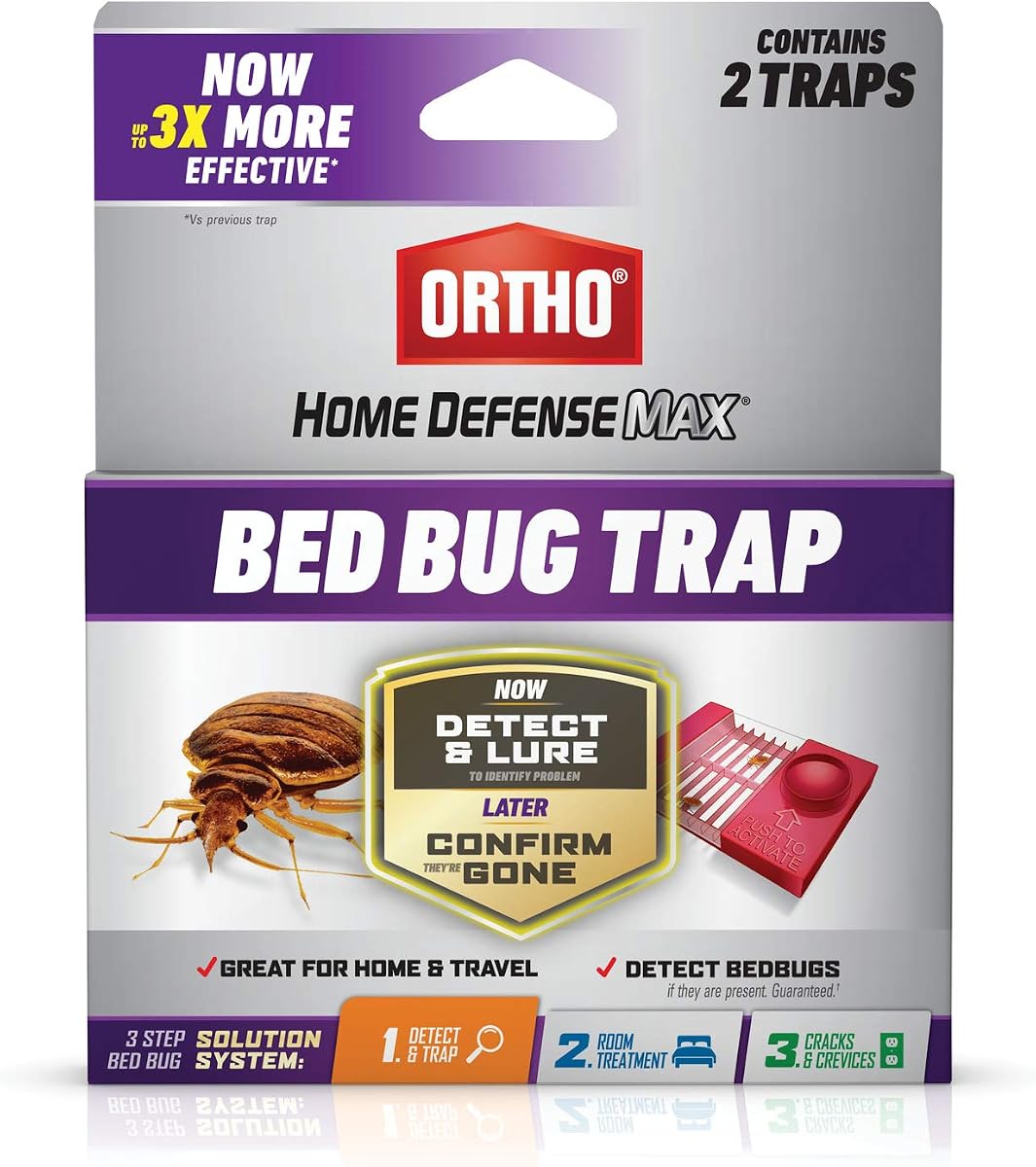
Ortho Home Defense Max uses a button-activated attractant and a partially enclosed design to help detect and trap bed bugs. The product listing recommends placing the units near bed headboards and legs, between the mattress and box spring, and near frequently visited furniture such as sofas and recliners. With a 3.6 customer rating, it is the lowest-rated product in this roundup, but its design serves a specific monitoring purpose.
We may earn a commission when you buy through this link, at no additional cost to you.
This trap is particularly useful when the objective is confirmation rather than broad, continuous interception. The user presses a button to activate the attractant and later peels back a window to inspect the contents. The listing specifically describes using the traps before treatment to confirm presence and afterward to help confirm that bed bugs are gone, making this a useful complement to a multi-step treatment system.
The main drawback is quantity. Two traps provide only limited coverage, and the instructions advise using both for best results. The product's rating is also below that of the interceptor and multipurpose adhesive options in this guide. Additionally, because the attractant must be activated, users must follow the setup directions carefully and replace or reactivate units as directed to avoid false confidence from inactive traps.
This is a sensible focused tool for someone who wants to test a specific sleeping area or furniture location and compare conditions before and after treatment. It is less suitable for comprehensive apartment-wide monitoring. Buyers who need broader passive coverage may prefer a larger interceptor pack or a collection of compact adhesive boards.
The listing positions these traps as monitoring devices within a broader solution system. They can help users establish whether bed bugs are present before treatment and provide visual confirmation afterward rather than functioning as a complete treatment on their own.
Placement near headboards, box springs, sofas, and recliners broadens the potential inspection points. This matters because bed bugs may travel through multiple resting and sitting areas rather than remaining exclusively beneath the bed.
We may earn a commission when you buy through this link, at no additional cost to you.
Bed Bug Blocker Pro White provides the same general interceptor format as the black version but blends more discreetly into light-colored rooms and furnishings. It has a 4.3 supplied rating and is designed for continuous monitoring under bed posts and furniture legs. The product listing states that it uses no synthetic additives or lures and calls it suitable for homes, apartments, hotels, hospitals, dormitories, and other residences.
We may earn a commission when you buy through this link, at no additional cost to you.
Its effectiveness depends on the intercepting structure. Bed bugs can climb the textured exterior, but the smooth outer pitfall reservoir is designed to keep captured bugs from escaping. This passive approach means no attractant is necessary, and users can inspect the visible interior without unfolding a conventional glue board. The product is also described as field-tested and used in professional inspection and treatment protocols.
Aesthetically, white can be a benefit or a drawback. It may be less conspicuous under a light bed frame, while the black model may be easier to notice against a pale floor. Functionally, color does not change the trapping principle. The larger limitation is the eight-trap count, which can cover the legs of one substantial bed but may not be enough for several sleeping surfaces without another package.
This is a strong option for people who want a professional-style passive monitor with no lure or synthetic additive. It suits a single bed, apartment, dorm room, or hotel-style inspection where visual discretion matters. For a household with multiple beds or larger furniture networks, consider how many legs and resting areas need coverage before choosing the pack size.
The white finish is designed to blend with lighter floors and furnishings. While appearance should not outweigh trap performance, a less conspicuous monitor can be convenient in a bedroom where appearance is important.
The trap relies on interception rather than a chemical lure. Its suitability for sensitive sleeping environments is reinforced by the listing's statement that it contains no synthetic additives, though household members should still avoid direct contact with any pest-control device.
We may earn a commission when you buy through this link, at no additional cost to you.
Trapper Max Glue Traps deliver a 4.5 supplied rating, tying for the highest rating among the products reviewed. These are compact, peanut-butter-scented glue boards designed to catch bed bugs along with mice, insects, spiders, and cockroaches. Their straightforward adhesive format makes them a flexible, economical option for monitoring locations where activity is already suspected.
We may earn a commission when you buy through this link, at no additional cost to you.
Each glue-covered surface measures 4.5 by 6.5 inches, while the complete trap measures 5.25 by 7.75 inches. Boards can remain flat or be folded for placement near walls, under furniture, or in other areas where pests have been observed. That versatility allows users to create a distributed monitoring network without relying on a rigid bed-leg-only design.
The important caveat is that this is a multipurpose trap. A captured spider or cockroach does not establish the presence of bed bugs, and a clean board does not prove that the entire room is free of them. The peanut butter scent may also attract non-target pests. Users should place traps carefully, inspect them regularly, and avoid situations where pets or children could contact the adhesive.
This is an appealing choice for budget-conscious shoppers who want a simple, non-toxic tool for broad crawling-pest monitoring. It works especially well as a supplementary tool around beds, baseboards, and furniture, or for renters who need portable, foldable traps. For precise bed bug interception along furniture legs, a dedicated interceptor may provide a more specialized result.
The ability to configure each board as a flat surface or a folded trap makes the product useful in more locations. Flat boards suit open monitoring areas, while folded forms can create a more enclosed profile near edges and furniture.
This product's broad pest coverage is a strength for general household monitoring. It can help capture other crawling insects or rodents, although every catch should be identified carefully before drawing conclusions about bed bug activity.
We may earn a commission when you buy through this link, at no additional cost to you.
This eight-pack of black bed bug interceptors emphasizes stable furniture support and a deep, smooth interior. It has a 4.3 customer rating and is marketed for beds, sofas, desks, apartments, hotels, hospitals, and dormitories. The structure combines a matte-textured outer surface, an inner platform, and deep smooth walls designed to make it difficult for captured bed bugs to escape.
We may earn a commission when you buy through this link, at no additional cost to you.
The widened base and grippy inner threads are particularly useful for maintaining the trap's position around a furniture leg. A stable interceptor is easier to inspect and less likely to shift when bedding, clothing, or the furniture itself is moved. Its broad range of intended applications also means it can be used around more than just a bed, giving users flexibility to monitor high-contact resting furniture.
The eight-unit quantity is the main constraint. The listing says that the traps provide monitoring and protection for one bed or other furniture item, so a multi-room property may require more. It also does not provide the same specific independent laboratory-testing language found in the Bed Bug Blocker Pro descriptions. Marketing claims about continuous monitoring and complete capture should therefore be understood within the product's intended placement conditions.
This interceptor is a good fit for a homeowner who values physical stability and wants monitoring under a bed, sofa, or desk. It also suits institutional users who need a straightforward device that can be checked quickly. Buy enough units to cover all relevant supports, and remember that passive interception works most consistently when pests travel along the furniture legs where the traps are positioned.
The trap's deep, smooth interior is designed to prevent bed bugs from climbing back out. A deeper profile may therefore be more reassuring than a shallow glue surface for anyone focused on reliable physical containment.
The widened base and internal grippy threads help keep furniture supported and the trap aligned. Stable positioning makes repeated visual checks easier and reduces the chance of disturbing an active monitoring setup.
We may earn a commission when you buy through this link, at no additional cost to you.
HARRIS Bed Bug Traps use a fold-and-tab design to create compact, pesticide-free monitoring stations. The package includes 20 large traps, and the supplied customer rating is 3.9. Their understated profile and simple construction make them useful for early detection in both residential and commercial settings where a more permanent interceptor might be visually intrusive.
We may earn a commission when you buy through this link, at no additional cost to you.
Assembly is straightforward: users fold the trap and insert a tab at the top to hold it in position. Once assembled, the units slide beneath furniture or bedding, providing a discreet monitoring point. Because no chemicals are used, the design is attractive to households seeking a non-pesticide option, although users should still use common sense around children and animals.
The product's limitations begin with its moderate rating and the fact that it is not presented with the same laboratory-specific evidence as some interceptor traps. The folding construction may also offer less depth and stability than a purpose-built bed-leg interceptor. Users should treat it as one component of a broader monitoring plan rather than a guarantee that a negative result proves an entire home is free of bed bugs.
HARRIS is a practical selection for landlords, property managers, dormitory operators, or homeowners who need many small, portable monitoring points. The 20-trap count provides enough supply to cover several rooms or create redundancy. It is less suited to a buyer who wants a heavy-duty structural interceptor with a deep reservoir and no assembly step.
The foldable profile makes these traps easy to carry, position, and slide beneath furniture. The top tab holds the folded shape together, allowing the device to remain low-profile while still providing a defined capture area.
Twenty traps offer enough units for repeated placement or multiple properties. A distributed setup can identify where activity is most likely, which is valuable information when planning inspection or professional treatment.
We may earn a commission when you buy through this link, at no additional cost to you.
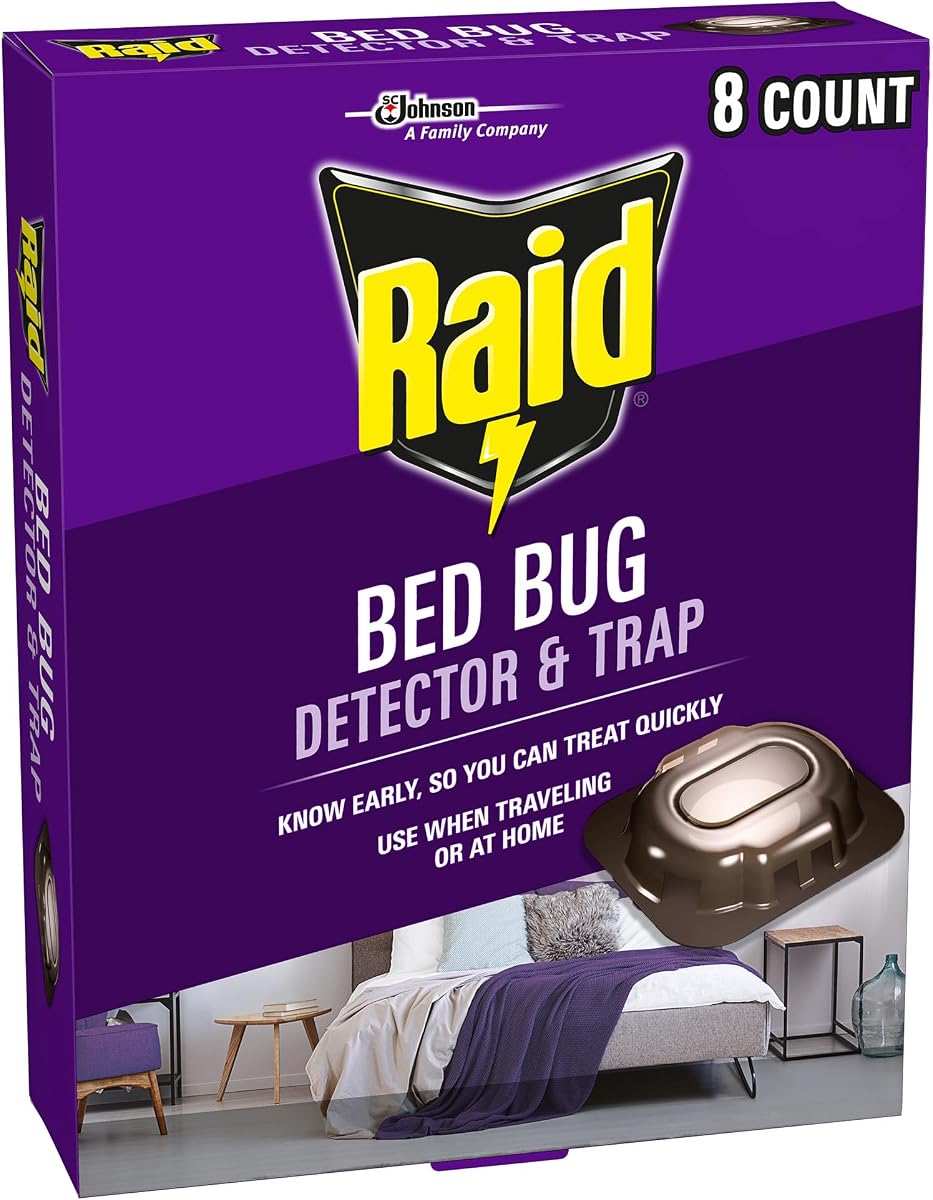
Raid Bed Bug Detector is an eight-count early-detection set designed for indoor use at home or while traveling. Its partially enclosed trap includes a see-through window, allowing users to check for captured bed bugs without opening the unit. The supplied customer rating is 3.9, and the product is best understood as a portable monitoring tool rather than a complete treatment system.
We may earn a commission when you buy through this link, at no additional cost to you.
Its strongest advantage is portability. Travelers, students in dormitories, and people moving between temporary accommodations can use a small number of units around a bed or other resting furniture. The viewing window makes routine inspections simple, while the enclosed construction provides a more contained capture area than a completely flat glue board.
As with the other early-detection options, the device cannot prove that a room is entirely bed bug free. Bed bugs may not encounter the trap during the period it is monitored, and the product's rating is only moderate. The listing specifies indoor use, so it should not be relied upon outdoors where moisture, debris, or uneven surfaces could affect performance. Users should follow all disposal directions and keep used traps away from children and pets.
Raid is most useful for people who want simple, disposable-looking monitoring during travel or in a temporary living arrangement. It is less appropriate for long-term passive monitoring around many pieces of furniture because the eight-unit quantity is modest. Those seeking 24/7 structural interception may prefer a deeper interceptor designed specifically for bed legs.
The compact count and home-or-travel positioning make this a convenient option for checking temporary sleeping areas. Portable traps are particularly useful for people who want a discreet monitoring method without setting up permanent bed-leg devices.
The transparent window lets users look for trapped insects without opening the enclosure. This makes daily or weekly checks faster and helps travelers maintain awareness while staying in unfamiliar accommodations.
We may earn a commission when you buy through this link, at no additional cost to you.
Bed Bug Blocker Pro White Four Pack delivers a 4.3 customer rating in a smaller, more manageable quantity. Like the larger white and black versions, it is a passive interceptor intended for placement under bed posts and furniture legs. The product listing states that the traps are chemical-free, have no lures, and have been laboratory tested by an independent research facility for bed bug monitoring.
We may earn a commission when you buy through this link, at no additional cost to you.
The mechanism uses a textured exterior to provide traction and a smooth outer reservoir to trap bed bugs that climb into the device. This makes careful positioning essential: the trap should sit where a bed bug is likely to move vertically toward furniture. The four-unit count can be useful for a small bed, a limited furniture setup, or a targeted room where a larger deployment would be unnecessary.
The compact quantity is both strength and weakness. It is easier to test placement on a smaller scale and can make the product more accessible for users who only need focused monitoring. On the other hand, a bed may have more than four relevant supports, and sofas or multiple rooms may require additional traps. Passive devices also cannot rule out bugs traveling through areas without interception coverage.
This four-pack is a strong choice for a small, precisely monitored sleeping area. It suits users who value the stated laboratory testing, no-chemical operation, and a discreet white appearance, but who do not need a broad property-wide network. For a larger bed, check the number of legs and purchase enough units to cover each likely route.
Four traps can be deployed efficiently around a compact bed or selected furniture. Concentrating the units at key travel points may make daily inspection more manageable than maintaining a much larger network.
The listing specifically references independent third-party laboratory testing. That distinction provides useful context for buyers comparing interceptor products, although laboratory effectiveness does not guarantee that every real household placement will capture the same number of bugs.
We may earn a commission when you buy through this link, at no additional cost to you.
Trapper Insect Trap is the largest monitoring set in the guide, providing 30 board units that contain 90 individual trap sections. It has a 4.5 customer rating and is marketed for bed bugs, spiders, cockroaches, and other insects. Its strength is the ability to create a highly distributed monitoring network rather than relying on a handful of large interceptors.
We may earn a commission when you buy through this link, at no additional cost to you.
The compact, foldable format makes it possible to place traps at numerous small points throughout a home, apartment, or property. A large inventory is valuable when a user wants to monitor several rooms, compare activity in different areas, or replace traps regularly without repeatedly purchasing smaller packages. The product is therefore especially attractive to landlords, property managers, and anyone conducting structured ongoing surveillance.
The trade-off is that this is a multipurpose insect trap, not a specialized bed-leg interceptor. A captured spider or cockroach should not be treated as evidence of a bed bug infestation. A larger number of traps also creates a greater inspection burden, and a negative result in one location does not rule out activity elsewhere. Users must position the traps thoughtfully and inspect them regularly for meaningful results.
This is the premium choice for comprehensive coverage. It is best suited to someone who values quantity, portability, and the ability to monitor many points more than a deep escape-proof reservoir. For a single bed, a specialized interceptor may be easier to interpret, but for whole-home or multi-property monitoring, the 90-section set offers exceptional flexibility.
The unusually large quantity makes it possible to place traps across many rooms and around numerous pieces of furniture. This creates a more detailed activity map and reduces dependence on any single check point.
Small, foldable traps can fit into corners, beneath furniture, and along suspected routes. Their compact footprint makes broad coverage more manageable than placing large interceptor structures at every location.
We may earn a commission when you buy through this link, at no additional cost to you.
The right bed bug trap depends on how you plan to use it, the spaces you need to monitor, and whether your priority is visible interception, attractant-based detection, or broad property coverage. Review the following factors before choosing a format and pack size.
Interceptor traps work passively by stopping bed bugs as they climb furniture legs or move across a surface. Attractant-based traps use a lure to encourage insects toward a capture area, which can help reveal activity in a suspected location. Neither approach guarantees that a negative trap proves an entire room is free of bed bugs, so placement and consistency matter more than the marketing claim alone.
A two-pack may suit one targeted sleeping area, while eight- and twelve-packs allow coverage around a bed and neighboring furniture. Twenty traps or 90 individual sections are better suited to larger homes, multiple rooms, or property managers who need frequent replacement. Count the relevant bed posts, sofa legs, and other likely travel points before deciding which pack offers enough coverage.
A deep interceptor with a textured exterior and smooth inner walls is designed to make escape difficult. Flat glue boards are simpler and more flexible, but captured insects remain exposed on the adhesive surface. Consider whether physical containment, easy visual identification, or flexible placement matters most, and check each product's stated construction carefully.
Many users prefer traps that contain no pesticides or chemical lure ingredients, particularly around sleeping areas and children. Attractant traps can still be useful for detection because they are designed to draw bed bugs into a visible enclosure. Read the product description for activation requirements, and never assume a trap is pesticide-free merely because it lacks a chemical treatment label.
A transparent window, contrasting color, or open interceptor design can make routine checks faster. Visibility helps distinguish an empty trap from one containing a captured insect, which is important when tracking activity over time. Dark traps may be easier to notice against light floors, while white traps may blend into pale rooms. Choose the finish that you will actually notice during regular inspections.
Traditional interceptor traps require a suitable furniture leg and enough clearance to sit beneath it. Folded boards and compact traps can work near baseboards, between a mattress and box spring, under sofas, or beside other furniture. Consider leg shape, floor texture, cleaning routines, and whether bedding or clothing might contact the adhesive.
Some products claim effectiveness for extended periods, while others may require more frequent replacement or activation. Exposed adhesive can collect dust, fibers, and other debris, and traps near high-traffic areas may need attention sooner. Establish a checking schedule based on the product instructions and your risk level, and replace damaged, soiled, or inactive traps as needed.
A multipurpose glue trap may catch spiders, cockroaches, ants, and other insects alongside bed bugs. That makes it useful for general household monitoring, but catches must be identified correctly. A bed-bug-specific interceptor is easier to interpret in a bedroom and may provide a more specialized structure for furniture-leg interception.
Begin by identifying the places most likely to be used by bed bugs, including bed posts, the space around and between a mattress and box spring, sofa legs, and other furniture close to where people sleep. Clean the selected area before placement, because dust, fibers, and food residue can reduce the usefulness of exposed adhesive. Read the product instructions and assemble or activate every unit before positioning it.
Place interceptor traps directly beneath relevant furniture legs, making sure the trap is stable and the furniture rests as intended. Place flat or folded adhesive boards near suspected travel routes and inspection points, while attractant traps should go exactly where the manufacturer recommends, such as near a headboard, bed leg, sofa, or recliner. Avoid stacking traps where furniture will not sit securely, and keep them away from children, pets, laundry, and moving bedding.
Inspect traps regularly and record what you find, including the date, location, and visible insects. Replace attractant traps according to their instructions, and discard used adhesive traps carefully. When several traps are active across a room, a captured bug should be treated as evidence that broader inspection and treatment planning are needed. Monitoring should continue after treatment so that new activity can be identified rather than assumed to have ended.
Some traps physically trap or kill bed bugs through adhesive or a pitfall design, while others are primarily intended to detect and contain activity. Even when a trap can kill a captured specimen, a single trap cannot control a whole infestation. Combine monitoring with inspection, sanitation, heat treatment where appropriate, and professionally guided treatment when the evidence indicates a broader problem.
Place interceptor traps beneath bed posts and furniture legs, especially pieces close to the sleeping area. Adhesive or folded boards can be positioned near baseboards, the mattress and box spring gap, sofas, recliners, and other frequently used furniture. Put traps where bed bugs are likely to travel vertically or horizontally, not merely in an open area where they are unlikely to encounter one.
Check them at least regularly during an active monitoring effort, with more frequent inspections when there is a suspected infestation or after treatment begins. Look for small captured insects, shed skins, stains, or changes inside the trap. The appropriate replacement interval depends on the product, but any trap that becomes soiled, dry, damaged, or inactive should be replaced according to its instructions.
Products that use no pesticides or chemical lure ingredients can reduce concern around sleeping areas, but they are not automatically childproof or petproof. Keep traps out of reach, prevent direct contact with adhesive, and follow all disposal instructions. No bed bug trap should be placed where children or animals might chew, lick, or otherwise handle the device.
No. An empty trap only means that no bed bug was captured in that location during the monitoring period. Bed bugs may travel through other areas, remain hidden in cracks, or avoid the trap entirely. A more reliable assessment combines multiple monitored locations with a careful inspection of beds, frame joints, upholstery, seams, and nearby belongings.
Yes. Many products in this guide use no pesticides or chemical lure ingredients. Interceptors prevent escape through their physical structure, adhesive boards immobilize insects on a sticky surface, and attractant traps encourage a bug to enter a capture area. Their usefulness still depends on proper placement, regular inspection, and realistic expectations about what one trap can reveal.
Bed-leg interceptors are better suited to structured, continuous monitoring around furniture supports and offer more physical containment. Glue boards are smaller, easier to distribute, and useful for checking additional locations, but captures remain exposed and other crawling insects may be caught. Many households benefit from using both formats as complementary monitoring tools.
Continue monitoring long enough to evaluate the treatment and watch for renewed activity rather than relying only on the initial cleanup. New captures can indicate that bugs remain hidden elsewhere or that surrounding areas still need attention. If evidence of continued activity appears, pause assumptions that the problem is resolved and seek guidance from a qualified pest professional.
MaxGuard Bed Bug Traps stand out for broad chemical-free coverage and a 24-unit count, Bed Bug Blocker Pro Black offers a strong conventional interceptor with a 4.3 rating, and Trapper Max Glue Traps provide flexible, budget-friendly monitoring with a 4.5 rating. For extensive property coverage, the 90-section Trapper Insect Trap set offers more placement points than the alternatives.
The most important buying priority is proper fit for the monitoring environment. Choose deep interceptors for stable furniture-leg placement, adhesive boards for flexible multi-point coverage, and attractant traps for focused inspection. Quantity should match the number of locations you can actually check, and a stronger customer rating should be considered alongside design, evidence, and intended use rather than treated as the only measure of performance.
Finally, verify current product details, customer feedback, availability, and pricing before making a purchase, as these details can change. Most importantly, treat traps as monitoring tools within a complete pest-management strategy. If multiple traps show activity, seek a thorough inspection and appropriate treatment instead of relying on trapping alone.